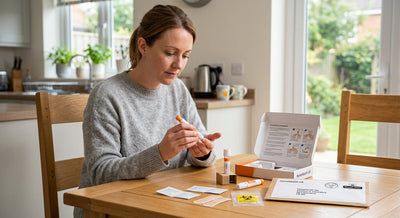
You do not need ten tabs open and a medical dictionary to choose a blood test.
Start with why you want to test. Your symptoms, health goals and family history usually point towards the right type of panel.
This guide gives you a simple route through the options. It also explains when a single marker makes sense, when a wider panel is more useful, and when your GP should be your first stop.
TL;DR:
- Tiredness, brain fog or hair thinning: start by considering a nutritional, thyroid or broader health panel.
- Heavy periods: ask about iron, ferritin and a full blood count through your GP.
- Low mood or hormone-related symptoms: consider a hormonal or thyroid panel, but do not use results to self-diagnose.
- Training plateau: look at nutritional, metabolic, organ and selected hormonal markers.
- Family history of heart disease or diabetes: consider a metabolic panel and speak with your GP about wider risk assessment.
- Want a broad baseline: choose a full health MOT rather than one isolated marker.
- Severe, persistent or worrying symptoms: contact your GP first.
Which blood test should I get? Choose a test based on your main symptom or goal: nutritional and thyroid markers for tiredness, hormonal markers for hormone-related symptoms, metabolic markers for diabetes or heart-health risk, and a broader health MOT when you want a wider baseline.
Start with the question behind the test
Before choosing a test, write down one sentence:
“I want to test because…”
That sentence matters. A single marker is like checking one warning light on a car. A panel is more like looking at the dashboard. A full MOT gives you a much wider inspection.
None of these replaces a GP assessment. Blood results need context, including your age, sex, medicines, symptoms, medical history and recent illness or training.

Which panel fits your symptoms or goal?
1. Tiredness and brain fog: consider nutritional, thyroid and metabolic markers
Persistent tiredness can have many causes, including sleep problems, stress, low mood, anaemia, thyroid conditions and diabetes. The NHS advises speaking to your GP if tiredness lasts for a few weeks, affects daily life or comes with other symptoms.
For a broad starting point, consider markers such as:
- Ferritin and iron
- Vitamin B12 and folate
- Vitamin D
- Thyroid markers such as TSH
- HbA1c, which reflects average blood sugar over recent weeks
- Liver and kidney markers
A nutritional panel may suit you if your diet is restricted, you train regularly or you have concerns about iron, B12, folate or vitamin D.
A thyroid panel may be more relevant if tiredness comes with feeling unusually cold, changes in weight, dry hair, hair loss, low mood or difficulty concentrating. The NHS explains that an underactive thyroid can cause tiredness, low mood, hair loss and heavy periods.
For a straightforward baseline, look at the Basic Health Check Blood Test. It measures five markers across thyroid, liver, kidney and cardiovascular categories. It is a starting point, not a complete investigation of every cause of tiredness.
2. Low mood: check the wider picture
A blood test cannot explain every cause of low mood. Stress, depression, grief, poor sleep and life changes all matter too.
However, physical issues can sometimes contribute to low mood or make you feel mentally slowed down. A GP may decide to investigate areas such as:
- Thyroid function
- Iron status
- Vitamin B12 and folate
- Vitamin D
- Blood sugar
- Liver and kidney function
Choose a hormonal or thyroid panel only when it matches your symptoms and situation. For example, low mood alongside irregular periods, changes in libido, hot flushes or other hormone-related changes may justify a conversation about hormonal testing.
Explore the Hormones & Thyroid collection to see the available targeted options. Treat the result as information to discuss, not as a diagnosis or a reason to start supplements or treatment on your own.
3. Hair thinning: think iron, thyroid and hormones
Hair thinning can have many causes. Recent illness, stress, rapid weight loss, hereditary hair loss, hormonal changes and nutritional issues may all play a part.
The most useful blood test depends on your pattern of hair loss and other symptoms. Common areas to discuss with your GP include:
- Full blood count
- Ferritin and iron status
- Thyroid function
- Vitamin B12 and folate
- Vitamin D
- Hormonal markers where clinically appropriate
Iron deficiency anaemia can include hair loss, tiredness, breathlessness and palpitations. The NHS explains that a full blood count is usually used to check for iron deficiency anaemia.
Do not assume that hair thinning automatically means you need an extensive hormone panel. Start with the most likely areas and seek medical advice if the change is sudden, severe or accompanied by other symptoms.
4. Heavy periods: speak to your GP about iron first
Heavy periods can reduce iron stores and may contribute to tiredness, breathlessness, headaches or palpitations.
The sensible first step is usually a GP conversation about:
- Full blood count
- Ferritin and iron status
- Thyroid testing if other symptoms are present
- Further assessment of the cause of heavy bleeding
A private panel can provide useful information, but it should not delay medical care. You may need more than a blood test to understand why your periods are heavy.
5. Training plateau: choose a performance-aware panel
When your training stops moving forward, do not immediately blame motivation or programme design. Look at the wider picture: recovery, sleep, food intake, training load and health.
Relevant areas may include:
- Ferritin and vitamin D
- Blood count
- HbA1c
- Cholesterol and triglycerides
- Liver and kidney markers
- Thyroid markers
- Selected hormone markers
Training can affect results. Hard exercise may temporarily change inflammation markers, creatine kinase, liver enzymes and other measures. Higher creatinine can also appear in people with more muscle mass or higher protein intake.
Avoid heavy exercise for 24 hours before testing where the instructions advise it. Warm your hands, drink water and follow the official how to collect your sample guide carefully. Finger-prick collection is convenient, but some people find it difficult to collect enough blood. That is normal. Take your time and contact Vitall Check support if you need help.
The Training Essentials Blood Test covers 15 biomarkers across nutritional, thyroid, metabolic, organ and performance-related categories. For a wider picture, consider the Complete Health & Performance Blood Test, which covers 50 biomarkers.

6. Family history of heart disease or diabetes: choose metabolic markers
If heart disease or diabetes runs in your family, do not wait for symptoms. High cholesterol often causes no symptoms and can only be identified through a blood test, according to the NHS.
A metabolic or cardiovascular-focused check may include:
- Total cholesterol
- HDL and LDL cholesterol
- Triglycerides
- HbA1c
- Inflammation markers
- Liver and kidney markers
A result outside the laboratory reference range does not tell the whole story. Your GP may combine blood results with blood pressure, family history, age, weight, smoking status and other information.
Single marker, panel or full health MOT?
Choose a single marker when:
- You have a clear, focused reason to test.
- You are monitoring one result discussed with a healthcare professional.
- You want a simple follow-up check.
Choose a panel when:
- Several symptoms overlap.
- You want related markers interpreted together.
- You are investigating a specific area, such as hormones, thyroid, nutrition or training recovery.
Choose a full health MOT when:
- You want a broad baseline.
- You have several connected goals.
- You want to understand more than one body system at the same time.
A full panel gives you more information, but more information is not automatically better. It can also create more questions. Choose the smallest useful test that matches your reason for testing.

When should you ask your GP instead?
Contact your GP before ordering a private test if you have:
- Chest pain, severe breathlessness or fainting
- Unexplained weight loss
- Heavy or unusual bleeding
- Persistent fever or night sweats
- New neurological symptoms
- Severe or rapidly worsening symptoms
- Significant low mood or thoughts of harming yourself
Also speak to your GP if you are pregnant, trying to conceive, under 18, taking prescribed medicines or managing a long-term condition. Your clinician can decide which tests are appropriate and interpret the results in context.
If you do use an at-home test, treat it as an informed arrival for your next GP conversation. Vitall Check samples are processed by UKAS-accredited laboratories to NHS-grade standards, with lab-verified results available in 48 hours. The Insight Report translates raw data into plain-English explanations and context around laboratory reference ranges. It does not diagnose or prescribe.
The straight answer
So, which blood test should you get?
Choose based on your main reason:
- Tiredness or brain fog: nutritional, thyroid or broader health panel.
- Low mood with physical symptoms: thyroid, nutritional or hormonal panel.
- Hair thinning: iron, thyroid and nutritional markers, with GP input.
- Heavy periods: speak to your GP about a full blood count and iron status.
- Training plateau: nutritional, metabolic, organ and selected hormone markers.
- Family history of heart disease or diabetes: metabolic and cardiovascular markers, alongside GP risk assessment.
- General baseline: a full health MOT.
Do not chase random markers. Start with a clear question, collect your sample carefully and take your report to a qualified healthcare professional when you need clinical interpretation.
Summary
The right blood test is the one that answers a sensible question about your symptoms, goals or family history.
A single marker suits a focused check. A panel gives related results more context. A full health MOT offers a wider baseline but may raise more questions.
Vitall Check provides discreet at-home testing, UKAS-accredited laboratory processing, NHS-grade standards and plain-English Insight Reports. Use the information to prepare for a better GP conversation, not to replace one.
FAQ
Q: Can an at-home blood test replace a GP appointment? A: No. It can provide lab-verified information and help you arrive informed for a GP consultation, but it does not diagnose, treat or replace medical care.
Q: Which blood test is best for tiredness and brain fog? A: There is no single best test. Nutritional, thyroid, blood count, metabolic and organ markers may all be relevant, depending on your symptoms. Speak to your GP if tiredness persists or affects daily life.
Q: Are finger-prick blood tests accurate? A: They can provide reliable results when your sample is collected correctly and processed by a suitable laboratory. Follow the official collection guide, prepare properly and contact Vitall Check if you have difficulty collecting enough blood.
Author
Vitall Check Editorial Team
The Vitall Check Editorial Team is dedicated to empowering individuals with evidence-based health information and clear, actionable insights. Every article is researched using peer-reviewed journals and official health resources, reflecting our commitment to the same high standards of accuracy as our laboratory testing services. Our goal is to make proactive wellness accessible, data-driven, and transparent.
Disclaimer: Vitall Check is not CQC registered. The content provided is for general information only, does not provide a diagnosis, and does not replace advice from a qualified healthcare professional. Our services do not include treatment, prescription, or medical advice that falls under CQC-regulated activities. Always consult with your GP or a qualified clinician before making significant changes to your healthcare regimen.