You can sleep for eight hours and still wake up tired. You can notice pins and needles, mouth ulcers or brain fog, then wonder whether stress is really the whole story.
Vitamin B12 deficiency is one possible explanation. It can affect your nerves, red blood cells, memory and mood. It can also happen without anaemia, so a routine result may not tell the full story.
Here’s what to know before ordering a vitamin B12 deficiency test in the UK.
TL;DR:
- Vitamin B12 supports your nervous system and red blood cell production.
- Common symptoms include fatigue, pins and needles, brain fog, mouth ulcers, low mood and breathlessness.
- Risk is higher with vegan or restricted diets, metformin, long-term acid-reducing medicines, older age, pernicious anaemia and some gut surgeries.
- Serum B12, active B12 and folate are different tests. They are often read together.
- A “normal” result does not always end the conversation if symptoms continue.
- At-home testing can provide useful insight and help you prepare for a GP appointment. It does not diagnose or treat deficiency.
- Warm hands, good hydration and careful collection can make a finger-prick sample easier.
What's a vitamin B12 deficiency test? A vitamin B12 deficiency test measures B12 in your blood, often alongside folate and a full blood count, to help a qualified clinician assess whether deficiency could explain your symptoms.
What does vitamin B12 do?
Vitamin B12 helps keep your nervous system healthy. It also helps your body make red blood cells, which carry oxygen around your body.
Think of red blood cells as small delivery vans. They carry oxygen to your muscles, brain and organs. If there are not enough working vans, you may feel tired, weak or breathless.
B12 also helps maintain the wiring system that carries messages through your nerves. When B12 is low, some people notice tingling, numbness, balance problems or changes in concentration.
Vitamin B12 deficiency symptoms to look for
Symptoms often develop slowly. They can also overlap with many other health problems, so symptoms alone cannot confirm a deficiency.
Common symptoms include:
- Extreme tiredness or low energy
- Pins and needles or numbness
- Brain fog, poor concentration or memory problems
- Low mood, anxiety or irritability
- Mouth ulcers or a sore, red tongue
- Muscle weakness
- Balance or coordination problems
- Breathlessness or palpitations
- Headaches or dizziness
- Changes in vision
The NHS symptom guide notes that neurological symptoms can happen even when anaemia is not present.
That matters because a normal haemoglobin result does not automatically rule out B12-related symptoms. Your symptoms, diet, medicines and medical history all need to be considered together.

Why might you be at risk in the UK?
Plant-based or vegan diets
Vitamin B12 is naturally found mainly in animal-source foods such as meat, fish, eggs and dairy. If you follow a vegan diet, you usually need reliable fortified foods or a suitable supplement.
A vegetarian or vegan diet may be part of the explanation, but it is not always the only explanation. Your clinician may also consider absorption problems, medicines or previous surgery.
Metformin
Metformin is commonly used to manage type 2 diabetes and other conditions. Long-term use can affect B12 levels in some people.
Do not stop prescribed metformin yourself. If you take it and have symptoms such as tingling or ongoing fatigue, mention it when you speak to your GP.
Acid-reducing medicines
Long-term use of proton pump inhibitors and some other acid-reducing medicines can affect how your body absorbs B12 from food. Examples include medicines used for reflux and indigestion.
This does not mean you should stop them. It means they are relevant context when your results are reviewed.
Older age
The NHS says B12 and folate deficiency are more common in older people, affecting around 1 in 10 people aged 75 or over and 1 in 20 people aged 65 to 74.
Pernicious anaemia
Pernicious anaemia is linked to an immune system problem that affects B12 absorption. In this situation, eating more B12 may not solve the underlying issue.
A GP may arrange additional tests, such as an intrinsic factor antibody test, if this cause is suspected.
Gut surgery or absorption problems
Some stomach or bowel operations can affect B12 absorption. This includes certain bariatric procedures, gastrectomy and surgery involving the end part of the small intestine.
Coeliac disease and other gut conditions may also affect absorption. These causes need clinical assessment and treatment.
Serum B12, active B12 and folate: what’s the difference?
These names can look like alphabet soup on a blood report. They are not the same test.
Serum B12
This is also called total B12 or serum cobalamin. It measures the total amount of B12 in your blood.
It is useful, but it may not show exactly how much B12 is available for your cells to use.
Active B12
Active B12 is also called holotranscobalamin. It measures the portion of B12 carried in a form available to your cells.
It is like checking the money in your account that is actually available to spend, rather than counting every pound shown across different accounts.
Folate
Folate is vitamin B9. It supports red blood cell production and other important processes.
B12 and folate are often checked and read together because both deficiencies can cause similar blood-count changes, tiredness and weakness. However, nerve symptoms make B12 especially important to consider.
A clinician may also look at your full blood count and, in some cases, arrange further tests such as methylmalonic acid.
NICE advises using either total B12 or active B12 as an initial test in many adults. Its guidance on B12 deficiency also explains that:
- Total B12 below 180 nanograms per litre suggests deficiency.
- Total B12 between 180 and 350 nanograms per litre is an indeterminate result.
- Active B12 below 25 pmol/L suggests deficiency.
- Active B12 between 25 and 70 pmol/L is indeterminate.
These figures guide clinical assessment. They are not a diagnosis by themselves, and your laboratory’s reference range should always be read alongside your symptoms.
Can a “normal” B12 result still need a GP conversation?
Yes.
A result may sit inside the laboratory reference range while you still have symptoms that deserve discussion. NICE says not to rule out B12 deficiency based only on the absence of anaemia or enlarged red blood cells.
A normal result may also need more context if:
- You have ongoing pins and needles or numbness.
- You follow a vegan or restricted diet.
- You take metformin or acid-reducing medication.
- You have had gut surgery.
- You are already taking B12 supplements.
- Your symptoms do not match the result.
Your blood result is a useful signpost, not a final verdict. It is more like a map: helpful for showing where to look next, but not enough to explain the entire journey.
How to check vitamin B12 at home
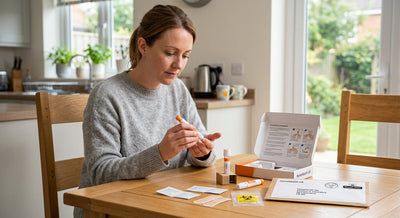
An at-home test can help you collect laboratory-processed data privately and prepare questions for your GP. It does not diagnose pernicious anaemia, identify the cause of deficiency or replace clinical care.
Vitall Check’s Essential Vitamins & Nutritional Health Test includes vitamin B12, active B12 and folate, alongside other nutritional markers. Samples are processed by UKAS-accredited laboratories working to NHS-grade standards, with results available within 48 hours after the laboratory receives a suitable sample.
STEP 1: Check the preparation instructions
Read the official how to collect your sample guide before opening the lancet.
For this nutritional test, the product instructions advise a morning sample before 10:00 am and an eight-hour fast, with water allowed. Always follow the instructions for your specific kit.
STEP 2: Drink water and warm your hands
Hydration can make collection easier. Warm your hands in comfortably warm water for a few minutes, then dry them fully.
Your fingers are a little like a tap. Cold hands and dehydration can slow the flow; warmth and water may help it along.
STEP 3: Prepare your workspace
Place the lancet, collection tube, wipes, labels and return packaging on a clean, flat surface.
Sit down before you begin if you feel nervous. A small pinch is normal, but stop if you feel faint or uneasy.
STEP 4: Collect the sample carefully
Clean the chosen finger as instructed. Use the lancet once. Let the blood form naturally and avoid squeezing aggressively.
Fill the tube to the marked line. An under-filled sample may not contain enough blood for every requested marker.
STEP 5: Label and post it promptly
Record the collection date and time. Check that the label matches your order. Pack the sample exactly as instructed and post it on the required day.
Some people find finger-prick collection difficult. That is normal. Contact the provider if you cannot collect enough blood or if you need help.

What should you do with your result?
Read the B12, active B12 and folate results together with their units and reference ranges.
Then write down:
- Your main symptoms and when they started
- Your diet
- Your medicines and supplements
- Any previous stomach or bowel surgery
- Any relevant family or medical history
Take this information to your GP if you have symptoms, a result outside the reference range or a result that does not seem to match how you feel.
You may also want to read our complete guide to at-home blood testing in the UK for more on preparation, laboratory processing and informed GP conversations. If tiredness is your main concern, our Ferritin Test UK guide explains why iron stores can also matter.
Key takeaways
Vitamin B12 supports your nerves and red blood cells. Deficiency can cause fatigue, pins and needles, brain fog, mouth ulcers, low mood and breathlessness, with or without anaemia.
A home test can provide useful, lab-verified insight. It cannot diagnose B12 deficiency, pernicious anaemia or the cause of your symptoms.
Use the result as a starting point for a better GP conversation. Vitall Check is not CQC registered and does not diagnose, treat, prescribe or provide medical advice.
FAQ
Q: What are the first signs of vitamin B12 deficiency? A: Common signs include tiredness, pins and needles, numbness, brain fog, mouth ulcers, low mood, weakness and breathlessness. These symptoms can have other causes, so testing and clinical review may be needed.**
Q: Can a vitamin B12 test be done at home in the UK? A: Yes. Some private services use a finger-prick sample processed by a laboratory. Follow the official collection guide carefully, and use the result for insight and GP preparation rather than diagnosis.**
Q: Can you have B12 deficiency with a normal blood test? A: You can have symptoms even when a result appears within the laboratory reference range. Your GP may consider your symptoms, risk factors, other tests and whether further investigation is needed.**
Author
Vitall Check Editorial Team
The Vitall Check Editorial Team is dedicated to empowering individuals with evidence-based health information and clear, actionable insights. Every article is researched using peer-reviewed journals and official health resources, reflecting our commitment to the same high standards of accuracy as our laboratory testing services. Our goal is to make proactive wellness accessible, data-driven, and transparent.
Disclaimer: Vitall Check is not CQC registered. The content provided is for general information only, does not provide a diagnosis, and does not replace advice from a qualified healthcare professional. Our services do not include treatment, prescription, or medical advice that falls under CQC-regulated activities. Always consult with your GP or a qualified clinician before making significant changes to your healthcare regimen.