You have likely been there: waking up after eight hours of sleep yet still feeling like you have walked a marathon before your first coffee. You might have mentioned it to friends, only to be told that being tired is just part of modern life. But when your hair starts thinning, your concentration slips, and you feel breathless climbing a single flight of stairs, "just being busy" stops feeling like a valid explanation. Often, the culprit is hiding in your blood, but it is not the marker most people think to check. While many ask for a basic iron test, the real story of your energy levels is written in your ferritin.
TL;DR:
- Ferritin measures your body's iron stores, acting like a backup battery for your energy levels.
- A standard iron test only shows what is in your blood right now, whereas ferritin shows your long-term reserves.
- Many people fall into the "normal" lab range but still experience significant fatigue, hair loss, and brain fog.
- Low ferritin is often the first stage of iron deficiency, appearing long before full-blown anaemia shows up on a test.
- Understanding your ferritin levels helps you arrive informed for your next GP appointment with data-driven insights.
What's a ferritin test? A ferritin test measures the amount of a protein called ferritin in your blood, which directly correlates to how much iron your body has in storage. Unlike a standard serum iron test that shows iron currently circulating, ferritin reveals your long-term reserves. It is the most reliable marker for identifying iron deficiency before it progresses to anaemia.
The Savings Account vs the Cash in Your Wallet
To understand why a ferritin test UK is so critical, it helps to think of your body’s iron like your personal finances. Imagine that the iron circulating in your blood is the cash you have in your wallet. It is what you are using right this second to pay for things. Your ferritin, on the other hand, is your savings account. When your wallet is empty, you dip into your savings to keep things running.
A standard serum iron test only looks at your wallet. If you just ate a meal rich in iron, your wallet might look full, even if your savings account is completely empty. This is why a simple iron test can be misleading. You could have "normal" iron levels today, but if your ferritin is low, your savings are depleted. Eventually, the wallet runs dry, the savings are gone, and your body starts to struggle. This final stage is what clinicians call iron-deficiency anaemia, but you can feel the effects of low savings, low ferritin, long before you reach that point.

Why Your Battery Feels Like It Won't Charge
Another way to look at ferritin is as the charge in your internal battery. Iron is essential for producing haemoglobin, the protein in red blood cells that carries oxygen to your brain, muscles, and organs. When your ferritin levels drop, your body becomes less efficient at moving that oxygen around. It is like trying to run a high-performance laptop on a battery that only holds a 10% charge. You can still turn it on, but the screen is dim, the processor is slow, and it might shut down unexpectedly.
According to the NHS guidance on iron deficiency, this lack of "oxygen transport" is why fatigue is the most common symptom. But it is rarely just about being tired. Low iron stores can manifest as a persistent "brain fog" where you struggle to find the right words or lose your train of thought mid-sentence. You might also notice physical signs like brittle nails, a sore tongue, or even strange cravings for non-food items like ice or paper, a condition known as pica.
The Trap of the "Normal" Range
One of the biggest frustrations for those seeking a ferritin test UK is being told their results are "normal" despite feeling terrible. Clinical reference ranges are often very broad. For example, a lab might classify anything between 15 and 300 µg/L as normal for a man. However, research suggests that many people begin to feel the symptoms of iron depletion, such as hair thinning and significant fatigue, when their levels drop below 30 or 50 µg/L.
The World Health Organisation (WHO) suggests that a ferritin level below 15 µg/L indicates a complete absence of iron stores, but the "grey area" between 15 and 50 µg/L is where most people suffer in silence. In this range, you aren't clinically anaemic yet, so a standard Full Blood Count (FBC) might look fine. But because your savings account is nearly empty, your body is already starting to ration energy. This is why getting a Fitness Health Check that includes ferritin is so valuable; it gives you the context to see where you sit within that broad range.

The Endurance Engine: Ferritin for Athletes
If you are an athlete or a fitness enthusiast, your relationship with iron is even more demanding. Think of iron like the fuel in your tank. During intense exercise, especially endurance activities like running or cycling, your body loses iron through sweating, minor gastrointestinal bleeding, and even the physical impact of your feet hitting the ground (a phenomenon called "foot-strike haemolysis").
For those pushing their physical limits, a ferritin level that is "fine" for a sedentary person might be nowhere near enough to support high-level performance and recovery. When stores are low, your muscles cannot get the oxygen they need to recover from a session, leading to longer periods of soreness and a plateau in your progress. Athletes often benefit from monitoring these levels through an Active Lifestyle Panel to ensure their "fuel tank" isn't running on fumes, as low iron stores are one of the most common reasons for unexplained performance drops in the UK sporting community.
Arriving Informed for Your GP Conversation
The goal of at-home testing isn't to bypass your doctor; it is to make your time with them more productive. The UK healthcare system is under immense pressure, and appointments are often short. If you can walk into your surgery with a lab-verified report from a UKAS-accredited facility, you are no longer just saying "I feel tired." Instead, you are saying, "I have evidence that my ferritin levels are at the bottom of the reference range, and I’d like to discuss how this might be linked to my symptoms."
This data-driven approach acts as a "pressure valve" for the NHS. It allows you to do the initial legwork and provides your GP with a clear starting point. By using a service like Vitall Check, which processes samples in the same labs used by the NHS, you ensure that your data is high-quality and professional. Whether you choose a Basic Health Check or a more comprehensive Advanced Organ & Immune Function Test, you are taking a proactive step toward understanding your own biology.

How to Get the Best From Your Test
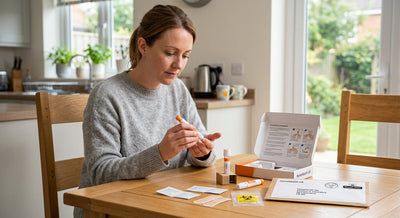
Collecting a finger-prick sample at home is straightforward, but it does require a little preparation to ensure a smooth process. Think of it like preparing for a small DIY project, having everything laid out beforehand makes all the difference. Hydration is your best friend here; drinking plenty of water in the 24 hours before your test makes your blood flow much more easily.
It is also helpful to get your blood pumping slightly before you start. A quick walk around the house or even just swinging your arms for a minute can help. Most importantly, ensure your hands are very warm, soaking them in warm water for a few minutes is a great trick. While some people find the idea of a finger-prick a bit daunting, it is a quick process that provides a wealth of information. Always follow the official collection guide included in your kit to ensure your sample is perfect for the lab.
Moving Beyond the "Off" Feeling
Understanding your ferritin is about more than just fixing fatigue; it is about reclaiming your quality of life. When your iron stores are healthy, your "savings account" is full, and your "internal battery" can hold a proper charge. You stop surviving the day and start living it. Whether that means having the energy to play with your children after work, hitting a new personal best in the gym, or simply being able to focus on a book for more than ten minutes, the insights from a ferritin test UK can be the key that unlocks that door.
If you have been feeling "off" for a while and haven't found answers, looking at your iron reserves is a logical next step. It is a simple, data-backed way to rule out one of the most common, yet most overlooked, causes of physical and mental exhaustion in the UK today.

Summary: Your Ferritin Takeaways
Monitoring your ferritin is one of the most effective ways to take control of your health data. By identifying low stores early, you can take action before they develop into more serious conditions like anaemia. Remember that "normal" on a lab report is a broad range, not a personalised recommendation. By combining lab-verified results with an easy-to-understand Insight Report, you can finally translate those "I'm just tired" feelings into a clear health action plan.
FAQ
Is a ferritin test better than an iron test? Yes, for most people. A ferritin test measures your stored iron (your reserves), whereas a standard iron test only measures what is in your blood at that moment. Ferritin is a much more reliable indicator of long-term iron status.
What are the signs of low ferritin? Common signs include persistent fatigue, shortness of breath, pale skin, heart palpitations, hair loss, and "brain fog" or difficulty concentrating.
Can I have low ferritin but normal haemoglobin? Absolutely. This is known as "iron deficiency without anaemia." Your body is dipping into its iron stores to keep your red blood cell count normal, but those stores are becoming depleted, which can still cause significant symptoms.
How long does it take to see results? With Vitall Check, once your sample reaches our UKAS-accredited lab, your results are typically ready within 48 hours. You will receive a secure digital report with clear insights.
Should athletes check their ferritin? Yes. Athletes often have higher iron demands due to training load and can lose iron through sweat and physical impact. Monitoring ferritin helps ensure performance isn't being hindered by depleted reserves.
Author: Vitall Check Editorial Team The Vitall Check Editorial Team is dedicated to empowering individuals with evidence-based health information and clear, actionable insights. Every article is researched using peer-reviewed journals and official health resources, reflecting our commitment to the same high standards of accuracy as our laboratory testing services. Our goal is to make proactive wellness accessible, data-driven, and transparent.
Disclaimer: Vitall Check is not CQC registered. The content provided is for general information only, does not provide a diagnosis, and does not replace advice from a qualified healthcare professional. Our services do not include treatment, prescription, or medical advice that falls under CQC-regulated activities. Always consult with your GP or a qualified clinician before making significant changes to your healthcare regimen.