Being tired all the time can have a straightforward explanation. Or it can be several things piling up: poor sleep, a heavy workload, training without enough recovery, or a health issue worth checking.
A blood test can offer clues, but it can’t tell the whole story. Here’s what you might discuss with your GP, and what a test can’t measure.
TL;DR:
- There isn’t one blood test that explains every case of tiredness.
- Depending on your symptoms and history, a GP may consider tests for anaemia, iron stores, B12 and folate, vitamin D, thyroid function, blood sugar, kidney function or liver function.
- Sleep debt, stress and training load matter too, but don’t show up as a simple result on a blood report.
- An at-home test can provide a baseline to discuss with your GP. It doesn’t diagnose or replace medical care.
- Finger-prick collection may take preparation. Warm hands, drink water and follow the official collection guide.
What blood tests may be worth discussing if you’re tired all the time? Depending on your symptoms and health history, a GP may consider a full blood count, ferritin and iron studies, B12 and folate, thyroid function, HbA1c, or kidney and liver tests. Vitamin D testing may also be relevant in some circumstances.
What might a GP check for persistent tiredness?
There’s no standard checklist that suits everyone. Your GP may first ask when the tiredness began, how it affects daily life, how you sleep, what medicines you take, and whether you’ve noticed other symptoms.
The NHS advises speaking to your GP if you’ve been tired for a few weeks without knowing why, if it affects your daily life, or if you have other symptoms. A blood test is one possible part of that assessment, not the whole investigation.
Here are some tests you may hear about.
Full blood count: a first look at your blood cells
A full blood count (FBC) measures different types of blood cells. It can help identify patterns linked with anaemia, including the amount of haemoglobin. The part of red blood cells that carries oxygen.
Think of it as a basic headcount: it tells you about several types of cells, but not every reason you might feel tired. If the results or your symptoms suggest it, your GP may consider more tests.
Ferritin and iron studies: looking beyond the FBC
Ferritin gives an indication of the iron stored in your body. You can picture those stores as a savings pot. An FBC and ferritin answer different questions, so a GP may consider both if your symptoms, history or other results make iron a possible factor.
Iron-related tests may be relevant if you have heavy periods, follow a restrictive diet, are pregnant, or have symptoms such as breathlessness or noticeable heartbeats. But tiredness alone doesn’t prove you have low iron. The NHS guide to iron-deficiency anaemia explains some signs and how a GP may investigate them.
Don’t start iron supplements just because you feel tired. Ask a qualified healthcare professional whether testing or supplements are suitable for you.
B12 and folate: nutrients involved in making blood cells
Vitamin B12 and folate help your body make red blood cells. B12 also supports the nervous system. If you have symptoms such as unusual tiredness, weakness or pins and needles, your GP may consider whether these tests fit your situation.
The NHS information on B12 or folate deficiency explains that symptoms can happen with or without anaemia. Your diet, medicines and health history can all help your GP decide what to check.

Vitamin D: a possible piece of the picture
Vitamin D helps your body manage calcium and phosphate, which support healthy bones and muscles. Tiredness on its own doesn’t show that you have low vitamin D, and a test won’t explain every cause of fatigue.
Your GP can advise whether testing makes sense based on your symptoms and circumstances. You can read the NHS overview of vitamin D for information about its role in the body.
Thyroid function: checking the body’s “thermostat”
The thyroid makes hormones that help control how quickly many body processes work. Tests may include TSH and T4. TSH is a signal involved in controlling the thyroid; T4 is one of the thyroid hormones measured in blood.
Imagine a thermostat sending a message to a heating system. The message and the system’s response need to be considered together. One result doesn’t explain all symptoms by itself.
Tiredness can be one symptom of an underactive thyroid, but it can also have many other causes. The NHS guide to underactive thyroid explains how a GP may assess it.
HbA1c: a longer view of blood sugar
HbA1c estimates your average blood sugar over roughly the past two to three months. It’s more like a term report than a single test score. It does not show every rise and fall in your blood sugar during the day.
A GP may consider blood sugar testing as part of a wider check, depending on your symptoms and history. The NHS explains how type 2 diabetes is diagnosed with a blood test.
Kidney and liver tests: useful context, not a full explanation
Kidney and liver blood tests may be considered as part of an assessment, depending on your health history, symptoms and other findings. They give information about certain aspects of organ function, but they don’t identify the cause of tiredness on their own.
If you exercise regularly, mention your training routine. Muscle mass, hydration and recent hard training can affect the context in which some results are read. Your GP can consider those details alongside the full report.
Why tiredness is rarely just one thing
Blood tests can check some physical clues. They can’t measure how many late nights you’ve had, whether you’re under sustained pressure, or whether your training plan leaves enough time to recover.
Those details matter. Think of the test as one dashboard in a car: useful for checking certain signals, but it doesn’t tell you where you’ve driven or how carefully you’ve maintained the engine.
If you train hard, keep a short record of your sessions and recovery before testing. Note recent intense workouts, any changes in your routine and how you’ve been sleeping. That context can help you have a more useful conversation with your GP.

If tiredness has been going on for weeks, is getting worse or is affecting everyday life, arrange a GP appointment. Blood testing should support that conversation, not delay it. For a broader overview, read our Health Hub guide to blood tests for tiredness.
Could an at-home fatigue blood test help?
An at-home test can give you a snapshot of selected markers. Use it as a baseline to help prepare for a GP consultation, not as a diagnosis or a substitute for care.
Check which markers a panel actually includes before choosing one. For example, Vitall Check offers an Essential Vitamins & Nutritional Health Test, a Thyroid Health & Function Test and a Baseline Internal Health & Function Screen. These panels cover different markers; no single panel should be assumed to include everything discussed in this article.
Samples are processed by UKAS-accredited laboratories working to NHS-grade standards, with lab-verified results in 48 hours. The Insight Report is a plain-English manual that translates raw results into information that’s easier to understand and can help you prepare questions for your GP. It doesn’t diagnose, treat or provide medical advice.
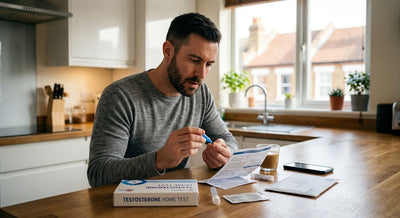
Finger-prick collection may take a little preparation, and some people find it challenging. Warm your hands, drink water if your instructions allow, and follow the official how to collect your sample guide. Follow the instructions for your specific panel, including any timing or fasting guidance. If you feel faint or uneasy, pause and sit down safely.
Vitall Check is not CQC registered and does not diagnose, treat, prescribe or provide medical advice.
Summary: use results to arrive informed
If you’re tired all the time, there isn’t one fatigue blood test that explains every case. Depending on your symptoms and history, your GP may consider an FBC, ferritin and iron studies, B12 and folate, vitamin D, thyroid function, HbA1c, or kidney and liver tests.
Sleep, stress and training load matter too. Use blood results as one piece of the picture, and take your questions and relevant context to your GP.
Frequently asked questions
Q: What blood test should I ask about if I’m tired all the time? A: There isn’t one test for everyone. Ask your GP which checks fit your symptoms and history; they may consider an FBC, ferritin, thyroid function, HbA1c or other tests.
Q: Can a blood test show exactly why I’m tired? A: No. Blood tests can check some possible causes, but they can’t measure sleep debt, stress or training load, and they don’t replace a wider assessment.
Q: Can an at-home fatigue blood test replace a GP appointment? A: No. It can provide a baseline to discuss with your GP, but it doesn’t diagnose or replace advice from a qualified healthcare professional.
Author
Vitall Check Editorial Team
The Vitall Check Editorial Team is dedicated to empowering individuals with evidence-based health information and clear, actionable insights. Every article is researched using peer-reviewed journals and official health resources, reflecting our commitment to the same high standards of accuracy as our laboratory testing services. Our goal is to make proactive wellness accessible, data-driven, and transparent.
Disclaimer: Vitall Check is not CQC registered. The content provided is for general information only, does not provide a diagnosis, and does not replace advice from a qualified healthcare professional. Our services do not include treatment, prescription, or medical advice that falls under CQC-regulated activities. Always consult with your GP or a qualified clinician before making significant changes to your healthcare regimen.