A thyroid blood test can look like a jumble of letters and numbers. The useful bit is understanding what each marker measures, and what it can’t tell you on its own.
TL;DR:
- TSH is the signal telling your thyroid how hard to work.
- Free T4 is the main thyroid hormone in your blood; Free T3 is the more active form your body uses.
- High or low results can suggest a pattern, but they don’t diagnose a condition by themselves.
- Your lab’s reference ranges, symptoms and health history all matter.
- Use your results to prepare for a GP conversation, not replace one.
What do TSH, T3 and T4 mean in thyroid blood test results? TSH is the signal that prompts your thyroid to work; T4 is the main hormone it makes, and T3 is the more active form used by your body. Together, they help show how your thyroid is working, but results need clinical context.
What do TSH, T4 and T3 each mean?
Think of your thyroid as a heating system. TSH is the thermostat’s instruction to make more or less heat. T4 is like stored fuel, while T3 is the fuel your cells can use more directly. The markers work together, so one number rarely tells the whole story.
TSH: the signal
TSH stands for thyroid-stimulating hormone. Your pituitary gland, in your brain, makes it to tell your thyroid to produce hormones.
A higher TSH can suggest your pituitary is asking the thyroid to work harder. A lower TSH can suggest it is asking for less. These patterns can be linked with an underactive or overactive thyroid, but they are not a diagnosis.
For most adults being checked for thyroid problems, NICE recommends measuring TSH first. Depending on the result, a lab may also measure Free T4 or Free T3 in the same sample. Read the NICE recommendations for thyroid testing.
Free T4: the main hormone supply
T4, or thyroxine, is the main hormone made by your thyroid. Free T4 is the portion available in your blood rather than attached to proteins.
A low Free T4 alongside high TSH can fit a pattern seen with an underactive thyroid. A high Free T4 alongside low TSH can fit a pattern seen with an overactive thyroid. Your GP needs to interpret the result with the rest of your information.
Free T3: the more active form
T3, or triiodothyronine, is the more active thyroid hormone. Much of it is made when your body converts T4 into T3.
Free T3 can help add context, particularly when TSH is low. It is not always the main marker used when checking for an underactive thyroid. Picture T4 as fuel in a tank and T3 as fuel being used by the engine: they are related, but they are not the same measurement.
The NHS explains that an overactive thyroid means the gland produces too much thyroid hormone, while an underactive thyroid means it does not make enough. The blood test pattern helps a GP decide what to look into next. Read the NHS pages on overactive thyroid and underactive thyroid.

What do thyroid antibodies show?
Thyroid antibodies are substances made by the immune system. Some antibody tests, such as TPO antibodies, can help a GP check whether an autoimmune process may be involved.
An antibody result does not measure the amount of thyroid hormone in your blood, and a positive result does not diagnose a thyroid condition on its own. It is one more clue for your GP to consider alongside your hormone results and symptoms.
Why do reference ranges matter?
A reference range is the interval a laboratory uses to show how a result compares with its expected values for that test. Always check the range printed beside your result. Different labs may use different methods and ranges, so a number found online might not match your report.
Also, “in range” does not automatically explain how you feel. Your symptoms, health history, medicines, supplements and earlier results may all add context. A single result is like one frame from a film: it can be useful, but it doesn’t show everything that happened before or after.
The NHS lists tiredness as having many possible causes, which is one reason symptoms and blood results need to be considered together. If you have ongoing symptoms, speak to your GP even if a result falls within its reference range.

What should you do with your thyroid results?
1. Check the full report. Note each result, its units and the laboratory’s reference range. Don’t compare your numbers with someone else’s report.
2. Write down what’s been going on. Record your symptoms, when they began and whether they have changed. Note any medicines or supplements, including biotin. NICE says high biotin intake from supplements can affect thyroid test results.
3. Ask your GP what the pattern means. You could ask whether Free T4, Free T3 or antibody testing is relevant, and whether repeat testing makes sense. NICE recommends considering a repeat test if symptoms worsen or new symptoms develop, but not sooner than six weeks after the most recent test.
4. Don’t change treatment based on a number alone. If you take thyroid medicine, don’t start, stop or adjust it without discussing it with your GP or qualified clinician.

Can you test thyroid markers at home?
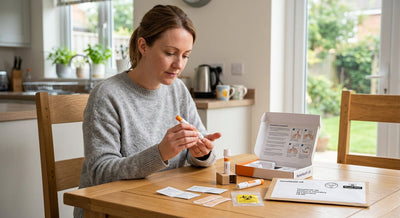
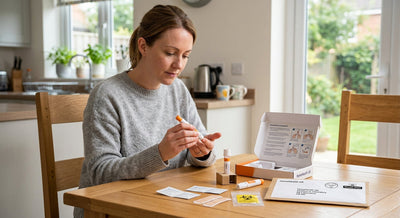
At-home testing can be a convenient way to collect a sample and see your results before a GP conversation. Vitall Check samples are processed by UKAS-accredited laboratories to NHS-grade standards. The Insight Report translates raw numbers into results in plain English; it does not provide a diagnosis or medical advice.
Finger-prick collection can be challenging for some people. Drink water, warm your hands first and follow the official how to collect your sample guide closely. If you’re comparing results over time, follow the collection instructions each time and note any relevant changes in your health or supplements.
You can read the Health Hub’s complete guide to underactive thyroid testing, explore the Thyroid Health & Function Test, or see the Advanced Thyroid Health & Metabolism Panel.
Summary / Takeaway
TSH is the signal, Free T4 is the main hormone supply, and Free T3 is the more active form your body uses. High or low results can point towards a pattern, but no single marker gives the whole answer.
Read your report alongside its reference ranges, note your symptoms and take your questions to your GP. A test can help you arrive informed; it cannot diagnose a thyroid condition or replace clinical care.
FAQ
Q: Can an at-home thyroid blood test replace a GP visit? A: No. It can give you results to discuss and help you arrive informed, but it does not diagnose or replace advice from your GP or a qualified clinician.
Q: Are finger-prick thyroid tests as accurate as venous blood draws? A: A finger-prick sample can provide useful lab results when collected correctly and processed by an accredited laboratory. Collection quality matters, so follow the official sample guide; ask your GP if you need help interpreting a result.
Q: Can thyroid results be in range if I still have symptoms? A: Yes. A result within its reference range may not explain ongoing symptoms. Discuss your symptoms and results with your GP, who can consider the wider picture and whether further checks are needed.
Author
The Vitall Check Editorial Team
The Vitall Check Editorial Team is dedicated to empowering individuals with evidence-based health information and clear, actionable insights. Every article is researched using peer-reviewed journals and official health resources, reflecting our commitment to the same high standards of accuracy as our laboratory testing services. Our goal is to make proactive wellness accessible, data-driven, and transparent.
Disclaimer: Vitall Check is not CQC registered. The content provided is for general information only, does not provide a diagnosis, and does not replace advice from a qualified healthcare professional. Our services do not include treatment, prescription, or medical advice that falls under CQC-regulated activities. Always consult with your GP or a qualified clinician before making significant changes to your healthcare regimen.