Weight-loss injections are everywhre online. Now, the so-called “Godzilla shot” retatrutide is creating even more noise.
A recent Cosmopolitan UK report explored how influencers are promoting unlicensed retatrutide through online markets and social media. The problem is simple: viral popularity is not the same as medical approval, safe manufacturing or proper monitoring.
If you are considering GLP-1 weight loss in the UK, you need more than a before-and-after video. You need to understand the medicine, the risks, your metabolic health and where blood testing fits into a proper conversation with a GP or pharmacist.
TL;DR:
- Semaglutide and tirzepatide are licensed UK medicines for specific uses. They require assessment and a prescription from a qualified healthcare professional.
- Retatrutide is not licensed for routine use in the UK. It remains an investigational medicine and should not be bought from social media, gyms or unregulated websites.
- Weight loss is only one part of metabolic health. Blood sugar, cholesterol, liver health, kidney function and inflammation can all add useful context.
- Common GLP-1 side effects include nausea, vomiting, diarrhoea and constipation. Severe or persistent symptoms need medical attention.
- At-home blood testing can provide useful baseline information when samples are processed by UKAS-accredited laboratories.
- A home test does not diagnose, prescribe or replace your GP. It can help you arrive at your appointment with clearer questions.
What’s the safest way to explore GLP-1 weight loss in the UK? Use a licensed medicine only through a qualified prescriber and registered pharmacy, and treat metabolic testing as supporting information, not a diagnosis or replacement for clinical care.
What are GLP-1 medicines?
GLP-1 stands for glucagon-like peptide-1. It is a hormone your body releases after eating.
GLP-1 medicines copy some of this hormone’s effects. They can help you feel fuller, slow the movement of food through your stomach and influence blood sugar control.
Think of GLP-1 as part of your body’s meal-time traffic system. After food arrives, it helps signal that the meal is being processed and that you may not need to keep eating. A medicine that acts on this pathway can change appetite and food intake.
Some medicines also work on other hormone pathways:
- Semaglutide acts on the GLP-1 receptor.
- Tirzepatide acts on both GLP-1 and GIP receptors.
- Retatrutide is an investigational triple agonist that targets GLP-1, GIP and glucagon receptors.
These are not interchangeable products. They have different licences, evidence bases, doses, side-effect profiles and prescribing rules.
The UK government’s official GLP-1 medicine guidance explains that GLP-1 medicines are prescription-only and authorised for particular medical uses. A medicine being discussed online does not mean it is authorised for everyone who wants to lose weight.
Licensed UK options: semaglutide and tirzepatide
Semaglutide
Semaglutide is available under several brand names, including:
- Wegovy, which is licensed for weight management in eligible adults.
- Ozempic and Rybelsus, which are licensed for type 2 diabetes rather than routine weight loss.
The brand and the medical reason for prescribing matter. You should not assume that one semaglutide product can be swapped for another without professional advice.
The NICE guidance for semaglutide covers its use for managing overweight and obesity in adults. Eligibility and access depend on clinical factors and the pathway available to you.
Tirzepatide
Tirzepatide is sold in the UK as Mounjaro. It acts on GLP-1 and GIP pathways and is licensed for type 2 diabetes and weight management in specific circumstances.
The NICE guidance for tirzepatide sets out recommendations for managing overweight and obesity in adults. This does not mean that tirzepatide is suitable for every person who wants to lose weight.
A qualified prescriber needs to consider your medical history, current medicines, symptoms and possible risks. A pharmacist may also be able to explain how a prescribed treatment should be used and when to seek further help.
What does “licensed” mean?
A licensed medicine has been assessed by the UK medicines regulator for specified uses. It does not mean that the medicine is risk-free. It means there is a regulated product, an evidence base for particular indications and approved information about how it should be supplied and used.
You still need individual medical assessment.
Retatrutide and the viral “Godzilla shot”
Retatrutide has become a viral topic because early trial results showed substantial weight loss at higher doses. In a phase 2 study published in the New England Journal of Medicine, the highest dose studied was associated with a mean weight reduction of 24.2% at 48 weeks.
That is a research result. It is not a promise for an individual. It also does not make retatrutide a licensed weight-loss treatment.
You can read the original NEJM retatrutide phase 2 trial for the study design and results.
Retatrutide is still investigational. It is not licensed for routine use in the UK. Products sold online as “research peptides”, “triple agonist pens” or “Godzilla shots” may not contain what the label says. They may also have an unknown strength, contamination risk or unsafe storage history.
This is the key difference:
| Medicine | What it does | UK position |
|---|---|---|
| Semaglutide | GLP-1 receptor agonist | Licensed for specified uses, including weight management under Wegovy |
| Tirzepatide | GLP-1 and GIP receptor agonist | Licensed for specified uses, including weight management under Mounjaro |
| Retatrutide | Investigational GLP-1, GIP and glucagon receptor agonist | Not licensed for routine use in the UK |
Do not buy retatrutide or any unlicensed injectable from social media, a beauty salon, a gym contact or a website that does not require a proper consultation.
The MHRA states that legitimate GLP-1 medicines should be supplied through a registered pharmacy following a prescription from a healthcare professional. If you are unsure whether an online pharmacy is legitimate, check the relevant pharmacy register before buying.
Weight loss is not the same as metabolic health
Body weight is one measure. It is not a full report card on your health.
Metabolic health describes how your body manages energy, blood sugar, fats and other systems that work together. Two people can lose the same amount of weight and have very different blood-test results.
Imagine your body as a car. Weight is one visible feature, like the outside colour. Metabolic markers are closer to the dashboard: fuel use, engine temperature, oil pressure and warning lights. One does not replace the others.
That is why a sensible GLP-1 conversation may include:
- Blood sugar control.
- Cholesterol and triglycerides.
- Liver enzymes.
- Kidney function.
- Inflammation markers.
- Blood pressure and waist measurements.
- Your symptoms, medical history and current medicines.
Blood testing should provide context, not become another source of anxiety. A result outside a laboratory reference range is a reason to discuss the result with a clinician. It is not a diagnosis by itself.
Key metabolic markers to understand
1. HbA1c: your longer-term blood sugar picture
HbA1c reflects your average blood sugar over roughly the previous two to three months. It is sometimes called your body’s glucose memory because it provides a broader view than one reading after one meal.
The NHS explanation of HbA1c and high blood sugar explains how the test is used and how results may relate to diabetes.
HbA1c can help show whether blood sugar has been higher than expected over time. It does not explain every symptom and it cannot, on its own, tell you why a result is outside a reference range.
Your GP may interpret HbA1c alongside:
- Your symptoms.
- Family history.
- Medicines.
- Weight and waist measurements.
- Other blood results.
- Previous readings.
At-home testing may offer a useful snapshot, but a result suggesting diabetes or another clinical concern needs proper follow-up. Do not start, stop or change medication based on a home report.
2. Fasting glucose
Fasting glucose measures blood sugar after a period without food. It is different from HbA1c, which reflects a longer period.
A single glucose result can be affected by stress, illness, sleep, exercise, hydration and the timing of your last meal. It is more like taking one photograph, while HbA1c is closer to looking through a short video.
Your clinician may request fasting glucose or other tests depending on your history. Follow the instructions supplied with your chosen test. If fasting is required, water is usually allowed, but check the official instructions.
3. Lipids: cholesterol and triglycerides
A lipid profile can include:
- Total cholesterol.
- HDL cholesterol.
- LDL cholesterol.
- Non-HDL cholesterol.
- Triglycerides.
The NHS guide to cholesterol levels explains what these different types mean.
Cholesterol is not a single “good” or “bad” number. It is more like a team sheet. Each marker has a different role, and your overall cardiovascular picture depends on the group rather than one result alone.
Weight loss can change lipid results, but your result still needs to be read alongside age, blood pressure, smoking status, diabetes risk, family history and existing cardiovascular disease.
4. Liver enzymes
Liver blood tests may include ALT, AST, GGT, ALP, bilirubin and albumin.
These markers can provide clues about how the liver and bile system are working. They can also be affected by alcohol, medicines, recent illness, muscle damage, intense exercise and other factors.
The Specialist Pharmacy Service guide to liver blood tests explains why these markers are interpreted as patterns rather than in isolation.
This matters if you train hard. AST can rise after strenuous exercise because it is also found in muscle. A mildly raised ALT may have several possible explanations, including recent training, alcohol, medicines or liver changes. It should not be self-diagnosed from a dashboard.
A liver result is a signpost, not a final destination. Your GP may repeat the test or request other investigations if needed.
5. Kidney function
Kidney tests commonly include creatinine, urea and eGFR.
The NHS explains in its chronic kidney disease diagnosis guidance that creatinine is used to calculate eGFR, an estimate of how efficiently the kidneys filter waste from the blood.
Creatinine can be influenced by muscle mass, hydration and protein intake. This is particularly relevant if you lift weights or have a high level of muscle mass.
Vomiting and diarrhoea can also cause dehydration. If you are taking a prescribed GLP-1 medicine and have persistent gastrointestinal symptoms, speak to your prescriber or pharmacist. Do not wait for a private blood test to manage severe symptoms.
6. CRP and inflammation
C-reactive protein, or CRP, is a marker that can rise when inflammation is present. It is not a diagnosis and does not identify the cause by itself.
The NHS Inform guide to common blood tests explains that CRP is produced by the liver and that higher levels can indicate inflammation.
CRP may be raised after an infection, injury or hard training session. It can also be influenced by longer-term health conditions. Timing matters, especially if you have recently been ill or completed an unusually demanding workout.
A raised CRP is like a smoke alarm. It tells you that something may need checking, but it does not tell you whether the cause is burnt toast or a larger problem.

What side effects should you know about?
GLP-1 medicines can cause side effects. Gastrointestinal symptoms are among the most common.
You may experience:
- Nausea.
- Vomiting.
- Diarrhoea.
- Constipation.
- Stomach discomfort.
- Feeling full quickly.
- Reduced appetite.
- Headache or fatigue.
These symptoms may be more noticeable when treatment is started or when the dose changes. However, you should not assume that severe symptoms are simply part of the process.
The MHRA’s GLP-1 guidance highlights the risk of dehydration after significant vomiting or diarrhoea. It also explains that severe, ongoing stomach pain may be a sign of acute pancreatitis and needs urgent medical help.
Seek urgent help if you have:
- Severe stomach pain that does not go away, particularly if it travels through to your back.
- Persistent vomiting or signs of severe dehydration.
- Sudden loss of vision or rapid changes in eyesight.
- A suspected allergic reaction.
- Symptoms that feel severe, unusual or rapidly worsening.
If you are pregnant, trying to become pregnant or breastfeeding, speak to a qualified healthcare professional before using a GLP-1 medicine. You should also tell your healthcare team before surgery or deep sedation.
Do not change your dose, switch medicines or stop treatment without speaking to your prescriber.
How at-home metabolic testing fits in
At-home testing can be useful when you want a baseline view of selected markers before a GP conversation or while tracking general health information over time.
Vitall Check samples are processed by UKAS-accredited laboratories using NHS-grade standards. Results are provided through a secure portal, with an Insight Report that translates raw laboratory data into plain-English explanations.
This is not a clinical review. It does not diagnose a condition or decide whether a medicine is suitable for you.
A relevant option may be the Female Weight Management Panel, which includes markers linked with blood sugar, hormones, kidney health, liver health and nutritional status. If you want a simpler starting point, the Basic Health Check Blood Test covers a smaller group of core markers.
Check the exact biomarker list before ordering. Different panels measure different things.
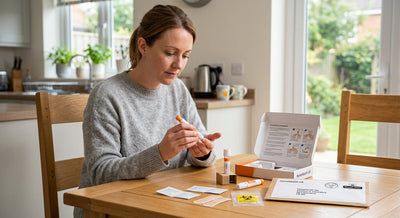
Prepare properly for a finger-prick sample
Finger-prick testing is convenient, but it is not magic. Collection can be challenging for some people.
For the best chance of a usable sample:
- Read the official how to collect your sample guide before you begin.
- Follow any fasting instructions for your chosen panel.
- Drink water unless your healthcare professional has told you not to.
- Warm your hands first.
- Avoid a heavy workout beforehand if the test instructions advise this.
- Take the sample at the requested time, especially if a morning sample is needed.
- Post the sample according to the return instructions.
If you feel faint or uneasy, stop and sit or lie down. It is completely reasonable to ask someone you trust to stay nearby.
If the sample does not fill to the marked line or the collection does not go smoothly, contact the testing provider rather than guessing what to do next.
How to use your results in a GP conversation
Your Insight Report is best used as a conversation starter.
Take the following to your appointment:
- The complete report, including units and laboratory reference ranges.
- A list of your medicines and supplements.
- The date and time you collected the sample.
- Any recent illness, intense exercise or changes in diet.
- Your symptoms and how long they have been present.
- Questions about whether repeat testing is needed.
Useful questions may include:
- “What does this result mean in the context of my medical history?”
- “Could this result be affected by my medicines, training or recent illness?”
- “Do I need a repeat test through the NHS?”
- “Would you recommend any further investigation?”
- “Is this medicine suitable for me, and what should I watch for?”
That is an informed arrival: you are not trying to diagnose yourself. You are giving your clinician clearer information to work with.
If muscle retention is part of your concern, read the Health Hub guide on GLP-1 muscle loss and lean mass. You can also browse the wider Health Hub for plain-English guides on liver, cholesterol and hormone testing.

The difference between useful data and unsafe self-treatment
Data can help you ask better questions. It cannot make an unlicensed product safe.
Be cautious if a seller:
- Promises dramatic results without discussing risks.
- Uses influencer testimonials instead of verifiable medicine information.
- Offers retatrutide for personal use outside a named clinical trial.
- Supplies a powder or vial that you must mix yourself.
- Does not ask about your medical history.
- Does not require a prescription.
- Claims blood testing alone proves that a medicine is safe for you.
- Encourages you to ignore symptoms because they are “normal”.
A proper healthcare pathway is slower than a viral video, but that is part of its purpose. Assessment, prescribing checks, pharmacy standards and follow-up are there to reduce avoidable harm.
Key takeaways
GLP-1 medicines can be an important treatment option for some people, but they are not casual wellness products.
Semaglutide and tirzepatide are licensed in the UK for specific uses and must be prescribed through an appropriate healthcare pathway. Retatrutide is still investigational and is not licensed for routine use. Products sold through unregulated online markets may be incorrectly labelled, contaminated or unsafe.
Metabolic health involves more than the number on the scales. HbA1c, fasting glucose, lipids, liver enzymes, kidney markers and CRP can provide useful context, but they must be interpreted alongside your history and symptoms.
At-home testing can help you arrive informed for a better GP conversation. Choose a relevant panel, follow the official collection instructions and use UKAS-accredited laboratory results as supporting information, not as a diagnosis.
Frequently asked questions
Q: Are semaglutide and tirzepatide licensed for weight loss in the UK? A: Yes, specific products are licensed for weight management in eligible people. Semaglutide is available as Wegovy for weight management, while tirzepatide is available as Mounjaro for specified uses. A qualified prescriber must assess whether treatment is suitable.
Q: Is retatrutide legal to buy for weight loss in the UK? A: Retatrutide is not licensed for routine use in the UK. It remains an investigational medicine, so products sold online or through social media outside an authorised clinical trial are unlicensed and may be unsafe.
Q: Can an at-home blood test tell me whether I should take a GLP-1 medicine? A: No. An at-home test can provide selected laboratory results and plain-English context, but it cannot diagnose you, prescribe medicine or decide whether treatment is suitable. Discuss results with your GP, prescriber or pharmacist.
Q: Which blood tests are useful before GLP-1 weight loss treatment? A: Depending on your circumstances, a healthcare professional may consider HbA1c, fasting glucose, cholesterol and triglycerides, liver enzymes, kidney function and sometimes inflammation markers. The appropriate tests and timing vary between people.
Q: What should I do if I have severe side effects from a GLP-1 medicine? A: Contact your prescriber or pharmacist promptly. Seek urgent medical help for severe persistent stomach pain, ongoing vomiting or dehydration, sudden changes in eyesight, or symptoms that feel severe or rapidly worsening.
Author
Vitall Check Editorial Team
The Vitall Check Editorial Team is dedicated to empowering individuals with evidence-based health information and clear, actionable insights. Every article is researched using peer-reviewed journals and official health resources, reflecting our commitment to the same high standards of accuracy as our laboratory testing services. Our goal is to make proactive wellness accessible, data-driven, and transparent.
Disclaimer: Vitall Check is not CQC registered. The content provided is for general information only, does not provide a diagnosis, and does not replace advice from a qualified healthcare professional. Our services do not include treatment, prescription, or medical advice that falls under CQC-regulated activities. Always consult with your GP or a qualified clinician before making significant changes to your healthcare regimen.