Your face is not a blood test. But if you have noticed dull skin, dark circles, hair shedding or a tired-looking complexion, it is fair to wonder whether something is happening beneath the surface.
That is why “ferritin face” has taken off online. The phrase is being used to describe facial changes that people associate with low iron stores. Recent coverage from The Conversation has added useful context to the trend.
The balanced answer is simple: iron deficiency can affect how you look and feel, but you cannot diagnose low ferritin by looking in a mirror or comparing two photographs taken in different lighting.
TL;DR:
- Ferritin stores iron. Think of it as your body’s iron savings account.
- Serum iron is different. It is the iron currently moving around your bloodstream.
- Low iron stores may affect energy, skin, hair and nails.
- You can have low ferritin with normal haemoglobin. This is iron deficiency without anaemia.
- Menstruating women, endurance runners, heavy trainers, vegetarians, vegans and regular blood donors may have a higher risk.
- Do not start iron supplements because of a TikTok video. Check your results and discuss them with your GP.
What's ferritin face? Ferritin face is a social media term for a tired, pale or dull-looking appearance that people associate with low iron stores. It is not a medical diagnosis, and only blood testing can assess ferritin.
What does “ferritin face” actually mean?
The trend usually points to:
- Dark circles under the eyes
- Pale, grey or washed-out-looking skin
- Dull or dry skin
- Facial puffiness
- Pale lips
- Hair shedding or thinning
- Brittle nails
There is a kernel of truth here. Iron is needed to make haemoglobin, the protein in red blood cells that carries oxygen around your body. Low iron can also affect other processes involved in energy production and tissue health.
When iron deficiency becomes significant, the NHS lists tiredness, breathlessness, paler skin, hair loss and nail changes among possible symptoms.
However, none of these signs belongs exclusively to iron deficiency. Poor sleep, stress, dehydration, allergies, genetics, hormonal changes, thyroid problems and other nutrient deficiencies can create a similar picture.
Your face is more like a weather forecast than a laboratory report. It may suggest that something has changed, but it cannot tell you exactly what.

Ferritin is your iron savings account
Ferritin is a protein that stores iron inside your cells. A small amount circulates in your blood, and that amount gives an indication of how much iron your body has in reserve.
A useful way to picture it is this:
- Ferritin: money kept in your savings account
- Serum iron: cash currently in your wallet
- Haemoglobin: the delivery vans carrying oxygen around your body
You can have cash in your wallet today but very little in savings. In the same way, serum iron can look acceptable at one moment while ferritin shows that your longer-term reserves are running low.
That is why a ferritin test UK search is more useful than looking for a single “ferritin face” checklist. A test gives you a number to interpret alongside your symptoms, full blood count and medical history.
Ferritin is also affected by inflammation, infection and some long-term conditions. A raised ferritin result does not automatically mean you have too much iron. It may reflect inflammation or another health factor. Context matters.
For a deeper explanation of results, read the Health Hub’s Ferritin Test: What Your Iron Stores Actually Say.
The ferritin gap: low stores but normal haemoglobin
This is the part many people miss.
You can have low ferritin while your haemoglobin is still within the laboratory reference range. This is called iron deficiency without anaemia.
Anaemia develops when haemoglobin falls low enough to reduce the blood’s oxygen-carrying capacity. But iron stores may start falling earlier. Your body can keep haemoglobin steady for a while by using its reserves.
That means a standard full blood count can look “fine” while ferritin is low.
A peer-reviewed review on non-anaemic iron deficiency explains that people may have a normal haemoglobin level alongside low ferritin and low or borderline transferrin saturation. Symptoms can include fatigue, reduced exercise tolerance, difficulty concentrating and irritability.
One commonly used research threshold is ferritin below 30 µg/L, but laboratories and clinical situations vary. Inflammation can make ferritin appear higher than the underlying iron stores suggest. Your result should be read against the reference range on your report and discussed with a qualified healthcare professional.
This is why “my haemoglobin was normal” does not always close the conversation.
Symptoms people search for
Low iron is often searched alongside:
- Tiredness that does not match your sleep
- Breathlessness when climbing stairs
- Reduced exercise tolerance
- Hair shedding
- Cold hands and feet
- Headaches or dizziness
- Brain fog or poor concentration
- Restless legs
- Paler skin
- Brittle or spoon-shaped nails
These symptoms are real possibilities, but they are not proof of low ferritin. Breathlessness, palpitations or dizziness can have many causes and should not be self-managed through supplements.
Seek medical advice promptly if symptoms are severe, worsening or affecting your daily life.
Who is more likely to have low ferritin?
Iron deficiency can affect anyone, but risk is higher in some groups:
- Menstruating women: regular blood loss can gradually reduce iron stores, particularly with heavy periods.
- Endurance runners and heavy trainers: training can increase iron demands. Sweat, small amounts of blood loss and repeated impact may contribute, while low energy intake can make it harder to replace iron.
- Vegetarians and vegans: plant-based foods can provide iron, but non-haem iron is absorbed differently from the haem iron found in meat and fish. The NHS iron guidance lists beans, nuts, dried fruit, fortified cereals and green vegetables as sources.
- Regular blood donors: repeated donations remove iron from the body and may reduce stored iron over time.
- People with gut conditions or ongoing blood loss: absorption problems and blood loss need proper clinical investigation.

Why athletes discuss ferritin differently
Sports clinicians often pay close attention to ferritin because iron supports oxygen transport, muscle energy systems and recovery from training.
An endurance runner may have a normal haemoglobin result but still experience reduced training tolerance if iron stores are low. Heavy training can also temporarily affect inflammation markers and iron handling. That makes timing, recent illness, diet, menstrual history and training load important when interpreting results.
Research in athletes uses different ferritin cut-offs, particularly around endurance training and altitude exposure. A 2023 peer-reviewed review of iron status and physical performance in athletes highlights that there is no single ferritin threshold that applies to every athlete.
In other words, sport-specific conversations may involve closer monitoring than a routine health check. They should still be based on blood results and professional context, not a social media label.
What should you do if you are worried?
Do not diagnose yourself from your face. Do not take high-dose iron “just in case”. The NHS warns that too much iron can be harmful, and supplements can cause side effects or hide the need to investigate why iron is low.
A sensible next step is to discuss:
- Ferritin
- Full blood count, including haemoglobin
- Transferrin or transferrin saturation
- Inflammation markers where relevant
- Your periods, diet, training, blood donation history and symptoms
If you are looking for an iron deficiency test UK option, Vitall Check’s Active Lifestyle & Wellness Panel includes ferritin and vitamin B12, alongside other markers relevant to active adults. The Complete Health & Performance Blood Test includes ferritin, serum iron, transferrin and full blood count markers within a broader 50-marker panel.
Samples are processed by UKAS-accredited partner laboratories, with results presented in plain English. Vitall Check does not diagnose or replace a GP assessment. Think of testing as a way to arrive informed for a better conversation with your clinician.
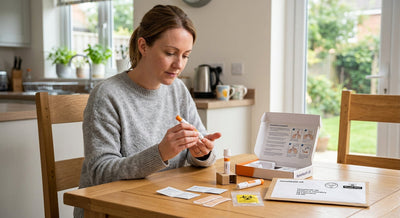
If you collect a finger-prick sample at home, prepare properly and follow the official how to do a home blood test guide to minimise collection errors.
Takeaway
“Ferritin face” is a catchy internet phrase, not a diagnosis.
Low iron stores can genuinely contribute to tiredness, breathlessness, hair changes, pale skin and brittle nails. But the same signs can come from many other causes, and lighting can make any face look dramatically different from one photo to the next.
The useful question is not, “Do I have ferritin face?”
It is: “Could my symptoms and risk factors justify checking my iron status?”
FAQs
Q: Can you tell if you have low ferritin by looking at your face?
A: No. Low iron may contribute to paler or tired-looking skin, but facial appearance cannot confirm ferritin levels. A blood test is needed.
Q: Can ferritin be low when haemoglobin is normal?
A: Yes. This is called iron deficiency without anaemia. Iron stores may fall before haemoglobin moves outside the laboratory reference range.
Q: What does a ferritin test check in the UK?
A: A ferritin test estimates your stored iron. Your result should be interpreted with your full blood count, symptoms, medical history and the reference range shown by the laboratory.
Author
Vitall Check Editorial Team
The Vitall Check Editorial Team is dedicated to empowering individuals with evidence-based health information and clear, actionable insights. Every article is researched using peer-reviewed journals and official health resources, reflecting our commitment to the same high standards of accuracy as our laboratory testing services. Our goal is to make proactive wellness accessible, data-driven, and transparent.
Disclaimer: Vitall Check is not CQC registered. The content provided is for general information only, does not provide a diagnosis, and does not replace advice from a qualified healthcare professional. Our services do not include treatment, prescription, or medical advice that falls under CQC-regulated activities. Always consult with your GP or a qualified clinician before making significant changes to your healthcare regimen.