September has quietly become the UK’s second chance to reset. New routines return, summer distractions fade and winter starts appearing on the horizon.
But before you buy every immunity supplement on the shelf, there is a smarter first step: find out where you are starting from.
TL;DR:
- September is emerging as a second wellness reset after January.
- Boots research found rising interest in health checks, supplements, testing kits and cold remedies.
- Vitamin D levels can fall during the darker months in the UK.
- A baseline blood test can give you useful context before winter.
- Results should support a better GP conversation, not replace one.
What's the smartest way to reset your health in September? Start by checking your baseline. An at-home blood test can show where key markers sit within clinical reference ranges, helping you arrive informed for your next GP conversation.
Why September is the new January for health
Boots research suggests that 44% of UK adults see September as the right time to restart healthy habits. Almost half also regret not investing more in their wellbeing before winter.
Retail behaviour tells a similar story. Comparing September 2025 with the previous month, Boots reported increases in:
- Health checks: up 44%
- Immunity supplements: up 25%
- Wellness testing kits: up 12%
- Cough and cold remedies: up 72%
The research was based on a Censuswide survey of 2,000 UK adults commissioned by Boots. You can read the full September reset research.
The pattern makes sense. September feels like a clean page. You may be back at work, back at school routines or back to regular training. It is easier to make a plan when the calendar gives you a natural starting line.
But a reset should not just mean buying more products. It should mean getting better information.

Why vitamin D deserves attention before winter
Vitamin D is often called the “sunshine vitamin” because your body makes it when skin is exposed to sunlight. It helps regulate calcium and phosphate, which support healthy bones, teeth and muscles.
The problem is that UK sunlight is not equally useful all year round. Government nutrition advice explains that sunlight-induced vitamin D production is effective from around late March or early April to September, but not from October onwards through winter. Read the Scientific Advisory Committee on Nutrition vitamin D report.
The figures are worth understanding, but not panicking over.
The latest National Diet and Nutrition Survey report found that around 18% of adults aged 19–64 had vitamin D levels below 25 nmol/L. This is the UK threshold used to indicate increased risk of poor musculoskeletal health.
Some summaries of UK Biobank data use a higher cut-off of 50 nmol/L. On that basis, around 55–56% of adults were below the cut-off overall, rising to roughly 68–71% during winter. These figures are not the same as the official UK deficiency threshold, so they should not be compared as if they describe the same thing. The cut-off changes the headline.
Think of it like a pass mark. If one school sets the pass mark at 50 and another sets it at 70, the number of people below the line will change. The people have not changed. The measuring point has.
The NHS recommends that everyone considers taking a daily vitamin D supplement during autumn and winter. A blood test is not needed for most people simply to follow this general advice. If you have symptoms, a health condition, take medicines or have been told to monitor vitamin D, speak with your GP.
Why a baseline beats guesswork
You do not need to wait until January to ask useful questions about your health.
A baseline can include markers such as vitamin D, iron-related markers, HbA1c, cholesterol and inflammation markers, depending on the panel you choose. These markers do not tell you everything. They also do not provide a diagnosis. They can, however, give you a clearer starting point.
It is like checking your car before a long winter journey. You are not rebuilding the engine because the dashboard shows a reading. You are checking the basics so you know what deserves attention.
Vitall Check samples are processed by UKAS-accredited laboratories using NHS-grade standards, with results available in 48 hours. The Insight Report acts as a plain-English manual for your results. It translates raw data into clear explanations and shows where each result sits within the laboratory’s reference range.
For a vitamin and nutrition-focused check, explore the Essential Vitamins & Nutritional Health Test. For a broader starting point, see the Baseline Internal Health & Function Screen.
If you want more background on why results need context, read the Health Hub pillar post on why blood test numbers should not be read in isolation.

How to make your September reset more useful
Start with three simple steps:
-
Choose your question.
Are you checking nutritional markers, metabolic health or a broader baseline? -
Prepare properly.
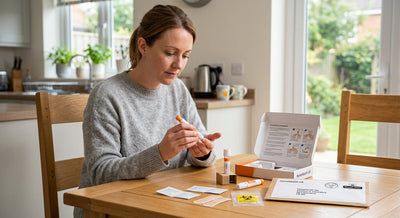
Follow the official how to collect your sample guide. Warm hands, good hydration and careful collection can make finger-prick testing easier. Some people find sample collection challenging, so allow enough time and contact the provider if you need support. -
Use the result in context.
Record recent illness, hard training, poor sleep, changes in diet and supplements. These details can help your GP understand the result more fully.
Do not test immediately after an unusually hard workout and then treat the result as your permanent baseline. That would be like judging your fitness by taking your pulse halfway through a sprint.
The goal is not to chase a perfect number. It is to understand your data clearly and know what may be worth discussing.
FAQ
Q: Is September a good time to take a vitamin D test in the UK? A: It can be a useful time to establish a baseline before the darker months, but your result should be interpreted alongside the laboratory reference range, your circumstances and any relevant symptoms.
Q: Can an at-home blood test replace a GP appointment? A: No. It can provide useful information for an informed arrival at your GP surgery, but it does not diagnose, treat or replace professional medical care.
Q: What should I check before winter? A: Depending on your health goals, you may consider vitamin D, iron-related markers, HbA1c, lipids and inflammation markers. Choose a suitable panel and discuss concerns with your GP.
Summary
The September reset does not need to be another shopping list.
Before reaching for immunity boosters, start with information. A vitamin D test in the UK or a wider at-home blood test can help you understand your baseline before winter. Used responsibly, that information can support a better conversation with your GP and make your next health decision less of a guess.

Author
Vitall Check Editorial Team
The Vitall Check Editorial Team is dedicated to empowering individuals with evidence-based health information and clear, actionable insights. Every article is researched using peer-reviewed journals and official health resources, reflecting our commitment to the same high standards of accuracy as our laboratory testing services. Our goal is to make proactive wellness accessible, data-driven, and transparent.
Disclaimer: Vitall Check is not CQC registered. The content provided is for general information only, does not provide a diagnosis, and does not replace advice from a qualified healthcare professional. Our services do not include treatment, prescription, or medical advice that falls under CQC-regulated activities. Always consult with your GP or a qualified clinician before making significant changes to your healthcare regimen.