Testosterone is having a moment online.
From TikTok clips and podcasts to gym forums and influencer videos, T-Maxxing is being presented as the next shortcut to more muscle, confidence, energy and status.
The problem? Testosterone is not a phone setting you can simply turn up.
Recent reporting by The Guardian and Newsweek has highlighted concerns about young men trying to raise testosterone through supplements, steroids or unprescribed hormone treatment. At the same time, BBC reporting has shown that some menopausal women are struggling to access testosterone through the NHS and turning to unsafe online routes.
Different situations. Same important lesson:
Test before you supplement.
TL;DR:
- T-Maxxing means trying to increase testosterone through lifestyle changes, supplements or hormones.
- Social media can make normal tiredness, stress or low mood look like proof of a testosterone problem.
- Testosterone treatment can affect fertility, natural hormone production and general health.
- A single blood test cannot diagnose low testosterone.
- Testing should come before supplements or hormone products.
- Vitall Check samples are processed by UKAS-accredited partner laboratories.
- Results can help you arrive informed for a GP conversation, but they do not replace medical care.
What is T-Maxxing? T-Maxxing is the social-media trend of trying to raise testosterone through lifestyle changes, supplements or hormone products, often without proper testing or medical supervision.
What does T-Maxxing actually mean?
“T-Maxxing” is short for testosterone-maxxing.
It sits alongside other online “maxxing” trends that promise to improve one part of your body or identity. The idea is simple: raise testosterone as high as possible and you will become stronger, leaner, more confident and more masculine.
Some advice is ordinary and sensible:
- Getting enough sleep
- Eating a balanced diet
- Exercising regularly
- Reducing alcohol
- Managing stress
- Maintaining a healthy weight
Other advice moves into riskier territory:
- Taking testosterone boosters
- Buying products from unregulated websites
- Using anabolic steroids
- Injecting testosterone without medical supervision
- Starting treatment based on symptoms or influencer claims alone
That is where the trend becomes dangerous.
Your hormones are more like a thermostat than a volume knob. Turning the dial higher does not automatically make the whole house work better. It can create new problems elsewhere.
As The Guardian explains in its report on T-Maxxing and online testosterone claims, symptoms such as tiredness, low mood, poor concentration and low motivation have many possible causes. Testosterone is only one piece of the picture.
Why is T-Maxxing so appealing?
Testosterone is linked with muscle development, sex drive, bone health, mood and reproductive function. That makes it an attractive explanation when you are struggling with energy, confidence or progress in the gym.
Social media then adds a powerful shortcut:
“I felt tired. I checked my testosterone. I started treatment. Now I feel great.”
That story may feel convincing. It is still only one person’s story.
Low mood could relate to stress, depression, poor sleep or relationship difficulties. Low energy might involve thyroid health, iron status, nutrition, infection or an underlying condition. A stalled gym programme may come from training load, insufficient recovery or unrealistic expectations.
Think of a dashboard warning light in your car. It tells you that something needs checking. It does not tell you to replace the engine immediately.
The same applies to a hormone symptom.
Why testing must come before supplementing
Do not start a testosterone supplement because a video says you look tired.
Do not buy injectable hormones because a gym acquaintance says they changed his life.
Do not assume that a “natural” product is automatically safe. Supplement quality, ingredients and doses can vary. Some products may contain undeclared substances or interact with medicines.
Testosterone taken from outside the body can also reduce your natural production. It may affect sperm production and fertility. It can cause acne, changes in mood, hair loss and other side effects. Higher-dose steroid use carries further risks.
The British Society for Sexual Medicine guidance on testosterone deficiency stresses that suspected testosterone deficiency needs both relevant symptoms and reduced testosterone results. Testing is usually carried out in the morning and repeated when needed.
That matters because testosterone changes during the day. Illness, poor sleep, food, stress and hard training can also affect your result.
A single number is a snapshot. It is not the entire film.

How to approach testosterone testing sensibly
If you are concerned about testosterone, start with information rather than treatment.
1. Write down your symptoms
Record what has changed and for how long.
You may want to note:
- Changes in sex drive
- Erectile difficulties
- Loss of morning erections
- Ongoing fatigue
- Mood changes
- Sleep problems
- Changes in body weight
- Changes in training recovery
This gives your GP useful context. It also helps you avoid relying on a vague feeling that something is wrong.
2. Test at the right time
Follow the instructions supplied with your test.
For Vitall Check’s testosterone panels, the product guidance asks for:
- An eight-hour fast, with water allowed
- A morning sample before 10:00
- No heavy workout for 24 hours beforehand
- A pause from biotin supplements for two days, where appropriate
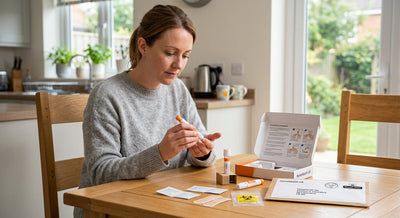
If you are using a finger-prick kit, read the official how to collect your sample guide before you begin.
Warm your hands. Drink water. Take your time. Some people collect a sample easily, while others find it fiddly. That is normal.
If the sample does not flow well, do not force the process. Follow the guide, use a fresh lancet if instructed and contact support if you need help.
3. Choose a panel that matches your question
Vitall Check’s Ultimate Testosterone & Hormonal Health Test measures testosterone alongside related markers such as calculated free testosterone, free testosterone percentage, SHBG and albumin.
Its Male Hormone Health & Vitality Test includes a broader group of hormone and health markers, including DHEA, LH, FSH, prolactin, vitamin B12 and albumin.
Neither panel diagnoses a condition. Both can give you organised information to discuss with a qualified healthcare professional.
Samples are processed by UKAS-accredited partner laboratories, with digital results available through a secure portal. The accompanying Insight Report is designed as a plain-English manual for your results. It translates figures and reference ranges into clearer explanations. It is not a prescription or a clinical review.
What about athletes and lifters?
Training can affect how you feel and how some blood markers appear.
A hard session may temporarily change inflammation markers and other results. Dehydration can also make some measurements look different. Heavy lifting may influence creatinine, a waste product often used when looking at kidney function.
That does not mean every unusual result is caused by training. It means the context matters.

If you are training hard, record:
- When you last trained
- How demanding the session was
- How well you slept
- Whether you were ill
- Whether you were taking supplements
- Whether you were fasting
You can also read the Health Hub article on the liver and testosterone connection for more context around related markers.
For wider hormone context, the Health Hub’s high-performance hormonal profile guide explains why testosterone should not be viewed in isolation.
The wider testosterone conversation includes women too
T-Maxxing is mainly marketed towards young men. However, testosterone is not a “male-only” hormone.
BBC Wales reported in September 2026 that some post-menopausal women were posing as men to buy testosterone online after struggling to access NHS prescriptions. The report also highlighted cases involving excessively high levels and unwanted, potentially permanent side effects.
That does not mean testosterone is unsuitable for every woman. It means access and dosing need proper medical oversight.
NICE guidance says testosterone supplementation may be considered for low sexual desire associated with menopause when HRT alone has not been effective. It should not be treated as a general answer for every menopause symptom.
The same rule applies: test where appropriate, discuss your symptoms with a qualified clinician and do not buy hormones from an unregulated source.
What should you do if your result is outside the reference range?
Do not panic. Do not self-prescribe.
Review the sample timing and preparation first. Then share the result with your GP or another qualified healthcare professional. They may decide that repeat testing or additional checks are needed.
Bring:
- Your result
- The laboratory reference range
- The time of collection
- Your symptoms
- Your medication and supplement list
- Any relevant training, sleep or illness information
This creates an informed arrival. It gives your clinician a clearer starting point for the conversation.
Summary: test first, trend second, treatment last
T-Maxxing has made testosterone impossible to ignore. That does not make every online claim reliable.
Use social media as a prompt to ask better questions, not as a diagnosis.
Before taking supplements or hormones:
- Record your symptoms.
- Test under suitable conditions.
- Use a laboratory with UKAS-accredited processing.
- Read the results in context.
- Discuss concerning findings with your GP or a qualified clinician.
Vitall Check can help you organise lab-verified information before your next appointment. It cannot diagnose, treat, prescribe or provide medical advice.
FAQs
Q: Is T-Maxxing safe? A: Not always. Lifestyle habits such as sleep, balanced nutrition and sensible exercise are generally different from using unregulated supplements, steroids or testosterone without medical supervision.
Q: Should I take testosterone supplements before getting a blood test? A: No. Test first and discuss your results with a qualified healthcare professional. Supplements or hormones can affect results and may carry risks.
Q: Can an at-home testosterone test diagnose low testosterone? A: No. An at-home test can provide lab-verified results and useful context, but diagnosis usually requires symptoms, appropriate testing and clinical assessment. It does not replace a GP consultation.
Author
Vitall Check Editorial Team
The Vitall Check Editorial Team is dedicated to empowering individuals with evidence-based health information and clear, actionable insights. Every article is researched using peer-reviewed journals and official health resources, reflecting our commitment to the same high standards of accuracy as our laboratory testing services. Our goal is to make proactive wellness accessible, data-driven, and transparent.
Disclaimer: Vitall Check is not CQC registered. The content provided is for general information only, does not provide a diagnosis, and does not replace advice from a qualified healthcare professional. Our services do not include treatment, prescription, or medical advice that falls under CQC-regulated activities. Always consult with your GP or a qualified clinician before making significant changes to your healthcare regimen.