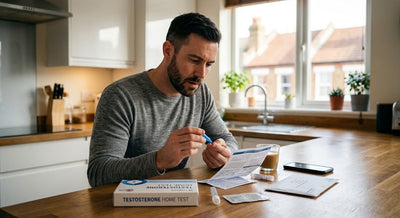
Home blood testing has gone mainstream. What used to mean a phone call and a waiting room now arrives in a letterbox, and three names keep coming up in UK searches: Randox, Thriva and Vitall Check.
If you're standing at that decision point, the question isn't really which brand is best in the abstract. It's which one fits what you need, at a price that makes sense, with results you can actually use. So instead of taking anyone's marketing at face value, let's compare all three on the things that genuinely matter: accreditation, how fast you get answers, and whether the report reads like a medical chart or like something a human wrote.
TL;DR:
- All three post kits to your home, but they differ on lab standards, turnaround and how clearly results are explained
- Randox is the biggest operation, with clinic and lab infrastructure alongside home kits
- Thriva works on a subscription model with rotating panels
- Vitall Check is built around speed (48-hour lab turnaround), UKAS-accredited labs, and an Insight Report that translates raw numbers into plain English
- Before choosing anyone, check three things: who processes the sample, how long results take, and whether the report makes sense without a medical degree
What's the difference between Randox, Thriva and Vitall Check? All three offer UK at-home blood tests, but they differ in scale, subscription model, turnaround time and how results are reported. Randox is the largest, Thriva leans on subscriptions, and Vitall Check focuses on 48-hour results from UKAS-accredited labs with a plain-English Insight Report.
How the three actually differ
Think of it like buying a car. All three brands will get you from A to B, but the driving experience, the service plan and what happens when something goes wrong are not the same.
Randox is the heavyweight. A Northern Irish company with its own labs and clinic network, they do everything from sports panels to genetic testing. Their home kits sit alongside a much bigger diagnostics operation, and they've been at it longest. If you want brand heritage and physical clinic options, that's their territory.
Thriva built its name on subscriptions. You sign up, they send kits at intervals, and the panels rotate based on what you've tested before. It's a habit-forming model, which suits people who want a routine, though it also means you're committing to a rhythm whether or not that rhythm matches your actual health goals.
Vitall Check took a different route. Rather than building a subscription around your health, we built around the result: samples go to UKAS-accredited (ISO 15189) partner laboratories, results land in 48 hours, and every panel comes with an Insight Report that translates raw numbers into plain English, with actionable context rather than a wall of lab data. No subscription pressure, no waiting weeks to find out where you stand.
Accreditation: the detail that actually protects you
This is the unglamorous bit that matters most. When you send a blood sample through the post, it's processed in a laboratory. What matters is the standard that laboratory works to.
UKAS (the United Kingdom Accreditation Service) is the national body that assesses labs against internationally recognised standards. A UKAS-accredited lab has been independently assessed for competence, consistency and quality management. It's the difference between a restaurant with hygiene certificates and one with a nice website.
All three brands use UKAS-accredited labs, which is genuinely reassuring, but the conversation shouldn't stop there. Vitall Check makes UKAS accreditation and UKAS (ISO 15189) standards the headline of its service, not a footnote, because for us that's the baseline, not the differentiator. What we compete on is speed and clarity: 48-hour turnaround from sample arrival, and an Insight Report designed to be read by someone without a medical degree.
If you're comparing providers and accreditation isn't prominently stated, ask. It's not a bonus feature. It's the floor.
Turnaround: how long until you know
Waiting for results is the worst part of any health test. You've done the finger prick, posted the kit, and now your sample is somewhere in a logistics chain. Every day of silence compounds.
Randox turnaround varies by panel and demand, with some complex panels taking longer. Thriva publishes typical turnaround windows that shift depending on the test, and their subscription model means you're often planning around the next kit rather than chasing one result. Vitall Check aims to return most results within 48 hours of the lab receiving your sample.
Speed alone isn't the whole story, of course. A fast result that doesn't make sense to you is just a faster way to feel confused. That's why turnaround pairs with the next section.
Reporting: numbers versus narrative
Raw results are like being handed a map in a language you don't speak. Every number is accurate. Nothing tells you where you are.
Randox reports tend to be data-rich, which suits people comfortable reading biomarker tables. Thriva gives you a dashboard view with some trend tracking, useful if you're following markers over months. Vitall Check's Insight Report is built differently: every result is placed in clinical context, explained in plain English, and paired with actionable next steps you can discuss with your GP. It's less "here are your ALT levels" and more "here's what your ALT level suggests about your liver, and what you might want to ask your doctor about it."
We're not a clinical service, and we're clear about that. What we do is help you arrive informed for your next GP appointment rather than Googling at midnight.
Which one is right for you?
If you want the biggest brand with the widest panel catalogue and you're comfortable interpreting raw data yourself, Randox has scale on its side.
If you like the idea of routine, regular testing baked into a subscription, Thriva's model fits that habit.
If you want results fast, from UKAS-accredited labs, with a report that tells you what the numbers actually mean rather than just showing them, Vitall Check is built for exactly that. Our Complete Health & Performance Blood Test, for example, covers a broad panel in one kit with the Insight Report included, no subscription required.
What to check before you buy from anyone
Whichever route you go, run these three checks first:
- Is the lab UKAS-accredited? If it's not stated clearly, that's an answer in itself. The UKAS site explains what accreditation involves
- What's the actual turnaround, and is it guaranteed or estimated?
- Can you see a sample report before buying? If the marketing hides the product, that tells you something
If you're weighing a clinic draw against a home kit, we've compared at-home and GP blood testing side by side separately.
The takeaway
Randox, Thriva and Vitall Check all do legitimate at-home blood testing in the UK. The differences are in speed, reporting and how the service fits your life. Compare on accreditation first, turnaround second, and how well you'll understand your results third. Price comes last, because the cheapest test you can't interpret is still a wasted sample.
FAQ
Q: Are at-home blood tests as accurate as going to a clinic? A: Yes, provided the sample is collected correctly. Vitall Check samples are processed in UKAS-accredited laboratories using the same standard procedures as traditional venous blood tests. The main variable is sample collection, which is why following the official how-to-collect guide matters.
Q: How quickly do home blood test results come back in the UK? A: Vitall Check aims to return most results within 48 hours of the lab receiving your sample. Check each provider’s own page for their current times. Randox and Thriva publish turnaround estimates that vary by panel and demand.
Q: Can an at-home blood test replace a GP visit? A: No. At-home testing provides baseline screening and lifestyle insights, allowing an informed arrival at your GP surgery with lab-analysed data your doctor can review. It doesn't replace formal diagnosis or medical advice.
About the author
The Vitall Check Editorial Team is dedicated to empowering individuals with evidence-based health information and clear, actionable insights. Every article is researched using peer-reviewed journals and official health resources, reflecting our commitment to the same high standards of accuracy as our laboratory testing services. Our goal is to make proactive wellness accessible, data-driven, and transparent.
Disclaimer: Vitall Check is not CQC registered. The content provided is for general information only, does not provide a diagnosis, and does not replace advice from a qualified healthcare professional. Our services do not include treatment, prescription, or medical advice that falls under CQC-regulated activities. Always consult with your GP or a qualified clinician before making significant changes to your healthcare regimen.