You can eat well, train regularly and still have a nutritional blind spot.
Fatigue, poor concentration, muscle cramps, hair changes and low mood can have many causes. A blood test cannot explain everything, but it can add useful evidence to the picture.
This guide explains nutritional blood testing in the UK, including vitamin D, iron and ferritin, vitamin B12, folate, magnesium, zinc and other micronutrients. You’ll learn who may benefit from testing, what the results can and cannot tell you, and how to use the information to arrive better informed for your next GP appointment.
TL;DR:
- Nutritional blood testing can check selected vitamins, minerals and related markers.
- The most commonly discussed tests include vitamin D, ferritin and iron, vitamin B12, folate, magnesium and zinc.
- Symptoms such as tiredness and poor concentration overlap across many conditions, so testing alone cannot identify the cause.
- Your diet, medication, health conditions, training load and recent illness can all affect results.
- Follow the laboratory’s reference ranges. A result outside a range needs proper medical context.
- Prepare carefully for an at-home finger-prick sample: hydrate, warm your hands and follow the official collection instructions.
- Use results as information for a better GP conversation, not as a diagnosis or a reason to start high-dose supplements without advice.
What does nutritional blood testing check in the UK? Nutritional blood testing measures selected vitamins, minerals and related blood markers, such as vitamin D, iron stores, vitamin B12, folate, magnesium and zinc. Results can provide useful health information, but they need to be interpreted alongside your symptoms, medical history and laboratory reference ranges.
What is nutritional blood testing?
Nutritional blood testing uses a blood sample to measure one or more nutrients or markers linked to nutrition.
Some tests measure the nutrient directly. Others measure a related marker. Ferritin, for example, gives information about stored iron. Full blood count markers can show how your red blood cells are behaving, which may help a clinician investigate possible iron, B12 or folate problems.
Think of your blood as a delivery system. It carries oxygen, hormones, nutrients and waste products around your body. A nutritional blood test checks a few parcels in that delivery system. It may show that one parcel is missing or running low, but it does not always explain why.
That is why the result should be read with:
- Your symptoms
- Your diet
- Your age and sex
- Your menstrual history, where relevant
- Your training and activity levels
- Your medication and supplements
- Your medical history
- Your laboratory’s reference range
A result is a clue, not a verdict.
Which nutritional blood tests matter?
There is no single blood test that checks every nutrient your body uses. The right panel depends on the question you are trying to answer.
Vitamin D
Vitamin D helps your body regulate calcium and phosphate. These nutrients support bones, teeth and muscles.
The usual blood test is 25-hydroxyvitamin D, often written as 25(OH)D.
Low vitamin D can be associated with:
- Bone or muscle pain
- Muscle weakness
- Difficulty climbing stairs or getting out of a chair
- Tiredness
- Increased risk of bone problems in more serious cases
The NHS explains how vitamin D supports bones, teeth and muscles. It also states that most people should consider a daily 10 microgram vitamin D supplement during autumn and winter. Some groups may need to consider supplementation throughout the year, including people who spend little time outdoors and people with darker skin.
The NHS does not recommend taking large amounts without a clear reason. Too much vitamin D over a long period can cause calcium to build up in the body, affecting the kidneys and heart.
UK laboratories commonly use bands such as:
- Below 25 nmol/L: generally classed as deficiency
- 25–50 nmol/L: often described as insufficiency or inadequacy
- Above 50 nmol/L: commonly regarded as adequate for bone health
Your laboratory may use different wording or reference limits. Always start with the range printed on your report.
A vitamin D result can be affected by the season, sunlight exposure, skin type, clothing, diet, supplements and some health conditions. A winter result is not automatically comparable with a summer result.
For more detail, read the Health Hub guide to vitamin D deficiency and UK testing thresholds.
Iron and ferritin
Iron helps your body make haemoglobin. Haemoglobin is the part of your red blood cells that carries oxygen.
Ferritin is a marker of stored iron. You can think of it as your iron savings account. A low balance may appear before clear anaemia develops, although ferritin must still be interpreted in context.
Common symptoms linked with iron deficiency anaemia include:
- Tiredness and low energy
- Breathlessness
- Noticeable heartbeats or palpitations
- Pale skin
- Headaches
- Dizziness
- Hair loss
- Restless legs
- Craving non-food items, such as ice or paper
The NHS guide to iron deficiency anaemia explains that a GP will usually start with a full blood count, or FBC. This checks the number and size of your blood cells. Further tests may be needed to investigate the cause.
Possible reasons for low iron include:
- Heavy periods
- Pregnancy
- A diet low in iron
- Blood loss from the stomach or bowel
- Problems absorbing nutrients
- High training volume combined with increased nutritional demands
Athletes need to read iron results carefully. Endurance training, repeated impact and sweat losses may form part of the wider context. A result that is low should not simply be blamed on training, though. The cause still needs proper assessment.
Vitall Check’s Complete Health & Performance Blood Test includes ferritin, serum iron and transferrin alongside folate, B12 and magnesium. That gives more nutritional context than looking at one iron marker alone.
Do not start iron supplements just because you feel tired. Iron can be harmful in excess, and unexplained iron deficiency may need further investigation.
Vitamin B12
Vitamin B12 supports red blood cell formation, energy release from food and normal nervous system function.
Good dietary sources include meat, fish, milk, cheese, eggs and some fortified foods. People following a vegan diet may need fortified foods or supplements, as natural B12 is not found in fruit, vegetables or grains.
Possible symptoms of vitamin B12 deficiency include:
- Extreme tiredness
- Lack of energy
- Pins and needles
- Numbness
- A sore or red tongue
- Mouth ulcers
- Muscle weakness
- Balance or coordination problems
- Changes in memory or concentration
- Mood changes
- Vision problems
The NHS explains that B12 or folate deficiency can cause symptoms even without anaemia.
NICE’s guideline on vitamin B12 deficiency in people aged 16 and over says that the absence of anaemia or enlarged red blood cells should not be used on its own to rule out B12 deficiency.
The guideline gives these broad guideposts for initial testing:
- Total B12 below 180 nanograms per litre: confirmed deficiency is more likely
- Total B12 between 180 and 350 nanograms per litre: indeterminate or possible deficiency
- Total B12 above 350 nanograms per litre: deficiency is less likely
- Active B12 below 25 pmol/L: confirmed deficiency is more likely
- Active B12 between 25 and 70 pmol/L: indeterminate or possible deficiency
- Active B12 above 70 pmol/L: deficiency is less likely
These are not personal treatment instructions. Your GP may consider symptoms, diet, medication, other blood results and further testing, such as methylmalonic acid.
Tell your GP or testing provider if you already take B12 supplements. They can raise the blood level without fully explaining whether the underlying issue has been resolved.
Metformin and some medicines that reduce stomach acid can also affect B12. The MHRA advises that B12 deficiency is a common side effect of metformin and recommends testing when deficiency is suspected.
Vitall Check’s Essential Vitamins & Nutritional Health Test includes vitamin B12, active B12, vitamin D and folate.
Folate
Folate, also called vitamin B9, helps your body produce healthy red blood cells and make and repair genetic material.
Good food sources include:
- Broccoli
- Brussels sprouts
- Spinach and other leafy greens
- Peas
- Chickpeas
- Kidney beans
- Fortified breakfast cereals
Folate deficiency can cause symptoms similar to B12 deficiency, including tiredness, weakness, breathlessness, headaches, palpitations and a sore tongue.
Folate is often tested alongside B12 because the two nutrients are connected. Both can affect red blood cell production, and both can cause a type of anaemia in which red blood cells become larger than usual.
The NHS diagnosis guide for B12 and folate deficiency explains that blood tests may check haemoglobin, red blood cell size, B12 and folate. Symptoms are also part of the assessment.
If you are pregnant, trying to become pregnant or could become pregnant, follow NHS and GP guidance on folic acid. Do not use a folate result as a substitute for pregnancy care.
High-dose folic acid can mask some signs of B12 deficiency. This is one reason to avoid treating a result in isolation.
Magnesium
Magnesium supports many processes in the body, including energy release from food and normal muscle function.
Food sources include:
- Spinach and other green vegetables
- Nuts
- Seeds
- Wholemeal bread
- Beans and pulses
Possible signs associated with low magnesium include:
- Muscle cramps
- Twitching
- Weakness
- Tiredness
- Changes in heart rhythm in severe cases
A blood magnesium result may be useful in selected situations, but it does not answer every question about magnesium intake or body stores. Your clinician may consider your symptoms, medication, kidney function, digestive health and other electrolytes.
Magnesium can also be affected by supplements and some medicines. Tell your GP what you take, including sports supplements and products sold for sleep or recovery.
The NHS information on magnesium and other minerals explains that adults need magnesium from a varied diet and warns that high-dose supplements can cause diarrhoea. It advises that adults should not take more than 400 mg a day from supplements unless advised otherwise by a doctor.
Do not treat a borderline result as proof that magnesium is the cause of muscle cramps. Cramps can have many explanations, including training load, hydration, medication and nerve or muscle problems.
Zinc
Zinc helps with making new cells and enzymes, processing food and wound healing.
Food sources include:
- Meat
- Shellfish
- Dairy foods
- Bread
- Cereal products
- Nuts and seeds
Possible signs associated with low zinc include slow wound healing, changes in taste or smell, skin changes, hair changes and increased susceptibility to infections. These signs are not specific to zinc deficiency.
Zinc blood testing is usually interpreted with care. Recent illness, inflammation, diet, supplements and the timing of the sample may all matter. A result should be assessed alongside your history rather than used as a stand-alone explanation.
The NHS zinc guidance warns that high-dose zinc supplements can reduce copper absorption and may lead to anaemia or weakened bones. It advises not taking more than 25 mg of zinc supplements a day unless a doctor recommends it.
This is a good example of why “more” is not automatically safer. Nutrients work as a team, rather like players on a football pitch. Increasing one can affect another.

What other micronutrients might be tested?
Depending on your symptoms and medical history, a clinician may consider other tests.
Calcium and phosphate
Calcium and phosphate are linked with bones, muscles and nerve function. They may be checked when there are concerns about bone health, vitamin D problems, kidney conditions or certain hormone disorders.
A calcium result may be interpreted alongside albumin because albumin affects the amount of calcium measured in the blood.
Copper
Copper supports the formation of red and white blood cells and helps your body use iron.
Low copper can occur in selected situations, including some absorption problems or excessive zinc intake. Copper testing is not usually needed as a general screening test for everyone.
Selenium
Selenium supports normal immune function and helps protect cells from damage. Food sources include meat, fish, eggs and Brazil nuts.
Too much selenium can cause problems, including hair and nail changes. Avoid taking selenium supplements without checking the dose and discussing them with a qualified healthcare professional when appropriate.
Vitamin A
Vitamin A supports vision, the immune system and skin. Testing may be used in specific medical situations, such as absorption problems, rather than as a broad routine check.
High-dose vitamin A can be harmful. This is especially important during pregnancy, when certain forms of vitamin A need particular care.
Iodine
Iodine is needed to make thyroid hormones. Iodine status is not usually assessed through a simple general blood test. If thyroid symptoms are a concern, a clinician will usually consider thyroid blood tests such as TSH and free T4, alongside your history.
Do not start iodine supplements because of tiredness or a thyroid concern without medical advice. Too much iodine can also affect thyroid function.
Vitamin B6
Vitamin B6 helps the body use protein and carbohydrates and supports haemoglobin production. It is found in foods including poultry, fish, oats, bananas and fortified cereals.
Routine blood testing is not usually the first step for vague symptoms. High-dose B6 supplements can cause nerve damage. The NHS advises adults not to take more than 10 mg of vitamin B6 a day in supplements unless advised by a doctor. You can read the NHS B vitamins and folic acid guidance.
Who should consider nutritional blood testing?
Testing may be worth discussing with a GP or qualified healthcare professional if you have:
- Persistent tiredness
- Breathlessness or noticeable heartbeats
- Pins and needles or numbness
- Muscle weakness or repeated cramps
- Hair loss or brittle nails
- Unexplained changes in weight or appetite
- Ongoing digestive symptoms
- Heavy periods
- A restrictive diet
- A vegan or vegetarian diet without reliable fortified foods or supplements
- A history of gastrointestinal surgery
- Coeliac disease or another condition affecting absorption
- Long-term use of medicines that can affect nutrient absorption
- A high training load
- A previous deficiency
- Symptoms that continue despite basic blood tests appearing within range
Testing may also be useful if you are working with a registered dietitian, nutritionist or personal trainer who wants more objective information to support a wider lifestyle discussion.
For athletes, the context matters. Heavy training can affect inflammation markers, muscle enzymes, hydration-related markers and sometimes the way symptoms feel. A hard training block may leave you tired, but it should not be used to dismiss persistent or worsening symptoms.
People who are pregnant, breastfeeding, under 18, taking prescribed medication or managing a diagnosed condition should discuss testing and supplements with a GP or qualified healthcare professional.
Nutritional deficiency symptoms are not specific
One of the biggest mistakes is assuming that one symptom points to one nutrient.
Tiredness may be linked with iron deficiency, B12 deficiency, folate deficiency, thyroid problems, poor sleep, infection, stress, depression or many other causes.
Muscle cramps may relate to training, hydration, medication, nerve problems or several different mineral and health factors.
Hair loss may involve iron stores, hormones, thyroid function, illness, stress or genetics.
A symptom is more like a warning light on a car dashboard. It tells you that something deserves attention. It does not tell you which part needs replacing.
That is why nutritional testing works best as part of a wider assessment.
If you have gastrointestinal symptoms and unexplained iron, B12 or folate deficiency, NICE recommends discussing coeliac disease testing. The NICE coeliac disease guideline says testing should be carried out while you are still eating gluten.
Do not start a gluten-free diet before speaking with your GP if coeliac disease is being considered. Removing gluten can affect the accuracy of testing.
How to prepare for a nutritional blood test
Preparation depends on the panel and the laboratory. Follow the instructions supplied with your test.
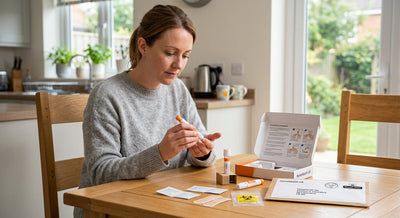
For an at-home capillary sample:
- Read the instructions first. Check whether fasting is required.
- Drink water. Good hydration can make collection easier.
- Warm your hands. Run them under warm water for around two minutes if they feel cold.
- Use a clean, well-lit surface.
- Choose the correct finger. The middle or ring finger of your non-dominant hand is commonly recommended.
- Clean the side of your fingertip. Let it dry fully.
- Use the safety lancet as directed.
- Wipe away the first drop if the instructions tell you to.
- Fill the collection tube to the marked line.
- Do not squeeze aggressively. Excessive squeezing can affect sample quality.
- Seal and mix the tube as instructed.
- Post the sample on the same day where possible.
Follow Vitall Check’s official sample collection guide before starting.
Some people find finger-prick collection difficult. That does not mean you have done anything wrong. Cold hands, dehydration, stress and poor blood flow can all make it harder to collect enough blood.
If you feel faint or uneasy, stop, sit down and ask someone to stay with you. Do not continue while feeling unwell. Contact the provider if you need help or a replacement kit.
For a wider preparation checklist, read the Health Hub guide to common athlete blood testing mistakes.
How to interpret nutritional blood test results
Start with the laboratory reference range
A reference range is the comparison range used by that laboratory. It is not a personal health target.
Laboratories may use different equipment, units and populations when setting their ranges. That means you should not compare a result with a random number found online.
Look for:
- The test name
- Your result
- The unit
- The laboratory reference range
- Any status label
- Notes about sample quality
- The collection date and time
Read related markers together
A ferritin result makes more sense alongside haemoglobin, MCV and other blood count markers.
B12 and folate are often considered together.
Vitamin D may be read alongside calcium, phosphate, alkaline phosphatase, kidney function and symptoms when clinically relevant.
Magnesium may need to be considered alongside kidney function and other electrolytes.
One result rarely tells the full story.
Check what could have affected the result
Ask yourself:
- Was the sample taken during an illness?
- Had you completed a hard training session recently?
- Were you dehydrated?
- Were you fasting?
- Had you recently changed your diet?
- Were you taking supplements?
- Were you taking prescribed medication?
- Was the sample collected at the recommended time?
- Was the sample delayed in the post?
Keep a record of these details. It gives your GP more useful context.
Look for patterns over time
A single result is a snapshot. Repeating a test under similar conditions can sometimes make trends easier to discuss.
Keep the following consistent where possible:
- Time of day
- Fasting status
- Recent training
- Supplement use
- Time of year
- Laboratory, if comparison is important
Do not repeat tests simply to chase a particular number. Decide what question the repeat test is meant to answer.
How Vitall Check’s Insight Report helps
Vitall Check results are processed by UKAS-accredited partner laboratories using NHS-grade standards.
The Insight Report is designed as a plain-English manual for the laboratory data. It translates raw results into clearly explained information, shows where results sit against the laboratory’s clinical reference ranges and provides context for your next conversation.
It is not a diagnosis.
It does not replace a GP, dietitian or qualified clinician. It does not prescribe treatment or tell you to take high-dose supplements.
For example, a report may show:
Ferritin: 22 µg/L
Laboratory reference range: 15–150 µg/L
The useful question is not simply, “Is this green or red?” You also need to ask:
- Do I have symptoms?
- What does my full blood count show?
- Do I have heavy periods or another possible source of blood loss?
- Could inflammation affect the result?
- Should I discuss further assessment with my GP?
That is the difference between reading a number and understanding its place in the wider picture.

Nutritional testing and qualified medical care
Private testing and NHS care serve different purposes.
The NHS and your GP can assess symptoms, examine you, review your history, arrange follow-up tests and investigate possible causes. A private test can provide additional information that helps you prepare for that discussion.
This is an informed arrival.
You are not replacing clinical care. You are bringing more organised information to the appointment.
Take the following with you:
- Your laboratory report
- The date and time of testing
- Your symptoms and when they began
- Your current medication list
- Your supplements and doses
- Your diet pattern
- Your training schedule
- Any previous results
- Questions you want to ask
Speak to your GP if a result is outside the reference range, if symptoms persist or if you are unsure what a result means.
Seek urgent help for severe breathlessness, chest pain, fainting, new weakness, sudden confusion, severe allergic symptoms or rapidly worsening neurological symptoms.
Supplements: do not treat the number alone
It is tempting to see a low result and immediately buy several supplements.
Pause first.
The correct response depends on:
- The size and type of the change
- Your symptoms
- The likely cause
- Other results
- Your kidney and liver health
- Medication interactions
- Pregnancy or breastfeeding
- Whether a nutrient is stored in the body
- Whether a high dose could cause harm
Iron, vitamin D, zinc, selenium, vitamin A and vitamin B6 can all cause problems when taken in excess.
Food-first advice may be suitable for some people, while others need prescribed replacement or further investigation. A GP, pharmacist or registered dietitian can help you decide what applies to you.
Summary: what to remember
Nutritional blood testing can help you look beyond vague symptoms and obtain clearer information about selected vitamins, minerals and related blood markers.
The most commonly discussed tests include:
- Vitamin D
- Ferritin and iron
- Vitamin B12
- Active B12
- Folate
- Magnesium
- Zinc
- Full blood count markers
- Calcium and phosphate in selected situations
The key is context.
Prepare properly. Follow the official sample collection guide. Use UKAS-accredited laboratory testing where possible. Read your result against the laboratory’s own reference range. Avoid diagnosing yourself from a single number. Do not start high-dose supplements without suitable advice.
Used sensibly, a nutritional blood test can help you arrive informed for a better GP conversation.
Frequently asked questions
Q: Which vitamin and mineral blood tests should I ask for in the UK? A: It depends on your symptoms, diet and medical history. Commonly discussed tests include vitamin D, ferritin and iron, vitamin B12, folate, magnesium and zinc. A GP can help decide which tests are appropriate.
Q: Can a nutritional blood test explain why I’m tired? A: It may identify information about iron, vitamin B12, folate, vitamin D or other markers, but tiredness has many possible causes. Your result should be reviewed with your symptoms and medical history.
Q: Are at-home finger-prick nutritional blood tests accurate? A: They can provide useful results when collected correctly and processed by an accredited laboratory. Preparation matters, and some people find collection challenging. Warm your hands, drink water and follow the official collection instructions carefully.
Q: Should I take supplements if my blood test shows a low result? A: Do not make high-dose supplement decisions from the result alone. Discuss the result, your symptoms, medication and medical history with a GP, pharmacist or qualified healthcare professional.
Author
Vitall Check Editorial Team
The Vitall Check Editorial Team is dedicated to empowering individuals with evidence-based health information and clear, actionable insights. Every article is researched using peer-reviewed journals and official health resources, reflecting our commitment to the same high standards of accuracy as our laboratory testing services. Our goal is to make proactive wellness accessible, data-driven, and transparent.
Disclaimer: Vitall Check is not CQC registered. The content provided is for general information only, does not provide a diagnosis, and does not replace advice from a qualified healthcare professional. Our services do not include treatment, prescription, or medical advice that falls under CQC-regulated activities. Always consult with your GP or a qualified clinician before making significant changes to your healthcare regimen.