Thriva may suit you if you want repeat testing, app-based tracking and the option of doctor consultations through a membership. But a subscription isn’t automatically the right fit. The useful question is whether its testing model, reporting and overall cost match what you need.
TL;DR:
- Thriva offers flexible self-curated testing and a Guided membership with three tests a year and a doctor consultation after each test.
- Compare lab accreditation, the exact tests included, turnaround time, report clarity and the full cost, not just the headline offer.
- Vitall Check offers one-off at-home panels processed by UKAS-accredited laboratories to NHS-grade standards, with lab-verified results within 48 hours.
- At-home testing can help you arrive informed for a GP conversation. It does not replace medical care.
Is Thriva worth it in 2026? Thriva may be worth considering if you want repeat testing and, with its Guided membership, a doctor consultation after each test. Compare the plan’s full cost, laboratory details, turnaround and reports with the alternatives before choosing.
What does Thriva offer in 2026?
Thriva currently presents two ways to test. Its self-curated subscription lets you choose tests and change your testing schedule. The company says testing starts from £45, and doctor consultations are not included in this option.
Its Guided membership is listed at £360 a year and includes three tests, plus a one-to-one doctor consultation after each test. Thriva also describes ongoing tracking and follow-up testing. These details and prices were checked on 18 October 2026, but offers can change, so confirm the current terms before you buy.
The difference is a bit like choosing between building your own route and following a planned one. The flexible plan gives you more control over test selection; the Guided membership bundles repeat testing and consultations. Whether either is good value depends on how often you’ll use those features.
A subscription can make sense if you want regular testing and will use the included support. If you want one test for a specific question, compare the cost and contents of a one-off panel before committing to an ongoing plan.
What should you compare before choosing?
1. Check the laboratory accreditation
Ask which laboratory processes the sample and whether the relevant testing is within its accreditation scope. UKAS accreditation is a useful quality marker, but the name alone doesn’t tell you whether every test, method or sample type is covered.
UKAS explains that medical laboratory accreditation offers independent assurance around the testing of blood and other samples. You can also search the UKAS directory of accredited organisations and read more about medical laboratory accreditation.
Thriva says it uses UKAS-accredited laboratories and describes validating its home tests. For any provider, it’s reasonable to ask which lab handles your chosen test and what its accreditation covers. Vitall Check’s samples are processed by UKAS-accredited laboratories to NHS-grade standards.
2. Compare the real turnaround time
“Results in 48 hours” can mean different things. Check whether the clock starts when you order, post your sample or the lab receives it. Delivery and lab processing are separate parts of the journey, and some tests may take longer.
Vitall Check provides lab-verified results within 48 hours of laboratory receipt. For comparison, Thriva says results can arrive in as little as 48 hours, while noting that some tests, such as Omega 3 & 6, can take up to 15 working days. Check the timeframe for the specific panel you’re considering.

3. Look beyond the dashboard
A dashboard can organise results, but a set of numbers still needs explaining. Think of raw results like a map with no key: you can see the marks, but may not know what they mean.
Check whether the report explains each marker in plain English, shows the relevant reference range and gives enough context to help you prepare questions for your GP. A report should help you understand the information, not present itself as a diagnosis.
Vitall Check includes a personalised Insight Report designed as a manual for translating raw data into clearly explained results and a health action plan. It is educational; it does not diagnose or provide medical advice.

4. Match the panel to your question
More markers do not automatically mean a better choice. A broad panel is like a full car dashboard: useful when you want a wider picture, but unnecessary if you only need to check one specific area.
Start with your question. Are you looking at hormones, general organ health, or a wider range of markers? Then compare what each panel actually includes. The Vitall Check Men’s Health collection lists the available panels. For a focused hormone option, see the Male Hormone Health & Vitality Test; for a broader set of organ and immune markers, review the Advanced Organ Health & Immune Profile.
5. Compare the full price and the support included
Look at the total cost over the period you expect to test. Include how many tests you’ll get, whether consultations are included, delivery and return postage, and whether you can change or cancel the plan easily.
A lower starting price may not tell you what repeat testing will cost. Equally, an annual plan may be worthwhile if you’ll use all its included tests and consultations. Compare the complete package, not the biggest number on the sales page.
So, is Thriva worth it, or should you consider an alternative?
Thriva may suit you if you want a repeat-testing routine, like tracking results over time and are interested in a membership that includes doctor consultations. Its flexible plan may appeal if you prefer choosing tests yourself, while the Guided option bundles scheduled tests and consultations.
Vitall Check may suit you if you prefer choosing an individual at-home panel and want UKAS-accredited lab processing, NHS-grade standards, lab-verified results within 48 hours of laboratory receipt, and a personalised Insight Report. Free delivery is available on orders over £100.
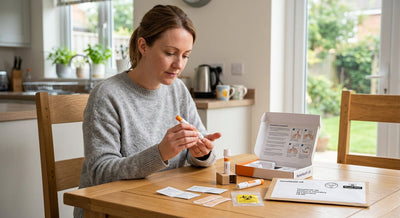
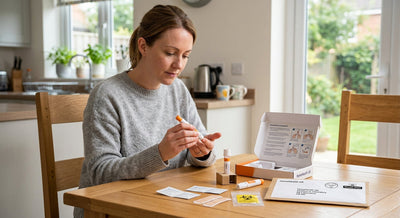
Finger-prick collection can be convenient, but it isn’t effortless for everyone. You may need to warm your hands, drink water and take your time. Follow the official Vitall Check home blood test guide to help reduce collection errors and frustration.
The NHS explains that blood tests are used for many reasons, and that results should be discussed with a healthcare professional if you have questions. An at-home test can help you arrive informed for that conversation; it isn’t a replacement for it. Read the NHS guide to blood tests.

Summary
Thriva may be worth it if you’ll use its subscription structure, repeat testing and, on the Guided membership, doctor consultations. If you’re comparing alternatives, check the laboratory and its accreditation scope, how turnaround is measured, what the report explains, which markers are included and the total cost.
Choose the service that fits your question and gives you information you can understand. Use results to support a better conversation with your GP, not to make a diagnosis yourself.
FAQ
Q: Does Thriva require a subscription? A: Thriva offers a flexible self-curated subscription and a Guided membership. Check its current terms and test options before ordering.
Q: How quickly do Thriva blood test results arrive? A: Thriva says some results can arrive in as little as 48 hours, while certain tests may take longer. Check the timeframe for your chosen test.
Q: Are at-home blood tests a replacement for a GP appointment? A: No. They can provide information to discuss with your GP, but they do not replace medical care or a formal diagnosis.
Author
Vitall Check Editorial Team
The Vitall Check Editorial Team is dedicated to empowering individuals with evidence-based health information and clear, actionable insights. Every article is researched using peer-reviewed journals and official health resources, reflecting our commitment to the same high standards of accuracy as our laboratory testing services. Our goal is to make proactive wellness accessible, data-driven, and transparent.
Disclaimer: Vitall Check is not CQC registered. The content provided is for general information only, does not provide a diagnosis, and does not replace advice from a qualified healthcare professional. Our services do not include treatment, prescription, or medical advice that falls under CQC-regulated activities. Always consult with your GP or a qualified clinician before making significant changes to your healthcare regimen.