Inflammation is not always the enemy. Sometimes, it is your body’s emergency repair crew. The challenge is knowing when that response is useful, when it may be lingering, and what a blood test can , and cannot , tell you.
One of the main blood markers linked to inflammation is C-reactive protein, usually shortened to CRP. It can rise after an infection, injury or hard training session. It can also be mildly raised for longer periods for many different reasons.
But CRP is not a diagnosis. It is more like a warning light on a car dashboard. It tells you that something may need attention, but it does not tell you which part needs fixing.
TL;DR:
- CRP is a blood marker made mainly by your liver when inflammation is present.
- A raised CRP can happen with infection, injury, intense exercise, smoking, excess body fat and long-term inflammatory conditions.
- Acute inflammation is usually short-term. Chronic inflammation continues for longer and may be linked to an ongoing condition or lifestyle factor.
- CRP does not show exactly where inflammation is or what caused it.
- ESR, white blood cells, ferritin and procalcitonin may provide extra context, depending on the situation.
- Hard exercise can temporarily affect CRP. Allow recovery before testing if you want a more representative baseline.
- A single result is only a snapshot. Trends, symptoms and other tests matter.
- If you have worrying symptoms, speak to a qualified healthcare professional. Do not use a CRP result to diagnose yourself.
What's a CRP blood test? A CRP blood test measures C-reactive protein in your blood. CRP rises when your body is responding to inflammation, infection or tissue injury, but the result cannot identify the cause or location on its own.
Key reminders before you focus on your CRP result
✅ A raised result is not automatically serious. Common illnesses, recent injuries and strenuous exercise can all affect CRP.
✅ A result within the laboratory reference range does not rule out every health problem. CRP is only one part of a wider picture.
✅ Do not stop prescribed medicine before testing. If you take regular medication, follow your usual instructions unless your GP or another qualified clinician tells you otherwise.
✅ Prepare properly for an at-home sample. Warm hands, good hydration and careful collection can make the process easier.
✅ Symptoms come first. Severe breathlessness, new confusion, blue or pale skin, or feeling acutely very unwell needs urgent medical attention, regardless of any home-test result.
What is inflammation?
Inflammation is your body’s response to something it sees as harmful. That may be a virus, bacteria, injury, chemical irritation or a mistaken immune response.
Imagine your home’s smoke alarm. It is there to protect you. If you burn toast, it may sound briefly and then stop. If there is a real fire, the alarm stays active because the danger has not gone away.
Inflammation can work in a similar way.
When you cut your finger, blood flow increases around the area. Immune cells move in. The area may become red, warm, swollen or sore. This helps your body deal with damage and begin repair.
When inflammation becomes widespread, you may notice symptoms such as:
- Fever or feeling hot and cold
- Tiredness
- Aching muscles or joints
- Swelling
- Redness or warmth
- Reduced appetite
- Feeling generally unwell
However, some inflammation produces few obvious symptoms. That is one reason blood markers can be useful in the right context.
Inflammation is not one single disease. It is a process. The cause of that process still needs to be worked out.
Acute and chronic inflammation: what is the difference?
Acute inflammation is usually short-term
Acute inflammation starts quickly. It often follows an infection, injury, operation or intense physical stress.
Examples include:
- A chest infection
- A urinary infection
- A sprained ankle
- A cut or wound
- A hard training session
- Recovery after surgery
CRP can rise within hours after an inflammatory trigger and may reach its highest level after roughly one to two days. It can then fall as the trigger settles. The exact timing depends on the cause, the severity and the person.
A peer-reviewed review in Frontiers in Immunology explains that CRP is mainly produced by the liver in response to inflammatory signals and can increase significantly during infection, inflammation or tissue damage. Read the review on the role of CRP at sites of inflammation and infection.
Chronic inflammation continues for longer
Chronic inflammation is more persistent. The immune system remains active over a longer period, sometimes because the original trigger has not settled and sometimes because of a long-term condition.
It may be linked with:
- Rheumatoid arthritis
- Inflammatory bowel disease
- Some autoimmune conditions
- Ongoing infection
- Smoking
- Excess body fat
- Poor sleep
- Long-term stress
- Some metabolic conditions
Chronic inflammation does not always mean that CRP will be high. Some people with inflammatory conditions have only a small rise, while others may have a result within the reference range.
A useful way to think about this is a dripping tap. Acute inflammation is like turning the tap on fully for a short time. Chronic inflammation is more like a slow drip that continues in the background. The amount may look small at any one moment, but it does not fully stop.
What is CRP?
CRP stands for C-reactive protein. Your liver releases it into your bloodstream when your body’s immune system sends out inflammatory signals.
A laboratory measures the amount of CRP in a blood sample, usually reported in mg/L, or milligrams per litre.
CRP can rise because of:
- Infection
- Tissue damage
- Injury
- Surgery
- Inflammatory disease
- Heavy physical exertion
- Smoking
- Some long-term health conditions
The result shows that inflammation may be present. It does not tell you:
- Where the inflammation is
- What caused it
- Whether it is bacterial, viral or non-infectious
- Whether the cause is short-term or long-term
- Whether treatment is needed
That is why healthcare professionals interpret CRP alongside your symptoms, examination findings, medical history and other tests.
The NHS explains that CRP and ESR can be used to check inflammation levels, while also stressing that a high result does not automatically point to one specific condition.
What does a high CRP mean?
A high CRP means that your body is producing more of this inflammation-related protein than usual for that laboratory’s reference range.
Possible explanations include:
1. A recent or current infection
Respiratory infections, urinary infections, skin infections and other illnesses can raise CRP.
The result cannot confirm the type of infection on its own. A higher result may occur with more intense inflammation, but it still needs clinical context.
2. An injury or operation
Broken bones, muscle damage, burns and surgery can activate the body’s repair response.
CRP may remain raised for a period while healing takes place. Your healthcare professional will consider when the injury or procedure occurred.
3. A long-term inflammatory condition
Conditions such as rheumatoid arthritis and inflammatory bowel disease may affect CRP over time. Your result may be used alongside other markers to monitor activity, but there is no single blood test that proves or rules out every condition.
The NHS rheumatoid arthritis diagnosis guide explains that CRP, ESR and a full blood count may help assess inflammation or rule out other causes, but no blood test can definitively prove or exclude rheumatoid arthritis.
4. Recent intense exercise
Training creates a controlled stress on the body. Hard sessions can cause small amounts of muscle damage and trigger a temporary immune response.
This is especially relevant if you:
- Completed a long run
- Took part in a competition
- Performed heavy eccentric lifting
- Added a new training block
- Trained through unusual soreness
- Suffered a sports injury
For an athlete, a raised CRP after a demanding session may reflect training-related inflammation. That does not automatically make it harmless, especially if it stays raised, appears with other abnormal results or comes with concerning symptoms.
This is why it is sensible to avoid heavy exercise before a planned test. Vitall Check’s athlete blood-testing guide covers how training load, hydration and timing can influence results.
5. Lifestyle and health factors
CRP can also be influenced by smoking, body composition, sleep disruption, dental or gum inflammation and some long-term conditions.
These factors are not proof of the cause. They are simply part of the context your GP may consider.
What does a low or normal CRP mean?
A CRP within your laboratory’s reference range generally means that the test has not detected a significant rise at the time of sampling.
That can be reassuring, but it has limits.
CRP may be normal or only mildly raised when:
- Inflammation is local rather than widespread
- The test was taken very early
- The condition does not strongly affect CRP
- Medication has reduced the inflammatory response
- The person’s immune response is altered
- The sample was taken after the inflammation had started to settle
A normal CRP does not replace a proper assessment. If you have persistent symptoms, speak to your GP even if the result looks reassuring.
CRP, hs-CRP and cardiac risk: are they the same?
You may see two similar terms:
- Standard CRP
- High-sensitivity CRP, often written as hs-CRP
Standard CRP is generally used to look for a more noticeable inflammatory response, such as one linked to infection, injury or inflammatory disease.
hs-CRP is designed to measure lower concentrations more precisely. It may be used in some cardiovascular risk assessments, but it is not a heart disease diagnosis.
The term “high-sensitivity” refers to the laboratory method. It does not mean the test can identify every health problem more accurately.
You should not interpret hs-CRP in isolation. Blood pressure, cholesterol, smoking, diabetes, family history, age and other factors may all contribute to cardiovascular risk.
If you have concerns about heart health, arrange a proper discussion with your GP rather than trying to interpret hs-CRP alone.
Which other inflammation markers may be tested?
CRP is useful, but it is not the only marker linked to inflammation.
ESR
ESR stands for erythrocyte sedimentation rate. It measures how quickly red blood cells settle in a tube over a set period.
ESR changes more slowly than CRP. It can be influenced by age, pregnancy, anaemia, kidney problems and other factors.
Your GP may request CRP and ESR together because they provide different information. The NHS describes both tests as inflammation markers.
White blood cell count
White blood cells are part of your immune system. A full blood count can show whether the number or type of white blood cells is outside the laboratory reference range.
White blood cells may change with infection, stress, exercise, medication and other health conditions.
A white blood cell result is not a stand-alone infection test.
Ferritin
Ferritin is commonly described as an iron-storage marker. It is also affected by inflammation.
That means a raised ferritin result may not always reflect high iron stores. Inflammation can make ferritin look higher than expected, so it is often assessed alongside iron, transferrin, haemoglobin and other results.
This is one reason raw numbers can be confusing without context.
Procalcitonin
Procalcitonin is another marker that may be used in specific clinical settings, particularly when bacterial infection is being considered.
It is not a general wellness marker and is not a replacement for clinical assessment. A peer-reviewed review of acute-phase reactants explains that CRP and procalcitonin have different strengths and limitations, and that biomarkers should support , not replace , clinical judgement. Read the review in Open Forum Infectious Diseases.
Fibrinogen and other acute-phase proteins
Other proteins can change during inflammation. These may be measured in hospitals or specialist settings depending on the suspected problem.
Your clinician will choose tests based on your symptoms and history. More tests do not automatically mean better answers.
How can diet affect inflammation markers?
Diet is one part of a much bigger picture. No single food can switch inflammation off, and no meal can explain a CRP result on its own.
A generally balanced eating pattern may include:
- Vegetables and fruit
- Wholegrain carbohydrates
- Beans, lentils and other pulses
- Nuts and seeds
- Fish, where suitable
- Sources of protein
- Unsaturated fats such as olive oil
- Fewer highly processed foods
- Fewer sugary drinks and snacks
A Mediterranean-style pattern has been studied in relation to inflammation. A systematic review and meta-analysis of older adults found an association between greater adherence to this pattern and lower CRP, but the researchers also noted that more long-term randomised trials are needed. Read the peer-reviewed review and meta-analysis.
The practical lesson is simple: focus on the pattern, not a miracle ingredient.
Think of your diet like the background music in a film. One loud note matters less than the whole soundtrack played over weeks and months.
If you have a diagnosed condition, food allergy, eating disorder, kidney disease, diabetes or another health concern, get individual advice from a qualified healthcare professional before making major dietary changes.

How do exercise, sleep and stress affect CRP?
Exercise
Regular physical activity supports general health. The NHS recommends that adults aged 19 to 64 aim for at least 150 minutes of moderate activity each week, or 75 minutes of vigorous activity, alongside muscle-strengthening activity on at least two days.
However, the timing of exercise matters when you are testing inflammation markers.
A single hard session may temporarily raise CRP. Regular training over time may be linked with lower resting inflammation in some people, particularly when it improves overall cardiovascular and metabolic health.
For a more representative result:
- Avoid strenuous exercise for at least 24 hours before testing, unless your healthcare professional gives different instructions.
- Do not test during an acute illness if your aim is to establish a baseline.
- Record any recent race, heavy session or injury.
- Use similar timing and preparation when comparing future results.
Sleep
Poor sleep can affect many parts of health, including energy, appetite, mood and recovery. It may also influence inflammatory signals.
One disrupted night will not explain every CRP result. Look for patterns rather than blaming a single late night.
Stress
Long-term stress may affect sleep, eating habits, activity and recovery. These indirect effects can matter when you are looking at health trends.
Stress is not a simple explanation for a raised CRP. Persistent or concerning results still deserve appropriate medical review.
Smoking
Smoking can influence inflammation and increases the risk of many serious health conditions. If you smoke and want support, speak to your GP, pharmacist or local stop-smoking service.
NICE guidance on stopping smoking covers support and treatment approaches for tobacco dependence.
How should you prepare for a CRP blood test?
CRP alone often does not require fasting. However, CRP may be included in a wider panel that measures cholesterol, glucose, hormones or other markers. In that case, follow the instructions for the full panel.
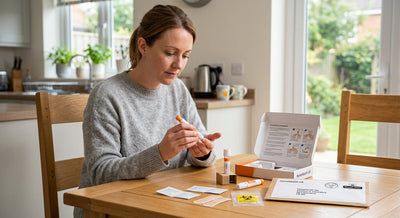
For an at-home finger-prick test:
- Read the official instructions first. Use the Vitall Check sample collection guide before you begin.
- Drink enough water. Hydration can make collection easier.
- Warm your hands. Run them under warm water for around two minutes if they feel cold.
- Use the correct finger and position. Follow the guide rather than improvising.
- Do not squeeze aggressively. Hard squeezing can affect the sample and make collection more difficult.
- Fill the tube to the marked line. An underfilled or poor-quality sample may not be suitable for analysis.
- Post the sample promptly. Follow the return instructions and send it on the recommended day.
A finger-prick sample can be reliable when collected correctly, but collection is not effortless for everyone. Some people have cold hands, poor circulation, needle anxiety or difficulty getting enough blood.
That is normal. If you feel faint or uneasy, stop, sit down and ask someone to stay with you. Contact the provider if you need help or a replacement kit.
Vitall Check samples are processed by independent UKAS-accredited partner laboratories using NHS-grade laboratory standards. The How Vitall Check works guide explains the process from activation and collection through to laboratory analysis and plain-English results.
Which Vitall Check panels include CRP?
CRP appears in several Vitall Check panels, including:
- The Active Lifestyle & Wellness Panel, which includes CRP alongside cardiovascular, metabolic, kidney, liver and nutritional markers.
- The Performance Monitor: 33-Marker Biological Profile, which includes CRP as part of a wider profile.
- The Complete Health & Performance Blood Test, which includes CRP alongside a broader group of health markers.
Vitall Check’s Insight Report is a manual, not a diagnosis. It translates raw laboratory data into plain-English explanations and lifestyle context. For example, it may help you understand what a CRP result means within the laboratory reference range and prepare questions for your next GP conversation.
It does not tell you that a result is “good enough”, diagnose a condition or prescribe treatment.
What are the limits of CRP testing?
CRP cannot identify the cause
CRP is non-specific. Infection, injury, training, autoimmune disease and other factors may all raise it.
You need more information to understand the reason.
Timing can change the result
CRP rises and falls over time. Testing immediately after an event may give a very different result from testing after recovery.
One result is only a snapshot
A single CRP number is like one frame from a film. It may be useful, but it does not show what happened before or what happens next.
Repeat testing may be considered by a healthcare professional when appropriate.
Reference ranges vary
Laboratories may use different methods, units and reference ranges. Always read the range printed beside your result.
Do not compare your result with a random number from social media or an overseas website.
A normal result does not rule out every condition
Some inflammatory conditions can produce normal or modest CRP results. Your symptoms still matter.
A high result does not automatically mean bacterial infection
CRP can rise for many reasons. Do not use it to decide whether you need antibiotics.
In primary care, NICE recommends point-of-care CRP only in a specific situation: when an adult has a suspected lower respiratory tract infection and, after clinical assessment, it is unclear whether antibiotics are needed. The NICE guideline sets out the clinical context and CRP thresholds. Those thresholds are not a general self-testing rule.
When should you speak to a qualified healthcare professional?
Arrange a routine GP appointment if:
- Your CRP is outside the laboratory reference range and you are unsure what it means.
- Your result remains raised on repeat testing.
- You have ongoing fever, joint swelling or stiffness.
- You have persistent cough or breathlessness.
- You have ongoing diarrhoea, blood in your stool or unexplained weight loss.
- You have night sweats, unusual tiredness or recurrent infections.
- You have a long-term condition or take medication that may affect inflammation.
- You are pregnant, immunosuppressed or recovering from a recent operation.
- You are under 18 and are unsure whether an at-home panel is suitable.
Take your full report, the date of testing, any recent illness or exercise, and a list of medicines and supplements to your appointment. This helps your GP interpret the result properly.
Get urgent help for red-flag symptoms
A CRP number should never delay urgent care.
Do not drive yourself if you are seriously unwell. Call 999 and explain your symptoms.
Summary: use CRP as context, not a verdict
CRP is a useful inflammation marker, but it is not a crystal ball.
It can rise after infection, injury, surgery or hard exercise. It may also be affected by long-term inflammatory conditions and wider health factors such as smoking, sleep and body composition.
The most useful way to read CRP is alongside:
- Your symptoms
- Your recent activity
- Your medical history
- Other blood markers
- The laboratory reference range
- Repeat results, where appropriate
- A qualified healthcare professional’s assessment
If you choose at-home testing, prepare carefully and follow the official sample collection instructions. Use the result to arrive informed for your next GP conversation , not to replace it.
FAQ
Q: Can a CRP blood test diagnose an infection? A: No. CRP can show that inflammation may be present, but it cannot identify the cause or confirm whether an infection is bacterial. A qualified healthcare professional must interpret it with your symptoms and other findings.
Q: Can exercise raise CRP? A: Yes. A hard or unusual training session, long race or injury can temporarily raise CRP. Avoid strenuous exercise before planned baseline testing and record your recent training load.
Q: Should I speak to my GP if my CRP is high? A: Yes, especially if the result is clearly outside the laboratory reference range, remains raised, or appears with symptoms such as fever, joint swelling, breathlessness, persistent gut symptoms or unexplained weight loss.
Author
Vitall Check Editorial Team
The Vitall Check Editorial Team is dedicated to empowering individuals with evidence-based health information and clear, actionable insights. Every article is researched using peer-reviewed journals and official health resources, reflecting our commitment to the same high standards of accuracy as our laboratory testing services. Our goal is to make proactive wellness accessible, data-driven, and transparent.
Disclaimer: Vitall Check is not CQC registered. The content provided is for general information only, does not provide a diagnosis, and does not replace advice from a qualified healthcare professional. Our services do not include treatment, prescription, or medical advice that falls under CQC-regulated activities. Always consult with your GP or a qualified clinician before making significant changes to your healthcare regimen.