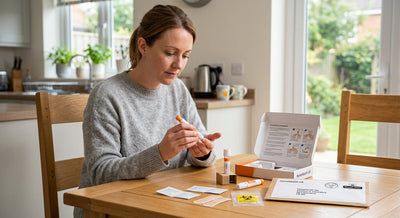
Cholesterol advice gets noisy fast. One reel tells you eggs are the problem. Another says carbs are the villain. A third tries to fix everything with one miracle food.
Here’s the better place to start: your data.
A cholesterol result is not one big red or green light. It is more like a car dashboard. One warning light matters, yes, but you still need to look at the full panel to understand what is actually going on. That is why a proper lipid panel matters before you change your routine.
TL;DR:
- Do not judge cholesterol by one number alone. Total cholesterol, LDL, HDL, non-HDL and triglycerides each tell a different part of the story.
- LDL and non-HDL help show the cholesterol linked with artery build-up. HDL helps carry cholesterol away. Triglycerides reflect how your body handles excess energy.
- The strongest evidence-backed lifestyle steps include more soluble fibre, swapping saturated fats for unsaturated fats, eating oily fish, adding nuts, considering plant stanols, moving regularly, sleeping properly and cutting back on alcohol.
- If you take statins or other lipid-lowering medication, do not stop or change them without speaking to your GP.
- An at-home lipid panel plus HbA1c can give you a fast baseline in plain English, so you can have a more productive GP conversation.
What should a blood test check if you want to lower cholesterol naturally? It should check a full lipid panel — total cholesterol, LDL, HDL, non-HDL and triglycerides — because one number alone can miss the bigger picture. Adding HbA1c also helps show whether blood sugar patterns may be part of the same heart-health picture.
Why one cholesterol number is never the whole story
When people say “my cholesterol is high”, they are often talking about total cholesterol. That is useful, but it is only the headline. Headlines can be dramatic. They are not always the full article.
Total cholesterol
This is the combined amount of cholesterol in your blood. It includes different types, which is why it can be misleading on its own. Think of it like the total bill at a restaurant. It tells you what you spent, but not what you ordered.
The NHS explains cholesterol testing here, including the different parts measured in a blood test.
LDL cholesterol
LDL is often called “bad” cholesterol because it is linked with fatty build-up in arteries over time. If you imagine your blood vessels as plumbing, LDL is the material more likely to stick to the inside of the pipe.
HDL cholesterol
HDL is often called “good” cholesterol because it helps carry cholesterol back to the liver, where it can be processed. It is more like the clean-up crew than the problem itself.
Non-HDL cholesterol
Non-HDL means all the cholesterol that is not HDL. In plain English, it captures the particles more closely linked with artery risk. It can give a clearer picture than total cholesterol alone, which is why NICE uses non-HDL in its lipid guidance for treatment monitoring and risk reduction discussions: NICE cardiovascular risk assessment and lipid modification guidance.
Triglycerides
Triglycerides are not the same as cholesterol. They are a type of fat in your blood, often influenced by excess calories, alcohol, blood sugar control and activity levels. If cholesterol is part of the building material in your body, triglycerides are more like stored fuel. Helpful in the right place. Less helpful when they build up in the wrong context.
This is why a full lipid panel matters. Looking at total cholesterol alone is like judging a football match from the final score without seeing who defended badly, who created chances or who ran out of steam.
What lifestyle changes actually help lower cholesterol naturally?
The NHS and NICE both focus on practical habits, not gimmicks. No detox tea required.
1) Eat more soluble fibre
This is one of the strongest food-based moves you can make.
Soluble fibre helps reduce the amount of cholesterol absorbed into your bloodstream. It acts a bit like a sponge in the gut, binding some of it so more leaves the body instead of being reabsorbed. Good sources include:
- oats
- barley
- beans
- lentils
- chickpeas
- fruit and vegetables
The NHS recommends foods high in fibre to help lower cholesterol. HEART UK also highlights oats and barley beta glucan, beans and pulses in its evidence-based dietary advice on cholesterol-lowering foods.
2) Swap saturated fat for unsaturated fats
This is a big one. The goal is not to fear all fat. It is to change the type.
That means using foods such as:
- olive oil
- rapeseed oil
- avocados
- seeds
- nuts
- oily fish
in place of foods high in saturated fat, such as butter, fatty processed meats, pastries and some takeaways.
The NHS high cholesterol guide and NICE guidance both support reducing saturated fat as part of heart risk reduction. A large Cochrane review also found that reducing saturated fat for at least two years lowered combined cardiovascular events: Cochrane review.
3) Include oily fish and nuts regularly
Oily fish and nuts are not magic bullets. They are more like steady players in a strong team.
The NHS Eatwell guidance recommends fish as part of a healthy diet, including oily fish, while also noting limits for some groups: NHS Eatwell Guide.
Nuts can help because they provide unsaturated fats and fibre. A handful is enough. No need to treat them like trail mix with a marketing budget.
4) Consider plant stanols or sterols
Plant stanols and sterols are added to certain yoghurts, drinks and spreads. They can help lower LDL cholesterol when used consistently. HEART UK explains that foods with 1.5 to 3g per day of plant sterols or stanol esters can help reduce LDL cholesterol: HEART UK plant sterols and stanols.
This is not something everyone needs. But for some people, it can be a useful add-on to broader food changes.
5) Move your body regularly
Exercise helps your heart health in several ways, not just through cholesterol. Think of movement as regular maintenance for the whole system, not a quick patch job.
The NHS recommends aiming for regular physical activity each week: NHS exercise guidelines. You do not need to become a marathon runner. Brisk walking, cycling, swimming and strength training all count.
6) Sleep properly and drink less alcohol
Sleep and alcohol often get left out of the cholesterol chat, but they matter because they affect the bigger metabolic picture.
Poor sleep can push appetite, routine and food choices off track. Alcohol can also raise triglycerides, especially if intake is high. The NHS advises cutting down alcohol as part of looking after your health: NHS alcohol support and guidance.
If you already take statins or other lipid-lowering medication
This part needs to be crystal clear.
Do not stop, reduce or change your statins or any other lipid-lowering medication without speaking to your GP or prescriber first.
Lifestyle changes still matter if you are on medication. They work alongside treatment, not against it. NICE guidance on lipid modification covers statins and other options as part of cardiovascular risk reduction: NICE lipid modification guidance.
If you have side effects, questions or confusion about your results, bring the data to your GP and talk it through there.
What should an at-home blood test include?
If you want a useful baseline, start with:
- total cholesterol
- LDL
- HDL
- non-HDL
- triglycerides
- HbA1c
Why add HbA1c? Because heart health and blood sugar often travel together. HbA1c shows average blood sugar over the past 2 to 3 months. It is less like a single snapshot and more like a longer exposure setting on a camera. It helps you see patterns, not just moments.
That combination gives you a clearer starting point in plain English, so you can spot whether your concern is mainly cholesterol-related, whether triglycerides may need more attention, or whether blood sugar belongs in the conversation too.
If you want to explore the wider picture, read our cholesterol pillar guide, browse our Heart Health blood test collection, or look at the Basic Health Check Blood Test. If you want a broader screen that also supports an informed GP discussion around blood sugar and internal markers, the Complete Health & Performance Blood Test may also be relevant.
Vitall Check reports are designed to make results easy to understand. They translate raw numbers into plain English, helping you prepare for a better, more productive conversation with your GP. That is the goal: not hype, not guesswork, just a faster baseline and clearer context.
Summary
If you want to lower cholesterol naturally, start with the full picture.
A proper lipid panel shows more than total cholesterol alone. LDL, HDL, non-HDL and triglycerides each add context, and that context shapes smarter next steps. The most evidence-backed changes are not flashy: more soluble fibre, better fat swaps, oily fish, nuts, plant stanols, regular movement, better sleep and less alcohol.
And if you already take cholesterol medication, do not change it without speaking to your GP.
The useful move is simple: get a clear baseline, understand it in plain English, and arrive informed for your next GP conversation.
FAQ
Q: Can an at-home blood test replace a GP visit?
A: No. At-home testing gives you a fast baseline and helps you arrive informed for your GP appointment, but it does not provide a diagnosis or replace medical care.
Q: What blood test should I take for cholesterol and heart health?
A: A full lipid panel is the best place to start because it checks total cholesterol, LDL, HDL, non-HDL and triglycerides. Adding HbA1c gives more context about blood sugar patterns too.
Q: If I take statins, can I stop them if my lifestyle improves?
A: Do not stop or change statins or any other lipid-lowering medication without speaking to your GP or prescriber first.
Author
Vitall Check Editorial Team
The Vitall Check Editorial Team is dedicated to empowering individuals with evidence-based health information and clear, actionable insights. Every article is researched using peer-reviewed journals and official health resources, reflecting our commitment to the same high standards of accuracy as our laboratory testing services. Our goal is to make proactive wellness accessible, data-driven, and transparent.
Disclaimer: Vitall Check is not CQC registered. The content provided is for general information only, does not provide a diagnosis, and does not replace advice from a qualified healthcare professional. Our services do not include treatment, prescription, or medical advice that falls under CQC-regulated activities. Always consult with your GP or a qualified clinician before making significant changes to your healthcare regimen.