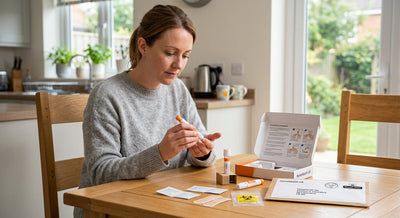
High blood pressure is common, quiet, and far easier to ignore than it should be. That is part of the problem. In England, only around 4 in 10 adults with high blood pressure are both diagnosed and controlled according to the government’s Tackling high blood pressure: from evidence into action report. That means a lot of people are either untreated, undertreated, or simply unaware. At the same time, the NHS is pushing cardiovascular checks further into the community, including quicker pharmacy-based screening options and broader high-street access to prevention services. In short: your heart health is becoming more visible, not less.
If you want to lower blood pressure naturally, the first thing to know is this: blood pressure is measured with a cuff, not found in a blood test. But blood tests still matter, because they show the wider picture your GP is piecing together around your blood pressure, cholesterol, blood sugar, and kidney health.
TL;DR:
- Blood pressure is measured, not blood-tested
- A high reading at home is still a GP conversation, not a diagnosis
- The biggest evidence-backed lifestyle levers are less salt, more potassium-rich foods, regular movement, less alcohol, better sleep, and weight change where needed
- Your GP may also look at total cholesterol, LDL, HDL, non-HDL, triglycerides, HbA1c, fasting glucose, creatinine, and eGFR
- These markers help build the full risk picture, a bit like checking the dashboard instead of staring at one warning light
- Vitall Check can help you arrive informed for your next GP appointment with UKAS-accredited lab results and a plain-English Insight Report
What’s the natural way to lower blood pressure, and which numbers is your GP watching? The natural ways to lower blood pressure include eating less salt, choosing more potassium-rich foods, moving regularly, cutting back on alcohol, sleeping well, and managing weight. Your GP is also likely to look at cholesterol, blood sugar, and kidney markers alongside your blood pressure reading to understand your wider heart health risk.
Why blood pressure is only one part of the story
A blood pressure reading tells you how hard your blood is pushing against your artery walls. Think of it like water pressure in a hose: too much force for too long can wear the system down.
But your GP does not look at that number in isolation.
NICE guidance recommends checking broader cardiovascular and kidney-related markers in people being assessed for high blood pressure, including HbA1c, creatinine, eGFR, total cholesterol, and HDL cholesterol. That is because high blood pressure often travels with other issues, such as raised cholesterol, insulin resistance, or reduced kidney function. One number may start the conversation. The rest explain the context.
If you want a deeper look at the wider cardiovascular picture, Vitall Check’s Basic Health Check Blood Test and Internal Health category can help you understand the lab markers that often sit beside blood pressure in a GP review.
The lifestyle levers that genuinely help
1. Reduce sodium without getting obsessive
Salt is one of the best-known blood pressure levers for a reason. The NHS advises adults to eat no more than 6g of salt a day, yet many people go over without realising it, mainly through packaged foods, sauces, takeaways, bread, and cereals rather than the salt shaker alone.
Think of sodium like carrying extra water in a backpack all day. Your circulation has more fluid to manage, which can raise pressure in the system.
Simple wins:
- Check food labels for salt content
- Swap heavily salted snacks for unsalted nuts, fruit, or yoghurt
- Go easy on sauces and ready meals
- Taste food before salting it
NICE also advises caution with potassium-based salt substitutes in some people, especially if kidney disease is a concern or certain medicines are involved. That is another reason not to self-manage in a vacuum.
2. Eat more potassium-rich foods
Potassium helps your body balance sodium. It is less of a “magic fix” and more of a counterweight. Picture a seesaw: when sodium is heavy on one side, potassium helps level things out.
Good food sources include:
- bananas
- potatoes
- beans
- spinach
- tomatoes
- yoghurt
- lentils
Food first is the sensible route here. If you have kidney issues, always speak to your GP before making major changes to potassium intake.
3. Move often, not just perfectly
You do not need to turn into a marathon runner. Regular movement matters because it helps your blood vessels stay more flexible, supports weight management, and improves insulin sensitivity.
A useful way to think about it: exercise is like oiling a stiff door hinge. The system tends to work more smoothly when it is used regularly.
The NHS recommends aiming for at least 150 minutes of moderate intensity activity a week, plus strength work on two days. Brisk walking, cycling, swimming, dancing, and even determined housework all count if they raise your heart rate.
4. Cut back on alcohol
Alcohol can push blood pressure up, especially when intake is regular or heavy. The NHS advises not regularly drinking more than 14 units a week, spread across several days.
This is one of those levers people often underestimate because the effect is not always dramatic overnight. It is more like a slow drip on the system than a single dramatic hit.
5. Take sleep seriously
Poor sleep and possible sleep apnoea can both affect blood pressure. If your sleep is short, broken, or full of loud snoring and daytime exhaustion, that matters.
Sleep is when your body does some of its basic maintenance work. Skip enough of it and the repair crew never really clocks in.
6. Weight change can help
If you are carrying excess weight, even modest weight loss can help bring blood pressure down. This is not about crash dieting. It is about reducing the workload on the heart and circulation over time.
Think of it like asking your car to drive uphill with a boot full of bricks. The heavier the load, the harder the engine has to work.
The blood markers your GP may review alongside blood pressure
Again, these are not blood pressure tests. They are supporting clues.
Cholesterol markers
The NHS explains cholesterol as a fatty substance in your blood, with different parts telling different parts of the story.
- Total cholesterol: the headline number, but not the whole picture
- LDL cholesterol: often called the type that can build up in artery walls
- HDL cholesterol: helps carry cholesterol away to the liver
- Non-HDL cholesterol: the cholesterol that is not HDL, often used as a practical risk marker
- Triglycerides: another blood fat linked with diet, alcohol, weight, and metabolic health
If blood pressure is the force inside the pipe, cholesterol is more about what may be happening to the pipe lining over time.
For a broader look at cholesterol and heart-health-related markers, you can explore the Complete Health & Performance Blood Test.
Blood sugar markers
- HbA1c: shows your average blood sugar over roughly the last 2 to 3 months
- Fasting glucose: shows your blood sugar at a single point in time after fasting
HbA1c is a bit like looking at your phone’s weekly screen-time report instead of just checking what is on screen right now. One gives the trend. The other gives the moment.
Raised blood sugar can sit alongside blood pressure as part of a wider metabolic picture, which is why it matters in a cardiovascular review.
Kidney markers
- Creatinine: a waste product measured in blood
- eGFR: an estimate of how well your kidneys are filtering
Your kidneys help regulate fluid balance and blood pressure. If they are under strain, that can influence the bigger picture. And high blood pressure can also affect the kidneys in return. It is a two-way street.
If kidney-related markers are part of your concern, the Health Hub pillar on kidney function testing is the key cluster post to read next, and the Organ Function Blood Tests category gives you a practical next step.
Where Vitall Check fits
Vitall Check does not measure blood pressure. You need a validated home monitor, a pharmacy check, or a GP reading for that.
What Vitall Check can do is help you understand the blood markers that often sit around the blood pressure conversation: cholesterol, blood sugar, and kidney-related markers. Every sample is processed by UKAS-accredited partner laboratories to NHS-grade standards, and your Insight Report translates raw numbers into plain English so you can arrive better prepared for your next GP appointment.
That matters because lab data without context can feel like getting a car dashboard full of lights with no manual. Clear explanation makes the next conversation easier.
When to speak to your GP
Speak to your GP if:
- your home readings are repeatedly high
- a pharmacy check flags a concern
- you have a strong family history of heart disease or stroke
- you have diabetes, kidney disease, or high cholesterol
- you are worried, even if you feel well
High blood pressure often has no symptoms. Feeling “fine” is not a reliable screening tool.
Summary
If you want to lower blood pressure naturally, start with the big levers that have real evidence behind them: less salt, more potassium-rich whole foods, regular movement, lower alcohol intake, better sleep, and weight change where appropriate. Then remember the second half of the story: your GP may also be watching cholesterol, blood sugar, and kidney markers to understand your wider cardiovascular risk.
Blood pressure is measured, not blood-tested. But blood tests can still help you arrive informed. That is where Vitall Check fits: not as a replacement for NHS or GP care, but as a practical way to understand the numbers around the conversation.
FAQ
Q: Can an at-home blood test replace a GP visit?
A: No. At-home testing provides baseline screening and lifestyle insights. It helps you arrive informed for your GP appointment, but it does not replace diagnosis or clinical care.
Q: Are finger-prick blood tests as accurate as clinic vein draws?
A: They can be, provided the sample is collected correctly and processed by UKAS-accredited laboratories. Always follow the official sample collection guide closely to reduce the risk of sample errors.
Q: Can a home blood pressure monitor diagnose high blood pressure?
A: No. A home reading is useful, but it is still part of a GP conversation. Diagnosis depends on proper assessment, and your GP may recommend repeated home checks or ambulatory monitoring.
Author
Vitall Check Editorial Team
The Vitall Check Editorial Team is dedicated to empowering individuals with evidence-based health information and clear, actionable insights. Every article is researched using peer-reviewed journals and official health resources, reflecting our commitment to the same high standards of accuracy as our laboratory testing services. Our goal is to make proactive wellness accessible, data-driven, and transparent.
Disclaimer: Vitall Check is not CQC registered. The content provided is for general information only, does not provide a diagnosis, and does not replace advice from a qualified healthcare professional. Our services do not include treatment, prescription, or medical advice that falls under CQC-regulated activities. Always consult with your GP or a qualified clinician before making significant changes to your healthcare regimen.
Sources
- NHS: High blood pressure
- NHS: Blood pressure test
- NICE NG136: Hypertension in adults: diagnosis and management
- gov.uk/Public Health England: Tackling high blood pressure: from evidence into action (PDF)
- NHS England Digital: Adults' health: Cholesterol