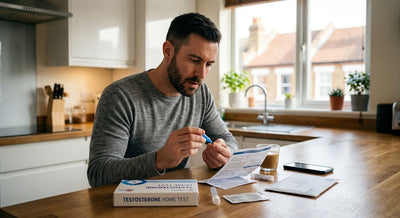
A home blood test kit sounds almost too convenient. Post a few drops of blood, get answers about your health without leaving the sofa. But what can these kits actually measure, and what can't they? Let's separate the reality from the marketing.
TL;DR:
- Home blood test kits can measure hormones, thyroid function, cholesterol, vitamin D, B12, iron, kidney and liver markers, and more
- Results come from UKAS-accredited labs, the same standard used by NHS labs
- What they can't do: diagnose conditions, replace your GP, or measure everything a full clinic draw can
- Vitall Check returns lab-verified results in 48 hours with a plain-English Insight Report
What can a home blood test kit actually measure? A finger-prick home blood test kit can measure hormones, thyroid function, cholesterol, vitamins, iron, and kidney and liver markers, with samples processed in UKAS-accredited laboratories. It cannot diagnose conditions or replace a GP consultation.
What a home kit genuinely measures
The list is longer than most people expect. Modern finger-prick kits, processed properly, cover:
- Hormones: testosterone, oestradiol, progesterone, cortisol, thyroid markers (TSH, free T4)
- Metabolic health: HbA1c, cholesterol panel, liver enzymes, kidney markers
- Nutrition: vitamin D, vitamin B12, folate, ferritin and iron status
- General wellbeing: full blood count, inflammation markers such as CRP
Think of it like a good home tool kit. It won't rebuild your house, but it handles the jobs that come up. For a growing number of health questions, a well-designed panel gives you genuinely useful answers, processed in UKAS-accredited laboratories working to NHS-grade standards.
If you want a single panel that covers most of these bases in one go, the Complete Health & Performance Blood Test does exactly that, with the Insight Report included. For vitamin and nutrition markers specifically, the Essential Vitamins Check keeps it focused.
The sample itself: finger-prick reality
The collection is a small prick, usually on a finger, a few drops onto a card or into a tube, then posted. Done properly, samples processed this way match clinic-draw accuracy for most routine markers. Done badly, the lab may not get enough volume, and the kit fails.
Follow the official how-to-collect guide: warm hands first, hydrate beforehand, and don't rush. Most failed samples come from cold fingers and hurrying, not from anything technical.
What home kits can't do
Being straight with you: some things need a clinic. Very large panels, some specialist markers, and tests requiring blood volume beyond a finger-prick can't be done at home. And no home kit diagnoses anything. What a good one does is give you a clear picture you can take to your GP, arriving informed rather than guessing.
That's not a marketing hedge. It's the honest boundary of the technology, and any provider claiming otherwise is selling you something else entirely.
Speed matters more than you think
Waiting weeks for results defeats the purpose of home testing. Vitall Check returns lab-verified results in 48 hours, with an Insight Report that translates raw numbers into plain English, so you can act on what you learn rather than sit on a result you can't read.
If you're weighing a home kit against a clinic draw, we've compared at-home and GP blood testing in detail separately.
Is a home blood test kit right for you?
If you want answers about energy, hormones, thyroid, cholesterol or nutritional status without waiting for a GP appointment, and you're happy to collect a small sample yourself, it's a legitimate and regulated route. If you need a diagnosis, see your GP. If you want data to bring to that GP conversation, a home kit does that job well.
The takeaway
Home blood test kits genuinely measure a wide range of markers, from hormones to kidney function, processed to the same accreditation standards as NHS labs. They don't diagnose, and they don't replace your doctor. What they do is close the gap between "I feel off" and "here's data my GP can work with," usually in 48 hours.
FAQ
Q: Are home blood test kits accurate? A: Yes, when the sample is collected correctly and processed in a UKAS-accredited laboratory, which is the standard Vitall Check uses. The finger-prick method matches venous-draw accuracy for routine markers.
Q: Can a home blood test kit replace seeing my GP? A: No. It provides baseline data and context, so you can have a better-informed conversation with your GP. Diagnosis and treatment remain clinical matters.
Q: How fast do results come back? A: Vitall Check returns lab-verified results in 48 hours from the sample arriving at the lab, with a plain-English Insight Report included.
About the author
The Vitall Check Editorial Team is dedicated to empowering individuals with evidence-based health information and clear, actionable insights. Every article is researched using peer-reviewed journals and official health resources, reflecting our commitment to the same high standards of accuracy as our laboratory testing services. Our goal is to make proactive wellness accessible, data-driven, and transparent.
Disclaimer: Vitall Check is not CQC registered. The content provided is for general information only, does not provide a diagnosis, and does not replace advice from a qualified healthcare professional. Our services do not include treatment, prescription, or medical advice that falls under CQC-regulated activities. Always consult with your GP or a qualified clinician before making significant changes to your healthcare regimen.