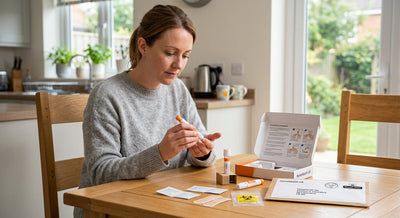
The arrival of Wegovy tablets in the UK this July has changed the landscape of weight management forever. With over two million people already using GLP-1 medications and tens of thousands joining the queue for this new oral version, the focus is shifting from "how do I get it" to "how do I stay safe while taking it." Taking a pill every morning feels far more routine than a weekly injection, but the biological impact on your body remains just as significant. Because these medications interact deeply with your metabolism, hormones, and organ function, keeping a close eye on your internal data isn't just a good idea, it's a fundamental part of responsible use.
TL_DR:
- Wegovy tablets launched in the UK in July 2026, offering a daily oral alternative to injections.
- Monitoring your blood markers helps you and your GP track how your liver, kidneys, and thyroid are responding.
- Key biomarkers to track include HbA1c for sugar levels, LFTs for liver health, and creatinine for kidney function.
- Nutritional gaps in Vitamin B12 and Vitamin D can occur as your appetite and diet change.
- Regular testing provides an "informed arrival" for your next clinical consultation.
What's GLP-1 blood monitoring? It's the process of tracking specific biomarkers, like HbA1c, liver enzymes, and kidney function, to see how your body responds to GLP-1 medications like Wegovy. This data helps you identify shifts in your metabolic and organ health, allowing for more productive conversations with your GP about your weight management journey.
The Morning Pill and the Metabolic Shift
The recent news that Wegovy tablets are now available in the UK marks a major milestone. For many, the transition from an injectable pen to a once-daily tablet makes weight management feel more integrated into daily life. However, whether you swallow a tablet or use a pen, the active ingredient, semaglutide, works by mimicking a hormone that tells your brain you're full and slows down your digestion. This doesn't just change how much you eat; it changes how your body processes energy and filters waste.
Think of your body like a high-performance car that's just had its fuel system upgraded. While the car might be running faster and more efficiently, you still need to check the dashboard regularly. If the oil pressure or engine temperature starts to creep up, you want to know before a warning light flashes red. Blood monitoring acts as that dashboard, providing early signals about how your "engine", your liver, kidneys, and pancreas, is handling the new settings.
Because the MHRA authorised oral semaglutide specifically for weight management, it's essential to remember that this is a clinical intervention. Even if you're accessing this through a private provider, the data you gather from regular testing helps you arrive at your next GP appointment with a clear picture of your progress. Instead of just saying you've lost weight, you can show how your blood sugar and organ markers are reacting to the change.
Tracking Your Blood Sugar Beyond the Scale
One of the primary reasons people use GLP-1 medications is to manage metabolic health. Even if you aren't living with type 2 diabetes, semaglutide has a profound effect on your blood glucose levels. The gold standard for monitoring this is the HbA1c test. Unlike a finger-prick glucose test that shows your sugar levels at a single moment, HbA1c provides a three-month average.
Imagine trying to judge a football team's performance. If you only look at the score five minutes into one game, you don't know much. HbA1c is like looking at the league table at the end of the season; it tells you the overall trend and consistency. This is vital because as you lose weight on Wegovy tablets, your insulin sensitivity usually improves. Tracking this change allows you to see the real biological benefit of your weight loss, which often moves faster than the numbers on your bathroom scale.
The NHS uses HbA1c to diagnose and monitor diabetes, and for someone on a GLP-1 journey, staying within a healthy range is a key indicator of success. If your levels drop too low or don't shift as expected, it's a conversation starter for your clinician. By using a specialist metabolic health panel, you can track these shifts from the comfort of home, ensuring your data is ready whenever you need to speak with a professional.

Protecting the Filtration System: Kidneys and Liver
Your kidneys and liver are the unsung heroes of your weight loss journey. They are responsible for processing the medication and filtering out the by-products of fat breakdown. When you lose weight rapidly, your liver has to work harder to process the fat being released from storage. Similarly, your kidneys must handle changes in fluid balance, especially since GLP-1 medications can sometimes reduce your thirst or lead to dehydration through side effects like nausea.
Monitoring kidney function typically involves checking your creatinine levels and eGFR (estimated Glomerular Filtration Rate). Think of your kidneys like a garden hose with a filter at the end. If the filter gets clogged or the water pressure drops too low, the system doesn't work. Keeping an eye on these markers ensures that your "filtration system" is keeping up with the demands of your new medication.
Liver function tests (LFTs) are equally important. These tests look for specific enzymes that might leak into your blood if the liver is under stress. While GLP-1 drugs are often helpful for liver health in the long run, the initial phase of weight loss is a period of high metabolic activity. Checking your liver enzymes every few months gives you peace of mind that your internal organs are coping well with the transformation. You can find these markers in a comprehensive organ health test.
The Nutrient Gap: Why B12 and Vitamin D Matter
When you're taking a medication that suppresses your appetite, you naturally eat less. While this is the goal for weight loss, it also means you're taking in fewer vitamins and minerals. It's easy to accidentally create a nutrient gap, where your body isn't getting enough of the essentials to keep you feeling energetic and healthy.
Vitamin B12 is a common concern for those on GLP-1 medications. This vitamin is crucial for energy production and nerve function. If your levels dip, you might start feeling unusually tired or "foggy," which people often mistake for a side effect of the medication itself. By testing your B12 levels, you can determine if you need to adjust your diet or consider a supplement, rather than just guessing.
Vitamin D is another vital marker, especially in the UK where sunlight is often in short supply. It's involved in everything from bone health to immune function and mood. When your body is undergoing the significant changes associated with weight loss, you want your foundation to be as strong as possible. Think of vitamins like the structural audit of a house. You can repaint the walls (lose weight), but you also need to make sure the beams and foundations (nutrients) are solid so the whole structure remains stable.

Thyroid Health and the Metabolic Thermostat
Your thyroid gland acts like a thermostat for your body. It controls how fast or slow your metabolism runs. Some GLP-1 users find that their thyroid function can influence how effective the medication is. If your thyroid is "running slow" (hypothyroidism), you might find it much harder to lose weight, even with the help of Wegovy tablets.
The NICE guidelines on thyroid monitoring emphasize the importance of checking TSH (Thyroid Stimulating Hormone) levels to ensure everything is in balance. Because weight loss and GLP-1 drugs interact with your endocrine system, having a baseline thyroid test before you start, and checking it periodically, is a smart move. It ensures that your weight loss journey isn't being held back by a silent issue with your body's internal thermostat.
Inflammation is another area where blood data provides deep insights. Markers like CRP (C-Reactive Protein) can tell you if there's high levels of inflammation in your body. Often, as people lose weight and improve their diet, these inflammation markers drop significantly. Seeing that numerical drop can be incredibly motivating, proving that your health is improving in ways that the mirror can't show.
Preparing for an Informed Arrival
The most empowered way to manage your health is to be a partner in your own care. Many people feel nervous about talking to their GP about weight management medications, especially if they are using private services. Arriving at a consultation with a folder of your own lab-verified blood results changes the dynamic of that conversation.
Instead of waiting for the GP to suggest tests, you can lead with the data. "I've been taking Wegovy tablets for three months, and here are my latest kidney and liver function results," is a very different opening than just asking for a prescription refill. It shows you're taking your health seriously and that you're monitoring the safety of your treatment.
This "informed arrival" helps bridge the gap between private weight loss programmes and the broader healthcare system. It ensures that your medical record is accurate and that any potential issues are caught long before they become clinical problems. By using at-home testing kits that use the same UKAS-accredited labs as the NHS, you can trust that your data is of the highest professional standard.

Listening to Your Body's Silent Signals
While blood tests provide the hard data, they should always be paired with how you feel. Some side effects of Wegovy tablets, like mild nausea or changes in bowel habits, are common and often settle over time. However, if you feel consistently fatigued, dizzy, or "not yourself," your blood markers might hold the answer.
Sometimes, what feels like a side effect is actually a sign of a nutrient deficiency or a shift in blood sugar that needs attention. For example, if you're feeling faint, it could be that your blood sugar is dipping too low because your dosage needs adjusting, or it could be a sign of dehydration affecting your kidney markers. Without a test, you're just playing a guessing game with your health.
Taking a proactive approach means you aren't just reacting when something goes wrong. You're building a library of data that maps out your unique biological response to the medication. This is particularly important for athletes or busy professionals who need to maintain high performance while managing their weight. You don't want your training or your work to suffer because of a hidden imbalance that could have been identified with a simple finger-prick test.
The Future of Weight Management is Data-Driven
As more people move towards oral GLP-1 options, the convenience of the tablet shouldn't lead to a casual attitude toward monitoring. The journey to a healthier weight is a marathon, not a sprint, and your blood data is the map that keeps you on the right path.
By regularly checking your metabolic, organ, and nutritional markers, you ensure that your weight loss is safe, sustainable, and supported by science. You're moving away from the old model of "wait and see" and towards a future where you are in the driver's seat of your own wellness. Whether it's your first month on Wegovy tablets or your first year, the insights you gain from your blood will always be your most valuable asset.

FAQ: GLP-1 Blood Monitoring
Do I need a blood test before starting Wegovy tablets? Most responsible providers will require a baseline blood test before prescribing GLP-1 medications. This usually includes checking your liver and kidney function, as well as your HbA1c, to ensure the medication is safe for you to use.
How often should I test my blood while on GLP-1 medication? While there's no single rule for everyone, many people choose to test every three to six months. This allows you to track long-term markers like HbA1c and see how your organ function is responding to your weight loss journey.
Can Wegovy tablets cause vitamin deficiencies? Because GLP-1 medications reduce your appetite, you may consume fewer nutrient-dense foods. This can lead to lower levels of Vitamin B12, Vitamin D, and Iron. Regular monitoring helps you identify these gaps so you can address them through diet or supplementation.
Why's liver function important for weight loss? When you lose weight, your liver has to process the fat that's being broken down. Monitoring liver enzymes ensures that your liver is handling this metabolic load effectively and staying healthy throughout the process.
Can I use my results to talk to my NHS GP? Yes. Using lab-verified results from UKAS-accredited laboratories means your data meets the same standards used by the NHS. Sharing these results with your GP helps them provide better care and ensures they are informed about your weight management progress.
Summary: Your GLP-1 Monitoring Checklist
- Baseline Testing: Always get a baseline of your liver, kidney, and HbA1c levels before starting.
- Sugar Tracking: Use HbA1c to see the real impact on your metabolic health beyond the scale.
- Organ Safety: Regularly monitor your kidney (creatinine) and liver (LFTs) enzymes to ensure your filtration systems are healthy.
- Nutrient Check: Keep an eye on Vitamin B12 and Vitamin D to avoid the energy crashes that come from restricted eating.
- GP Collaboration: Use your data to have more informed, productive conversations with your doctor.
Author: Vitall Check Editorial Team The Vitall Check Editorial Team is dedicated to empowering individuals with evidence-based health information and clear, actionable insights. Every article is researched using peer-reviewed journals and official health resources, reflecting our commitment to the same high standards of accuracy as our laboratory testing services. Our goal is to make proactive wellness accessible, data-driven, and transparent.
Disclaimer: Vitall Check is not CQC registered. The content provided is for general information only, does not provide a diagnosis, and does not replace advice from a qualified healthcare professional. Our services do not include treatment, prescription, or medical advice that falls under CQC-regulated activities. Always consult with your GP or a qualified clinician before making significant changes to your healthcare regimen.