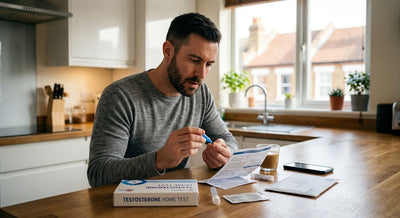
Feeling tired, wired or unlike yourself can make you wonder whether cortisol is involved. A cortisol test can give you a number, but that number needs context: symptoms, timing, medicines and the reason you tested all matter.
TL;DR:
- Cortisol naturally changes throughout the day, so follow the sample timing in your test instructions.
- Symptoms linked with high or low cortisol can have many other causes. Symptoms alone cannot tell you what your cortisol level is.
- At-home testing can provide lab results to help you prepare for a GP conversation. It does not diagnose a condition or replace medical care.
- Warm hands, drink water and follow the official how to collect your sample guide.
What’s a cortisol test? A cortisol test measures cortisol in a sample of blood, saliva or urine. The result needs to be considered alongside the sample time, your symptoms, medicines and the reason for testing.
What does cortisol do, and when might testing make sense?
Cortisol is a hormone made by glands above your kidneys. It helps your body respond to demands and follows a daily pattern: levels are usually higher in the morning and lower later on. Think of it like a body clock, not a fixed setting.
Stress, poor sleep, illness, exercise and some medicines can affect cortisol. That means feeling stressed does not automatically mean your cortisol is high. Nor does feeling tired prove it is low.
A GP may consider testing when there is a specific reason to check how the body is making or managing cortisol. For example, NHS guidance on Addison’s disease describes symptoms that can include ongoing fatigue, weight loss, nausea, salt cravings and dizziness when standing. These symptoms also occur in other conditions, so they need proper assessment.
Persistently high cortisol can be associated with Cushing’s syndrome, a rare condition. The NHS overview of Cushing’s syndrome describes signs such as easy bruising, muscle weakness and changes in body shape. If you notice ongoing or worsening symptoms, speak to your GP rather than trying to diagnose yourself from a checklist.
How to check cortisol at home in the UK
An at-home test lets you collect a sample at home and send it to a laboratory. Vitall Check’s Cortisol Levels & Daily Rhythm Test uses a finger-prick blood sample. The sample is processed by a UKAS-accredited laboratory working to NHS-grade standards.
The product instructions specify a morning sample before 10:00 am and an eight-hour fast (water is fine). They also advise avoiding heavy exercise for 24 hours and pausing biotin supplements for two days. Check the instructions supplied with your test, as preparation can vary.

STEP 1: Choose a suitable time
Plan ahead so you can collect your sample within the required morning window. Cortisol changes during the day, so taking a sample at a different time can make it harder to compare with the reference information provided for the test.
STEP 2: Get ready before you collect
Drink water and warm your hands under comfortably warm water. Have the collection materials ready. A finger-prick sample may feel like a small pinch, and collection can take patience. If you feel uneasy, ask someone you trust to stay with you.
STEP 3: Follow the official collection guide
Read the how to collect your sample guide before starting, then follow the steps included with your test. Don’t improvise if the sample is slow to collect. Follow the troubleshooting instructions, and contact the provider if you cannot complete it.
STEP 4: Return the sample as instructed
Package and post your sample using the supplied instructions. Vitall Check states that results are delivered through a secure portal, with a plain-English Insight Report to help explain the laboratory information. Think of the report as a manual for reading the numbers, not a diagnosis or medical consultation.
What do cortisol results mean?
Your result is shown alongside a clinical reference range. This is a guide used by the laboratory to help describe the result. It is not a stand-alone verdict about your health. A result outside a range does not, by itself, confirm a condition; a result within it does not explain every symptom.
Timing matters. So do medicines, recent illness and the reason for testing. For example, Oxford University Hospitals’ cortisol test information notes that its interpretation depends on a timed morning sample and clinical context. The thresholds and methods used can differ between laboratories, so don’t apply another lab’s numbers to your own report.
A single test is like a snapshot, not a full film of what has been happening in your body. If your result worries you, or your symptoms continue, share the report with your GP. Bring the sample time, a list of medicines and supplements, and a short note of what you have noticed. That can help you arrive informed for your GP appointment.
If you’re looking at other hormone markers too, explore the Hormones & Thyroid collection, the Thyroid Health & Function Test or the Male Hormone Health & Vitality Test. Each test looks at different markers; they are not substitutes for a GP assessment.

What should you do next?
- If symptoms are new, persistent or getting worse: book an appointment with your GP and explain what you have noticed.
- If you have a result outside the reference range: share it with your GP rather than trying to interpret it alone.
- If you take steroid medicines: tell your GP. Do not stop or change prescribed steroids without medical advice.
- If you feel seriously unwell: seek urgent medical help. If you have Addison’s disease and develop severe symptoms such as repeated vomiting, confusion, collapse or loss of consciousness, call 999.
At-home testing can add useful information to a health conversation. It should support care, not replace it.

Summary
A cortisol test measures a hormone that naturally changes through the day. Symptoms associated with high or low cortisol can overlap with many other health concerns, so they cannot confirm a cause on their own. If you choose an at-home cortisol test, follow the morning timing and collection instructions carefully. UKAS-accredited laboratory testing and a plain-English report can help you understand the information and prepare questions for your GP.
Frequently Asked Questions
Q: Can an at-home cortisol test replace a GP visit? A: No. It can provide laboratory results to discuss with your GP, but it does not diagnose a condition or replace medical assessment.
Q: Are finger-prick cortisol tests as accurate as venous blood draws? A: A finger-prick sample can be analysed reliably when the test is suitable for that sample type and collection instructions are followed. It is not automatically interchangeable with a venous sample; your GP may arrange further testing if needed.
Q: When should you take a cortisol test? A: Follow the instructions for your specific test. Vitall Check’s cortisol test instructions call for a morning sample before 10:00 am, because cortisol changes throughout the day.
Author
Vitall Check Editorial Team
The Vitall Check Editorial Team is dedicated to empowering individuals with evidence-based health information and clear, actionable insights. Every article is researched using peer-reviewed journals and official health resources, reflecting our commitment to the same high standards of accuracy as our laboratory testing services. Our goal is to make proactive wellness accessible, data-driven, and transparent.
Disclaimer: Vitall Check is not CQC registered. The content provided is for general information only, does not provide a diagnosis, and does not replace advice from a qualified healthcare professional. Our services do not include treatment, prescription, or medical advice that falls under CQC-regulated activities. Always consult with your GP or a qualified clinician before making significant changes to your healthcare regimen.