You can learn a lot from one blood test. But one marker rarely tells the whole story.
A cholesterol result is more useful alongside blood sugar and inflammation markers. Creatinine makes more sense when viewed with other kidney markers. Hormone results need timing and personal context. A broader panel connects the dots instead of leaving you with one isolated number and a search engine full of worst-case scenarios.
That is the purpose of a complete health blood test in the UK: to give you a wider snapshot of key health systems in one go, with clear explanations to help you prepare for a better GP conversation.
TL;DR:
- The Complete Health & Performance blood test measures 50 biomarkers across 8 health systems.
- It covers metabolic, hormonal, organ, immunity and nutritional markers.
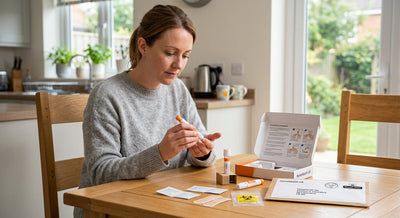
- You collect your sample at home using a finger-prick kit or choose a clinic draw where available.
- Samples are processed by UKAS-accredited laboratories using NHS-grade standards.
- Results are available in your secure portal within 48 hours of lab receipt.
- Your Insight Report translates raw results into plain English and includes a personalised health action plan.
- The test does not diagnose health conditions or replace medical care.
What's included in a complete health blood test in the UK? A complete health blood test combines markers for blood health, liver, kidneys, cholesterol, blood sugar, nutrients, inflammation, hormones and thyroid function in one panel, helping you understand your results in context and prepare for a GP conversation.
What is a complete health blood test?
A complete health blood test is a broad panel that checks several areas of your health at the same time.
Instead of ordering separate tests for cholesterol, iron, thyroid hormones and liver markers, you receive one joined-up set of results. This can be useful if you want a general baseline, are monitoring changes over time, or want more information to take to your GP.
Think of it like checking the whole dashboard of a car rather than only looking at the fuel gauge. The fuel reading still matters, but the engine temperature, oil pressure and warning lights add important context.
Vitall Check’s Complete Health & Performance blood test includes 50 biomarkers across 8 health systems.
It is designed for:
- The Data-Driven Patient who wants more than a single number.
- Athletes and active people tracking training, recovery and nutrition.
- Busy professionals looking for a convenient health snapshot.
- People preparing for a more informed GP appointment.
- Wellness professionals who need understandable data to support client conversations.
This is not a diagnosis. It is a broader set of lab results, explained clearly.

What does the Complete Health & Performance panel include?
The panel groups your results into eight easy-to-follow areas.
1. Liver and protein health
This group includes:
- ALT
- ALP
- GGT
- Total bilirubin
- Albumin
- Globulin
- Total protein
These markers can help show how different liver-related processes and blood proteins look at the time of testing. Alcohol, medication, recent exercise, illness and other factors can affect some results.
A single raised marker is not a diagnosis. It is a reason to look at the full pattern and, where appropriate, discuss it with your GP.
2. Heart and cholesterol markers
This group includes:
- Total cholesterol
- HDL cholesterol
- LDL cholesterol
- Non-HDL cholesterol
- Triglycerides
- Total cholesterol to HDL ratio
- C-reactive protein, or CRP
Cholesterol is often treated like one simple score. It is more like a team result. Total cholesterol, HDL, LDL and triglycerides each add a different piece of information.
Recent food, alcohol intake, activity, body composition and longer-term health factors can all influence results. Your report shows the results against the laboratory’s reference ranges, so you can see where each marker sits.
For wider background, the NHS explains how blood glucose and other checks can form part of health assessments in its guidance on type 2 diabetes diagnosis.
3. Kidney and hydration markers
This group includes:
- Creatinine
- Urea
- Uric acid
- eGFR
These markers are read together to provide information about kidney filtering and waste products in the blood.
If you lift weights or have a higher level of muscle mass, creatinine may be affected by that context. Hard training and dehydration may also influence some results. This is why it is unhelpful to panic over one number without considering the wider panel.
4. Iron and nutritional markers
This group includes:
- Ferritin
- Serum iron
- Transferrin
- Folate
- Vitamin B12
- Magnesium
These markers relate to nutrients involved in blood formation, nerve function and other body processes.
Ferritin is a useful example of why context matters. It reflects stored iron, but other factors can affect it too. Reading ferritin alongside iron, transferrin and the full blood count gives you a more complete view than looking at ferritin alone.
5. Blood sugar and cortisol
This group includes:
- HbA1c in percentage
- HbA1c in mmol/mol
- Cortisol
HbA1c gives an estimate of your average blood sugar over the previous two to three months. It is different from a single glucose reading taken after one meal or one fast.
Cortisol follows a daily rhythm, so timing matters. The Complete Health & Performance test asks for a morning sample because cortisol and some hormones can change during the day.
6. Hormone and muscle markers
This group includes:
- Testosterone
- Free testosterone
- Free testosterone percentage
- SHBG
- FAI
- Oestradiol
- FSH
- LH
- Prolactin
- DHEA
- CK
- Testosterone-to-cortisol ratio
Hormone results are affected by timing, age, sex, menstrual cycle, medication, sleep, stress and other personal factors.
Training context matters here too. CK, for example, can rise after hard exercise because it is linked to muscle stress. If you test immediately after a demanding session, the result may not represent your usual baseline.
It is like checking your body’s temperature straight after a sprint and using it to judge how you feel at rest. The reading is real, but the timing changes the meaning.
7. Blood cell and immunity markers
This group includes a full blood count, including:
- Haemoglobin
- Red blood cell count
- White blood cell count
- Haematocrit
- MCV
- MCH
- MCHC
- RDW
These markers provide information about red blood cells, oxygen-carrying capacity and white blood cells.
The results can be affected by factors such as recent illness, hydration, training, nutrition and other health circumstances. They should be read as a group rather than as separate warning lights.
8. Thyroid markers
This group includes:
- TSH
- Free T3
- Free T4
Thyroid hormones help control many body processes, including energy use and temperature regulation. TSH is the signal that tells the thyroid how hard to work, while T3 and T4 are thyroid hormones measured in the blood.
The panel gives you the numbers and their reference ranges. Your GP can interpret them alongside your symptoms, medical history and any medicines you take.

Why choose a full-body blood test instead of a single test?
A single test can be the right choice when you have one clear reason for testing. For example, you may only want to check thyroid markers or testosterone.
A wider panel may be more useful when you want a broader baseline or several areas are relevant to your health goals.
A complete panel can help you:
- See how related markers sit together.
- Identify areas to discuss with your GP.
- Compare results over time.
- Avoid testing one marker without useful context.
- Understand more of your metabolic, hormonal, nutritional and organ health in one report.
It is not automatically “better” for everyone. More information can also mean more questions. The value comes from understanding the results properly and knowing what should be discussed with a qualified healthcare professional.
For a deeper look at how context affects blood test results, read the Health Hub pillar article: Liver Test Kit.
How does the full-body blood test work at home?
The at-home process is straightforward, but preparation matters.
STEP 1: Prepare before testing
Follow the official sample collection guide before you begin.
For this panel, the product guidance recommends:
- Fast for around 8 hours.
- Drink water during the fast.
- Take your sample in the morning, before 10:00 am.
- Avoid heavy exercise for 24 hours.
- Avoid alcohol before sampling.
- Pause biotin supplements for 2 days, unless your GP has told you otherwise.
- Warm your hands before collecting the sample.
Finger-prick collection is convenient, but it can be challenging for some people. Warm hands and good hydration can help. If you feel faint or uneasy, stop and ask someone to stay with you. Contact Vitall Check if you need support or a replacement kit.
STEP 2: Collect your sample
Use the safety lancet on the side of your middle or ring finger. Let the blood flow naturally into the collection tube and fill it to the marked line.
Do not squeeze aggressively. Follow the instructions carefully to reduce the risk of an unusable sample.
STEP 3: Post it back
Seal the tube, place it in the biohazard bag and use the prepaid return envelope. Post it on the same day, Monday to Thursday where possible, so it reaches the lab promptly.
STEP 4: Receive your results
Your sample is processed by UKAS-accredited partner laboratories. UKAS explains that medical laboratory accreditation under ISO 15189 helps provide confidence in a laboratory’s quality, competence and quality management systems. You can read more on the UKAS medical laboratory accreditation page.
Your results are available in your secure portal within 48 hours of lab receipt.

What is included in the Insight Report?
The report is designed to make raw lab data easier to understand.
You receive:
- Your results and the laboratory reference ranges.
- Plain-English explanations of each marker.
- A summary of the main points in your report.
- Context about factors that may affect certain results.
- A personalised health action plan for general lifestyle tracking and discussion.
- A format that can help you prepare for your next GP appointment.
Think of the Insight Report as a user manual for your results. It does not make a diagnosis or tell you what treatment you need. It translates technical information into language you can follow.
The results portal tour shows how results, explanations and trend tracking are presented.
How should you use your results?
Start with the full report, not the most alarming-looking number.
Then:
- Check the reference range shown beside each result.
- Note any preparation issues, such as poor sleep, illness or hard training.
- Compare results with previous tests if you have them.
- Write down questions for your GP.
- Take the report with you if you arrange an appointment.
Reference ranges are not universal scoreboards. They can vary between laboratories and may be affected by age, sex, pregnancy, medicines and other factors. A result outside a range does not automatically mean you have a condition. A result inside a range does not rule out every health concern.
The NHS explains that blood tests can be used to investigate symptoms and diagnose conditions, but the meaning of a result depends on the wider clinical picture.
FAQ
Q: Is a full-body blood test at home in the UK accurate? A: It can provide reliable results when the sample is collected correctly and processed by a suitable laboratory. Vitall Check samples are processed by UKAS-accredited partner laboratories. Finger-prick collection still requires careful preparation and following the official instructions.
Q: How quickly do Complete Health & Performance results arrive? A: Results are available in your secure portal within 48 hours of the laboratory receiving your sample. Delivery and postal time are separate from laboratory processing time.
Q: Can a complete health blood test replace a GP appointment? A: No. It can help you arrive informed with a clear record of your results, but it does not replace a GP assessment, diagnosis or medical advice.
Summary
The Complete Health & Performance blood test is Vitall Check’s broadest at-home panel. It measures 50 biomarkers across liver, kidney, blood, cholesterol, blood sugar, nutrition, hormones, immunity and thyroid health.
That wider view can be helpful when you want more than one isolated result. With UKAS-accredited laboratory processing, results in 48 hours and an Insight Report written in plain English, you receive information that is easier to understand and take into a GP conversation.
Explore the Complete Health & Performance blood test.
Author
Vitall Check Editorial Team
The Vitall Check Editorial Team is dedicated to empowering individuals with evidence-based health information and clear, actionable insights. Every article is researched using peer-reviewed journals and official health resources, reflecting our commitment to the same high standards of accuracy as our laboratory testing services. Our goal is to make proactive wellness accessible, data-driven, and transparent.
Disclaimer: Vitall Check is not CQC registered. The content provided is for general information only, does not provide a diagnosis, and does not replace advice from a qualified healthcare professional. Our services do not include treatment, prescription, or medical advice that falls under CQC-regulated activities. Always consult with your GP or a qualified clinician before making significant changes to your healthcare regimen.