Your watch says your sleep was poor, your heart rate shifted and your recovery score has dipped. Hormones might be part of the picture, but your wrist can’t tell you their levels.
Hormone tracking is making headlines in UK wellness for 2026, with apps and wearables combining body signals in new ways. Here’s what that data can tell you, what it can’t, and where blood tests fit.
TL;DR:
- Wearables track signals such as heart rate, HRV, sleep and skin temperature.
- Apps may use those signals to estimate patterns. They do not directly measure hormone levels.
- Blood tests measure specific hormones in your sample at a particular time.
- Use wearable trends as context, and test results to help prepare for an informed GP conversation.
Can your smartwatch track hormones? No. A standard smartwatch measures signals such as heart rate, sleep and skin-temperature changes. An app may use those signals to estimate patterns, but a blood test is needed to measure specific hormones directly.
What does a smartwatch actually measure?
Your wearable collects body signals. Depending on the device, these may include heart rate, heart rate variability (HRV), movement, sleep estimates and changes in skin temperature.
HRV means the small changes in time between heartbeats. It can help show how your body’s patterns shift over time. But it is not a hormone reading, and it can change for many reasons, including stress, illness, exercise and poor sleep.
Women’s Health UK has highlighted hormone-aware tracking as a wellness trend for 2026. Some approaches combine wearable signals, such as temperature and resting heart rate, with separate hormone measurements. The important distinction: the wearable tracks signals; it doesn’t automatically measure hormones. (Women’s Health UK’s 2026 wellness trends)
Think of your watch as a weather app for your body. It can spot a change in the forecast, but it can’t tell you exactly what caused the clouds.

What can wearables tell you about hormones?
Hormone levels can change how you feel and how your body behaves. But similar changes can have other causes, too.
For example, an app might notice a shift in your overnight skin temperature or resting heart rate and use it to estimate a cycle pattern. That may give you useful context for your own tracking. It does not confirm an ovulation date, measure progesterone, or explain a symptom on its own.
The same applies to sleep and recovery scores. They may help you spot a pattern (say, your sleep has been disrupted for several nights) but they can’t identify whether hormones, workload, illness or something else is behind it.
Treat a score as a prompt to notice, not a verdict. A car dashboard can flag a warning light; it can’t tell you the full story under the bonnet.
What does a blood test measure?
A blood test can measure the specific markers included in that test. Depending on the panel, these might include:
- Oestradiol and progesterone, which vary with factors such as menstrual-cycle timing.
- Testosterone, a hormone present in people of all sexes.
- Thyroid markers, such as TSH and T4.
- Cortisol, a hormone whose levels can vary during the day.
A blood test gives you a result from a particular sample at a particular time. It is a snapshot, not a live stream. Timing and personal context matter, so follow the collection instructions for your test and discuss concerns with your GP.
For example, the NHS explains that suspected underactive thyroid may be checked with blood tests for TSH and T4. A watch’s heart-rate or temperature data cannot replace those measurements. (NHS: Underactive thyroid)
Explore the Thyroid Health & Function Test or the Female Hormone Health & Balance Test to see which markers those panels include. You can also browse the Hormones & Thyroid collection.

Wearable or blood test: which should you use?
They answer different questions.
Use a wearable to notice patterns. It can help you keep an ongoing record of sleep, activity, heart rate and other signals. That record may be useful to share with your GP, especially if you’ve noticed a change over time.
Use a blood test to measure selected markers. It can provide lab-verified results for the hormones included in the panel. Vitall Check samples are processed by UKAS-accredited laboratories working to NHS-grade standards. The Insight Report is a manual that translates raw data into results in plain English; it does not provide a diagnosis or medical advice.
Neither tool tells the whole story by itself. Your symptoms, health history and other factors matter too. If tiredness has lasted for a few weeks, affects your daily life or comes with other concerns, the NHS recommends contacting your GP rather than relying on an app or self-diagnosing. (NHS: Tiredness and fatigue)
For another look at how wearables and lab results fit together, read our Health Hub article, Wearables vs Blood Tests: Which Gives You Better Health Data?.
If you choose an at-home blood test
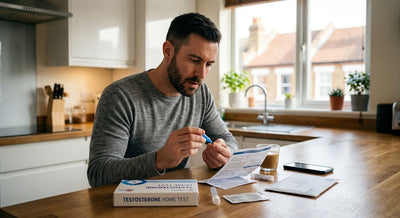
Finger-prick collection can be straightforward, but it isn’t effortless for everyone. Cold hands, slow blood flow or nerves can make it fiddly. Warm your hands, drink water unless your test instructions say otherwise, and allow yourself time.
Follow the official how to collect your sample guide closely. Read the instructions before you start, and don’t rush to fill the tube. If collection feels difficult, pause and seek help rather than forcing it.
If you take a test, use the result to arrive informed for a GP conversation, not as a reason to start, stop or change treatment on your own. NICE guidance on thyroid disease also sets out how suspected thyroid problems should be assessed and managed. (NICE: Thyroid disease, assessment and management)
Summary: use each tool for what it can do
Your smartwatch can track body signals and help you notice patterns. It cannot directly tell you your oestradiol, progesterone, testosterone, thyroid hormone or cortisol level.
A relevant blood test measures the specific markers included in that panel, while a wearable adds day-to-day context. Used thoughtfully, both can help you keep better notes and prepare questions for your GP. Neither replaces professional care.
FAQ
Q: Can an at-home blood test replace a GP visit? A: No. It can give you lab-verified results to help you arrive informed, but it does not diagnose, treat or replace advice from your GP or another qualified healthcare professional.
Q: Are finger-prick blood tests as accurate as clinic vein draws? A: A finger-prick test can provide reliable results when the test is suitable for that sample type and you collect it correctly. Vitall Check samples are processed by UKAS-accredited laboratories working to NHS-grade standards.
Q: Can a smartwatch tell me if I have a hormone problem? A: No. A watch can track signals that may change alongside hormones, but it cannot measure hormone levels or diagnose a health condition.
Author
The Vitall Check Editorial Team
The Vitall Check Editorial Team is dedicated to empowering individuals with evidence-based health information and clear, actionable insights. Every article is researched using peer-reviewed journals and official health resources, reflecting our commitment to the same high standards of accuracy as our laboratory testing services. Our goal is to make proactive wellness accessible, data-driven, and transparent.
Disclaimer: Vitall Check is not CQC registered. The content provided is for general information only, does not provide a diagnosis, and does not replace advice from a qualified healthcare professional. Our services do not include treatment, prescription, or medical advice that falls under CQC-regulated activities. Always consult with your GP or a qualified clinician before making significant changes to your healthcare regimen.