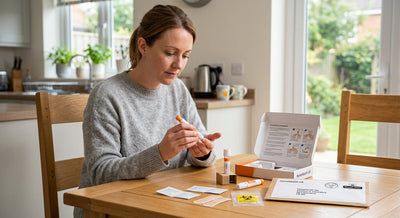
A blood test can turn a vague concern into something you can understand.
You might want to check your vitamins, hormones, thyroid, cholesterol, liver markers or kidney function. You might be training hard and want more context around recovery. Or you may simply want a clearer starting point before your next GP appointment.
At-home blood testing gives you another way to collect useful health data. But the details matter. The sample must be collected properly. The laboratory must meet recognised standards. And the results need to be read as part of the bigger picture , not treated as a diagnosis in isolation.
This guide explains how at-home blood testing works in the UK, what to look for, how to prepare and how to use your report responsibly.
TL;DR:
- At-home blood testing usually uses a finger-prick sample collected into a small tube.
- Your sample is posted to a laboratory for analysis. Vitall Check uses UKAS-accredited partner laboratories.
- Preparation can affect your sample. Follow your kit instructions, warm your hands, hydrate and post your sample on the same day.
- Panels may cover metabolic, hormonal, organ, immunity and nutritional markers.
- Read your result alongside its laboratory reference range. Do not compare numbers from different laboratories without context.
- A blood test is a snapshot, not a diagnosis.
- Use your report to arrive informed for a better conversation with your GP or another qualified clinician.
- Always follow the official Vitall Check sample collection guide.
How does at-home blood testing work in the UK? You collect a small finger-prick blood sample at home, return it to a laboratory using the supplied packaging, and receive your lab-verified results through a secure online portal. The quality of your result depends on the test method, laboratory standards, sample collection and transport.
What is at-home blood testing?
At-home blood testing allows you to collect a blood sample without first attending a GP surgery, hospital or private clinic.
Most home kits use capillary blood. This is the blood found in the small vessels close to the skin. A safety lancet makes a small prick on the side of your fingertip. You then collect drops of blood into a tube or onto a collection device, depending on the test.
The sample is sent to a laboratory. The laboratory measures the requested biomarkers and sends the results back to you.
Think of it like sending a small water sample to a specialist testing facility. You collect the sample at home, but the useful analysis happens in the laboratory.
At-home testing is not the same as using a home blood glucose meter. A glucose meter gives you a reading in minutes. A laboratory blood test can measure a wider group of markers and provide a formal report.
The NHS explains that blood tests may be used to check general health, investigate symptoms, assess the likelihood of certain conditions or monitor an existing condition. Read the NHS guide to blood tests for more detail.
How does a finger-prick blood test work?
The process is straightforward, but you still need to follow each step carefully.
STEP 1: Choose a suitable panel
Start with your reason for testing.
You may want to explore:
- Nutritional health: vitamin B12, active B12, vitamin D, folate, iron and ferritin.
- Hormonal health: testosterone, oestradiol, luteinising hormone, follicle-stimulating hormone, prolactin and sex hormone-binding globulin.
- Thyroid health: thyroid-stimulating hormone and free T4, with some panels also including free T3.
- Metabolic health: HbA1c, cholesterol and triglycerides.
- Organ health: liver and kidney markers.
- Blood health: haemoglobin, red blood cells, white blood cells and platelets.
- Inflammation and recovery context: markers such as C-reactive protein and creatine kinase, depending on the panel.
If you are unsure where to start, compare the available Vitall Check blood test panels by health goal rather than choosing the largest panel automatically.
More data is not always more useful. The right panel is the one that gives you information relevant to your question.
STEP 2: Activate your kit
When your kit arrives, activate it using the instructions provided.
Activation helps link your sample to your order. It may also ask for information that affects how your results are presented, such as age, sex, medication or menstrual cycle stage.
Enter details carefully. A wrong date of birth, incorrect sex or missing cycle information can make your report harder to understand.
STEP 3: Prepare before collection
Read your instructions before opening the kit.
Vitall Check generally recommends:
- Taking your sample in the morning.
- Fasting when your chosen panel requires it.
- Drinking water before collection.
- Avoiding alcohol before testing.
- Avoiding heavy exercise for the period stated in your kit instructions.
- Pausing biotin-containing supplements when instructed.
Do not stop prescribed medicines unless the clinician who prescribed them tells you to. If you take medication, have a health condition, are pregnant or are receiving treatment, check with your GP or specialist before testing.
STEP 4: Collect the sample
Wash your hands with warm water and dry them properly. Cold fingers can make collection harder.
Choose the middle or ring finger on your non-dominant hand. Clean the side of your fingertip with the supplied alcohol wipe and allow it to dry.
Press the safety lancet firmly against the side of the fingertip. You will feel a quick pinch. That is normal, and it should be brief.
Wipe away the first drop if your instructions tell you to. Then allow later drops to fall into the collection tube.
Keep your hand below your heart. Gently massage from the base of the finger towards the tip. Do not squeeze hard or scrape your finger against the tube.
Hard squeezing can mix tissue fluid with the sample or damage blood cells. Think of it like pressing a sponge too aggressively: you may get more liquid, but it is not necessarily the cleanest sample.
Fill the tube to the marked line. If your sample is short, re-warm your hand and try again according to the instructions. Most Vitall Check kits include a spare lancet.
STEP 5: Seal and return the sample
Close the tube securely. If your instructions say to mix it, gently invert it the required number of times.
Place the tube into the biohazard bag. Put that bag into the supplied return envelope.
Post your sample on the same day you collect it. Vitall Check recommends posting from Monday to Thursday to reduce the chance of a sample sitting in transit over the weekend.
Keep proof of postage where possible. It gives you a useful record if you need to track your return.
For the full process, follow the official step-by-step sampling guide, even if you have used a finger-prick kit before.

How accurate are at-home blood tests?
The short answer is: they can provide reliable results when the correct test method is used, the sample is collected properly and the laboratory follows recognised quality standards.
Accuracy is not one single feature. It is a chain.
That chain includes:
- The test selected.
- The collection method.
- Your preparation.
- The quality of the sample.
- Transport time and conditions.
- The laboratory analysis.
- How the result is interpreted.
If one link is weak, the final result may be less useful.
Finger-prick versus venous blood
A venous sample is taken from a vein, usually in your arm. It provides a larger volume and is the standard method used in many GP and hospital settings.
A capillary sample comes from a fingertip. It is convenient and can be suitable for many commonly measured biomarkers, but it may not be suitable for every test or every person.
Some panels need more blood than a finger-prick collection can comfortably provide. Some people also find self-collection difficult. In those situations, a venous draw may be more appropriate if available.
Vitall Check offers an at-home capillary option and, for selected panels and locations, a clinic draw. Check the product page before ordering.
Why UKAS accreditation matters
UKAS is the United Kingdom Accreditation Service. It assesses laboratories against recognised standards.
The UKAS medical laboratory accreditation page explains that ISO 15189 accreditation provides confidence in a medical laboratory’s quality, performance and competence. It also covers the laboratory’s quality management system and whether specific activities meet the required criteria.
That last point matters. Accreditation relates to a defined scope of activities. It is not enough to see the words “accredited laboratory” without checking what the laboratory is accredited to do.
Vitall Check samples are processed by UKAS-accredited partner laboratories using NHS-grade laboratory standards. The laboratory performs the analysis; Vitall Check provides the testing service and plain-English educational reporting.
This is different from claiming that every test is suitable for every clinical question. Always check the individual panel and speak with your GP about concerns.
Which at-home blood testing panels are available?
Different panels answer different questions. Here is a simple overview.
Nutritional health panels
These may include:
- Vitamin B12.
- Active B12.
- Vitamin D.
- Folate.
- Iron.
- Ferritin.
Ferritin is a marker related to stored iron. It is often read alongside haemoglobin, red blood cell markers and other iron results.
Low iron can be linked with tiredness, breathlessness, headaches and other symptoms. The NHS explains that suspected iron-deficiency anaemia usually needs a full blood count and may require further investigation into the cause. Read the NHS guide to iron-deficiency anaemia.
Do not assume that a low result explains every symptom. Use the result as a reason to have a fuller clinical conversation.
The Vitall Check Essential Vitamins & Nutritional Health Test includes four nutritional markers and provides a plain-English report.
Metabolic health panels
Metabolic panels may include:
- HbA1c.
- Total cholesterol.
- LDL cholesterol.
- HDL cholesterol.
- Triglycerides.
- C-reactive protein.
- Urea and creatinine.
HbA1c gives a longer-term view of blood glucose than a single reading. If you already have diabetes or are being monitored for it, your GP will interpret HbA1c alongside your medical history, medication and other results.
NICE guidance on blood glucose management in adults with type 2 diabetes explains that HbA1c measurement and targets should be individualised. Do not use a home report to change diabetes medicine.
Hormonal health panels
Hormone panels may include:
- Testosterone.
- Free testosterone.
- Sex hormone-binding globulin.
- Oestradiol.
- Follicle-stimulating hormone.
- Luteinising hormone.
- Prolactin.
- Cortisol.
Hormones can change according to the time of day, menstrual cycle, sleep, illness, stress, medication and training load.
For example, testosterone and cortisol are affected by daily rhythms. Oestradiol, follicle-stimulating hormone and luteinising hormone can vary across the menstrual cycle.
That means a single hormone result is not a complete story. It is one frame from a much longer film.
Thyroid panels
Thyroid testing may include:
- Thyroid-stimulating hormone.
- Free T4.
- Free T3.
TSH acts as a signal from the brain to the thyroid. Free T4 and free T3 are thyroid hormones measured in the blood.
The exact tests used depend on the panel and the laboratory method. The Gloucestershire Hospitals NHS thyroid testing guide explains how TSH, free T4 and free T3 are used, and why clinical details and medicines matter.
Biotin, often found in hair, skin and nail supplements, can interfere with some laboratory hormone tests. Check your kit instructions and tell your GP or laboratory about supplements you take. Do not stop prescribed treatment without medical advice.
Organ health panels
These may include markers related to:
- Liver function.
- Kidney filtration.
- Protein levels.
- Waste products.
- Hydration context.
Creatinine, for example, is affected by muscle mass, hydration and protein intake. A strength athlete may have a different result from someone with less muscle, even before other factors are considered.
Training can also affect some liver enzymes and inflammation markers. If you test soon after a hard session, tell your GP. A raised marker may be temporary, but only a clinician can assess what it means for you.
Full health and performance panels
A wider panel can bring several groups of markers together. The Vitall Check Complete Health & Performance Blood Test measures 50 biomarkers across areas including cardio, liver, kidneys, metabolism, nutrition, blood health and hormones.
If you train regularly, the Performance Monitor blood test is another panel designed around a broader biological snapshot.
The aim is not to chase a perfect number. It is to understand what has been measured, where the result sits against the laboratory reference range and what questions you may want to take to your GP or qualified professional.

How should you prepare for an at-home blood test?
Preparation depends on your panel. Always follow the instructions supplied with your specific kit.
Fasting
Some panels require an overnight fast. Vitall Check commonly advises an eight-hour fast for relevant panels, with water allowed.
Do not fast unless your instructions say to. Fasting is not required for every blood test.
The NHS also states that preparation varies. For some tests, you may be asked not to eat or drink anything except water, while other tests need no special preparation. Read the NHS blood test guidance if you are unsure.
Hydration
Drink water before collection. Hydration can make the finger-prick process easier.
Avoid using hydration as an excuse to drink large amounts very quickly. A normal, steady intake is enough.
Exercise
Avoid heavy exercise before testing when your instructions recommend it.
A hard session can temporarily affect markers linked with muscle stress, inflammation, hydration and liver enzymes. If you are an athlete, schedule your test after a rest period when possible.
Use the same preparation each time if you are tracking results over several tests. Consistency makes changes easier to understand.
Alcohol
Avoid alcohol before testing if your instructions advise it. Alcohol can affect some liver and metabolic markers.
Supplements and medication
Tell your GP and the testing provider about supplements and medicines.
Biotin deserves particular attention because it may interfere with some hormone and thyroid assays. Other supplements can also affect results.
Never stop prescribed medicines without medical advice. If you are unsure whether to take a regular medicine on the morning of your test, contact the prescriber.
Time of day
Morning collection is recommended for many Vitall Check panels. This is particularly relevant for hormones that follow a daily pattern.
If you are testing reproductive hormones, follow the cycle-day guidance provided with your panel. A result without timing information is like a photograph with no date: it may still show something useful, but the context is missing.
How should you read your blood test results?
Start with the report itself.
1. Find the result and unit
You may see a number such as:
- HbA1c: a result in mmol/mol.
- Ferritin: a result in micrograms per litre.
- TSH: a result in mIU/L.
- ALT: a result in IU/L.
The unit tells you how the number is expressed. Do not compare two results if they use different units without checking what they mean.
2. Read the laboratory reference range
Your report should show a reference range beside each result.
A reference range is a guide used by the laboratory. It is not a pass-or-fail test and it does not automatically confirm or rule out a condition.
Ranges can vary between laboratories. They may also vary according to age, sex, pregnancy, medication and other factors.
The result printed on your own report is the one to use first. Avoid copying a generic range from a search engine.
3. Look for patterns
Clinicians rarely interpret one blood marker alone.
For example:
- Ferritin may be considered alongside haemoglobin and other blood count markers.
- Cholesterol results are read as a group.
- TSH may be considered alongside free T4 and symptoms.
- Creatinine is used in calculations and interpreted with factors such as muscle mass and hydration.
- C-reactive protein may change after illness, injury or hard exercise.
Your report can translate raw data into plain English, but it cannot provide the complete clinical picture.
4. Compare trends carefully
A trend can be useful when the testing conditions are similar.
For repeat tests, try to keep the following consistent:
- Time of day.
- Fasting status.
- Training load.
- Sleep and recent illness.
- Supplements.
- Laboratory and test method.
Even then, a change does not automatically show cause and effect. Treat it as a prompt for a better question, not a final answer.

What does an Insight Report tell you?
A Vitall Check Insight Report is designed as a manual for your lab results.
It translates raw data into:
- Results in plain English.
- Clear explanations of what each marker relates to.
- Your result and the laboratory reference range.
- Context around factors that can affect a result.
- Questions and discussion points for your next GP appointment.
The report is not a diagnosis. It does not replace a consultation, physical examination or medical history.
Use it as a bridge between a page of numbers and a more informed conversation. Instead of arriving at your appointment with a search history full of worst-case scenarios, you can bring your report, your symptoms and a short list of sensible questions.
You can also download or share your results where the service allows it. Vitall Check’s FAQs explain how results can be shared and what happens if a sample cannot be processed.
What are the limits of at-home blood testing?
At-home testing is useful, but it has clear boundaries.
It is a snapshot
Your blood changes. Illness, sleep, stress, food, hydration, training and medication can all affect results.
One test cannot describe your entire health.
Collection can be difficult
Some people collect a suitable sample quickly. Others struggle to produce enough blood.
This is not a personal failure. Finger-prick collection requires warm hands, good blood flow and patience. If you cannot collect enough, follow the troubleshooting section in your guide and contact the provider.
Not every test is suitable
Some tests need a larger venous sample or more specialist handling. A clinic draw may be recommended instead.
Read the individual product details before ordering. Ask the provider if you are unsure.
Results do not diagnose
An out-of-range result may need repeating or further investigation. A result inside the reference range does not prove that every aspect of your health is fine.
The NHS explains that blood test results are interpreted alongside symptoms, medical history and other tests. You can also read about viewing NHS test results online.
Urgent symptoms still need urgent care
Do not wait for an at-home test if you have severe, sudden or rapidly worsening symptoms. Seek the appropriate NHS or emergency support.
At-home testing is a way to gather information. It is not an emergency assessment service.
How does at-home testing fit alongside NHS care?
Use at-home testing as a pressure valve, not a replacement for the NHS.
It can help you:
- Gather information before a routine appointment.
- Understand which questions you want to ask.
- Track selected markers over time.
- Share relevant results with your GP.
- Explain concerns more clearly.
- Arrive informed rather than relying only on guesswork.
Your GP can interpret the result in the context of your symptoms, examination, family history, medication and previous results. They can decide whether you need a repeat test, additional investigation or treatment.
If a result concerns you, take the full report to your GP. Do not start, stop or change medication based only on an at-home report.
Vitall Check is not CQC registered. It does not diagnose, treat, prescribe or provide medical advice. The laboratory analysis is completed by independent UKAS-accredited partner laboratories, while the Insight Report provides educational translation of the results.
How is your blood test data protected?
Blood test results are health information. Under UK GDPR, health data is classed as special category data, which receives extra protection.
The Information Commissioner’s Office explains what health data means. This includes medical examination data and test results.
Before ordering any test, check the provider’s privacy information. Look for clear answers to these questions:
- Where is your data stored?
- Who can access it?
- Is it encrypted during transfer and storage?
- Will it be shared with a GP, insurer, employer or another organisation?
- Can you request a copy of your information?
- Can you request deletion, subject to legal requirements?
- Are anonymised results used for research or product development?
- Do you need to opt in?
Vitall Check states in its FAQ that health data is stored on UK-based, GDPR-compliant servers, encrypted in transit and at rest, and not shared with third parties without explicit consent. Review the current policy and terms before placing an order, as privacy information can change.

A practical checklist before you order
Use this checklist to keep the process simple.
Before ordering
- ✅ Choose a panel linked to a clear question.
- ✅ Check whether the panel requires fasting.
- ✅ Check whether finger-prick collection is suitable.
- ✅ Read the sample and privacy information.
- ✅ Check the expected turnaround time.
- ✅ Confirm that the laboratory is appropriately accredited for the tests being performed.
Before collecting
- ✅ Activate your kit.
- ✅ Read the official instructions.
- ✅ Drink water.
- ✅ Warm your hands.
- ✅ Avoid heavy exercise if instructed.
- ✅ Check supplement guidance, especially biotin.
- ✅ Do not stop prescribed medication without medical advice.
- ✅ Set up a clean, well-lit space.
After collecting
- ✅ Fill the tube to the marked line.
- ✅ Seal it correctly.
- ✅ Place it in the biohazard bag.
- ✅ Complete any required labels or forms.
- ✅ Post it the same day.
- ✅ Keep proof of postage.
- ✅ Save your report and share it with your GP if needed.
Summary: use better data responsibly
At-home blood testing can give you a clearer view of selected health markers without requiring an initial clinic visit.
The quality of the result depends on more than the laboratory. Prepare properly. Collect carefully. Return the sample promptly. Check the laboratory standards. Then read your results alongside the reference range and the context of your health.
Choose panels that answer a genuine question. Use the Insight Report as a plain-English manual, not a diagnosis. If something concerns you, bring the report to your GP and ask what should happen next.
Better health data is not about chasing perfect numbers. It is about replacing guesswork with useful information and arriving better prepared for the next clinical conversation.
FAQ
Q: Are at-home blood tests accurate in the UK? A: They can provide reliable results when the correct test is used, the sample is collected properly and it is processed by a laboratory with appropriate accreditation. Finger-prick collection is not suitable for every test, so check the panel details and follow the official collection guide.
Q: Do I need to fast before an at-home blood test? A: It depends on the panel. Some tests require an overnight fast, while others do not. Follow the instructions supplied with your kit and drink water unless told otherwise.
Q: Can an at-home blood test replace a GP appointment? A: No. It can provide useful lab data and help you arrive informed, but it does not diagnose, treat, prescribe or provide medical advice. Discuss symptoms and out-of-range results with your GP or another qualified clinician.
Author
Vitall Check Editorial Team
The Vitall Check Editorial Team is dedicated to empowering individuals with evidence-based health information and clear, actionable insights. Every article is researched using peer-reviewed journals and official health resources, reflecting our commitment to the same high standards of accuracy as our laboratory testing services. Our goal is to make proactive wellness accessible, data-driven, and transparent.
Disclaimer: Vitall Check is not CQC registered. The content provided is for general information only, does not provide a diagnosis, and does not replace advice from a qualified healthcare professional. Our services do not include treatment, prescription, or medical advice that falls under CQC-regulated activities. Always consult with your GP or a qualified clinician before making significant changes to your healthcare regimen.