

Stop guessing.
Start Knowing!
Heart, liver, kidneys, prostate, blood sugar. One finger-prick at home, explained in plain English.
£199all in · free tracked delivery
Samples analysed in UKAS-accredited partner labs
Not sure which test? Take the 60-second finderHow it works
- 1 OrderSent the next working day
- 2 Finger-prick5 minutes at your kitchen table
- 3 AnswersIn your portal, typically in 48 hours
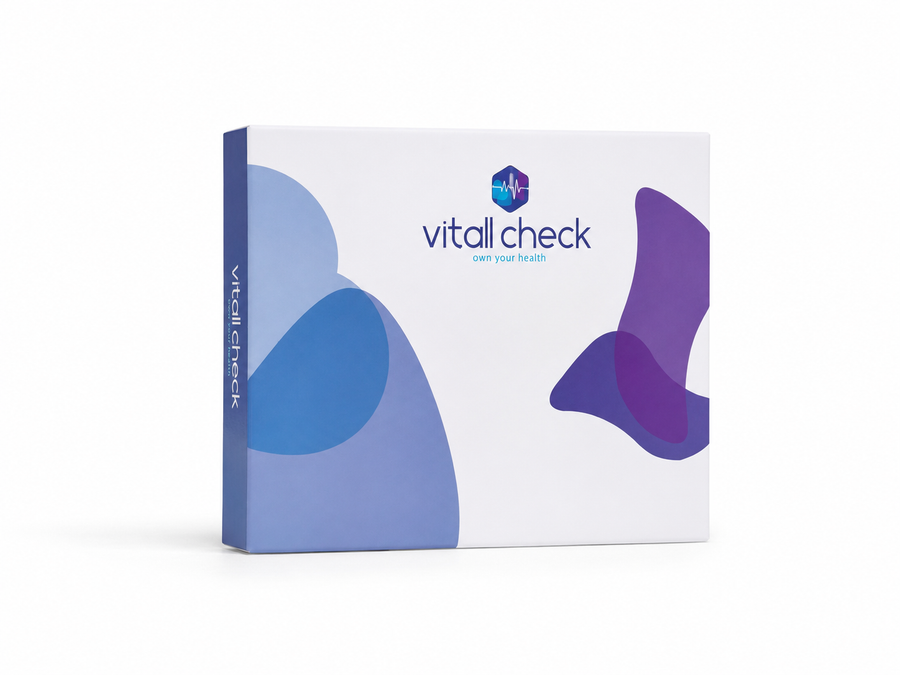
Complete Health & Performance Blood Test
- Defence Squad, your red and white cells: oxygen supply and immune defence WBC (White Blood Cells) Leukocytes, RBC (Red Blood Cells) Erythrocytes, HGB (Haemoglobin) + 14 more
- Muscle & Hormone Powerhouse, testosterone and the hormones behind energy and drive Testosterone (Total), Free Testosterone (calculated), Free Testosterone (%) + 10 more
- Detox Filter, how well your liver is clearing alcohol, medication and fat ALT (Alanine Aminotransferase), GGT (Gamma-Glutamyl Transferase), ALP (Alkaline Phosphatase) + 4 more
- Cardio Engine, how hard your heart and arteries are working Total Cholesterol, HDL (good cholesterol), LDL (less-protective cholesterol) + 4 more
- + 4 more health systems
- Every result in plain English, with a Vitall Point and Vitall Insight
60 biomarkers across 8 health systems 54 with the home kit. 6 more, marked ★ on the test page, need a clinic blood draw.
Tap a health system to see exactly what we measure and why.
Is your liver keeping up? Detox Filter · 7 markers
How well your liver is processing waste, alcohol, medications and proteins. Your body's built-in detox system.
- ALT (Alanine Aminotransferase)A liver enzyme that leaks into the blood when liver cells are stressed. Mildly raised ALT is common after heavy training, recent alcohol, certain medications, or fatty changes in the liver. Persistently high ALT is worth discussing with a GP.
- GGT (Gamma-Glutamyl Transferase)A liver enzyme particularly sensitive to alcohol intake and certain medications. Useful for understanding the source when other liver markers are raised.
- ALP (Alkaline Phosphatase)An enzyme involved in both liver and bone activity. Levels naturally vary with age (higher in growing teens, post-fracture healing) and during pregnancy, as well as with liver function.
- Total BilirubinA yellow pigment made when old red blood cells are broken down. Slightly raised bilirubin is often a harmless inherited pattern (Gilbert's syndrome); larger elevations can reflect liver or red blood cell processes.
- AlbuminThe most abundant protein made by your liver. It transports hormones and nutrients around the body and helps regulate fluid balance. Low albumin can reflect liver, kidney, gut or nutritional factors.
- Total ProteinThe combined amount of albumin and globulin in your blood. It's a broad picture of protein status, read together with albumin and globulin.
- Globulin (calculated)Proteins that play a major role in immunity, clotting and transport. Calculated by subtracting albumin from total protein. It is usually read alongside albumin and total protein.
Are your kidneys filtering properly? Hydration Pump · 4 markers
How effectively your kidneys are filtering blood and managing hydration, salts and waste products.
- CreatinineA waste product your muscles produce that's filtered out by your kidneys. Levels can shift with muscle mass, hydration status and protein intake, so very muscular people often sit slightly higher than the population average.
- eGFR (estimated Glomerular Filtration Rate)An estimate of how efficiently your kidneys filter blood, calculated from your creatinine. Higher is generally better. It's the single most-used indicator of overall kidney functio n.
- UreaAnother waste product cleared by the kidneys, this one from protein breakdown. It's affected by hydration, protein intake and kidney function.
- Uric AcidA by-product of how your body processes purines (found in red meat, shellfish and alcohol). Persistently high levels can crystallise in joints, linked with gout and metabolic patterns.
Are your hormones behind how you feel? Muscle & Hormone Powerhouse · 13 markers
The hormones driving muscle, recovery, libido, mood and reproductive health, plus the proteins that carry them.
- Testosterone (Total)The principal male sex hormone, also important in women at lower levels. Influences muscle mass, libido, mood, energy and bone density. Levels naturally peak in the morning, which is why we ask for a morning sample.
- Free Testosterone (calculated)The calculated amount of biologically active testosterone, derived from total testosterone, SHBG and albumin. Often more informative than total testosterone for symptoms.
- Free Testosterone (%)The proportion of testosterone that isn't bound to carrier proteins, making it biologically active. A more nuanced view than total testosterone alone.
- SHBG (Sex Hormone Binding Globulin)The protein that binds sex hormones in the blood. High SHBG can reduce the amount of biologically active testosterone, even when total testosterone looks normal.
- FAI (Free Androgen Index)A calculated ratio of testosterone to SHBG, giving a quick picture of androgen activity. Particularly useful in women's hormone assessment.
- DHEA-Sulphate (DHEA-S)A precursor hormone made by your adrenal glands, the building block your body uses to produce both testosterone and oestrogen. Levels are highest in your 20s and naturally drift down with age.
- Oestradiol (E2)The main and most active oestrogen. In women it varies dramatically through the cycle, in pregnancy, and around menopause. In men it sits much lower but still has roles in bone, brain and cardiovascular health.
- ProlactinA pituitary hormone best known for its role in lactation, but it also influences reproductive function, libido and metabolism in everyone. Levels can rise temporarily with stress, exercise and sleep.
- LH (Luteinising Hormone)Works alongside FSH to regulate reproductive hormones. In women, LH triggers ovulation; in men, it signals the testes to produce testosterone.
- FSH (Follicle-Stimulating Hormone)A pituitary hormone that signals the ovaries or testes. In women it varies through the menstrual cycle and rises sharply around menopause; in men it sits in a steady range.
- CK (Creatine Kinase)An enzyme released when muscle is damaged. Levels routinely spike for 24-72 hours after heavy training, hard cardio, or any unusually intense session. We ask you to avoid heavy training before testing for this reason.
- Testosterone : Cortisol RatioA balance indicator favoured in sports science: testosterone supports building and recovery, cortisol drives stress and breakdown. People who train often track it alongside how they are recovering.
- Testosterone : Free Testosterone Ratio
What do these markers say about you? Body Speed · 3 markers
Key markers for this category, explained in plain English.
- TSH (Thyroid Stimulating Hormone)The pituitary signal that tells your thyroid how hard to work. Counter-intuitively, high TSH usually means your thyroid is under-active (the brain is shouting at it), and low TSH often means it's over-active.
- Free T4 (Thyroxine)The storage form of thyroid hormone, mostly converted into T3 when needed. Most of your circulating thyroid hormone is in this T4 form.
- Free T3 (Triiodothyronine)The active thyroid hormone, the one actually doing the work in your cells. T3 influences metabolic rate, energy, body temperature, mood and heart rate.
Is your blood sugar drifting? Fuel Management · 3 markers
How your body manages fuel: long-term blood sugar control and your main stress and energy hormone.
- HbA1c (mmol/mol)The same measurement in mmol/mol, the unit the NHS and UK clinicians use. We show both so you can compare to NHS or older test results easily.
- HbA1c (%)Your average blood sugar level over the past 8-12 weeks, expressed as a percentage. Often called your "glucose memory" because, unlike a single glucose reading, it can't be gamed by a recent meal or fast.
- CortisolYour main stress and energy hormone, produced by your adrenal glands. It follows a strong daily rhythm: highest in the morning (which is why we ask for a morning sample) and lowest at night. Affected by sleep, training, work stress and caffeine.
Are you running low on something? Supply Chain · 6 markers
The nutrients your cells need on tap: iron stores, B vitamins, and minerals that fuel energy and red blood cell production.
- Vitamin B12Essential for energy production, nerve function, and red blood cell formation. Found almost exclusively in animal products, so vegans and vegetarians need to supplement. Low B12 can present as fatigue, brain fog or tingling.
- Folic Acid (Folate)Works alongside B12 to build red blood cells and support DNA repair. Particularly important for women of reproductive age. Influenced by diet, certain medications, and alcohol intake.
- FerritinYour body's stored iron, the long-term iron savings account. Low ferritin is the earliest sign of iron deficiency, often appearing before iron itself drops or anaemia develops. Common in women with heavy periods, athletes, and people on plant-based diets.
- Iron (Serum)The mineral your body uses to make red blood cells and carry oxygen around your body. Low iron can leave you tired, breathless, or struggling to recover from training.
- TransferrinThe protein that carries iron through your bloodstream. Together with iron and ferritin, it gives a complete picture of how iron is being stored, transported and used.
- MagnesiumA mineral involved in more than 300 enzymatic reactions, including muscle function, energy production and the regulation of blood pressure. Inadequate intake is common in modern diets.
Is your heart under strain? Cardio Engine · 7 markers
How your heart and arteries are coping: cholesterol balance and inflammation that affect long-term cardiovascular health.
- Total CholesterolThe total amount of cholesterol circulating in your blood, including both protective (HDL) and less-protective (LDL) types. On its own it tells you very little, which is why we always read it alongside HDL, LDL and the ratio below.
- HDL (good cholesterol)The cholesterol that picks up excess from your arteries and returns it to your liver. Higher HDL is generally protective. It's influenced by exercise, alcohol intake, and the types of fat in your diet.
- LDL (less-protective cholesterol)The cholesterol most associated with build-up in artery walls when it sits high for years. Diet (especially saturated fat), genetics, body composition and activity level all influence LDL (Low Density Lipoprotein).
- Non-HDL (calculated)Total cholesterol minus HDL. Captures every cholesterol type that can contribute to artery build-up in one figure, which is why many clinicians now prefer it as a single risk indicator.
- Total Cholesterol : HDL RatioA widely used cardiovascular risk indicator. Lower is generally better. The ratio shifts with diet, training, weight changes and consistent aerobic exercise.
- TriglyceridesA form of fat your body uses for energy. Levels are heavily influenced by recent meals (which is why we ask you to fast), alcohol, carbohydrate intake and overall body composition.
- CRP (C-Reactive Protein)A marker your liver releases when there's inflammation anywhere in the body. High CRP can reflect short-term inflammation (a recent illness, intense training, an injury) or longer-term, low-grade inflammation linked to lifestyle, sleep and stress.
Is your blood count where it should be? Defence Squad · 17 markers
A picture of your red and white blood cells, the carriers of oxygen and your immune system's frontline defenders.
- WBC (White Blood Cells) LeukocytesYour immune system's army. Numbers rise temporarily during infections, after intense exercise or in response to stress. Persistently raised or low counts are worth a closer look.
- RBC (Red Blood Cells) ErythrocytesThe cells that carry oxygen from your lungs around your body. Endurance athletes often sit slightly higher than average; pregnancy and certain conditions can lower them.
- HGB (Haemoglobin)The iron-containing protein inside red blood cells that actually binds and carries oxygen. Low haemoglobin (anaemia) commonly causes fatigue, breathlessness and pale skin.
- HCT (Haematocrit)The proportion of your blood that's made up of red blood cells, expressed as a percentage. A key indicator of hydration status as well as red cell health.
- MCV (Mean Cell Volume)The average size of your red blood cells. Small cells can suggest iron deficiency; large cells can point to B12 or folate deficiency.
- MCH (Mean Cell Haemoglobin)The average amount of haemoglobin inside each red blood cell. Read alongside MCV, it helps narrow down the type of any anaemia present.
- MCHC (Mean Cell Haemoglobin Concentration)How densely packed haemoglobin is within your red blood cells. Provides extra detail when interpreting unusual full blood count patterns.
- RDW-CV (Red Cell Distribution Width %)
- RDW-SD (Red Cell Distribution Width SD)How much your red blood cells vary in size. It is usually read alongside MCV and your iron and vitamin markers.
- Platelets (PLT)Tiny cells in your blood that clump together to stop bleeding when you cut yourself. Low platelets can mean easier bruising. High levels can mean your body is fighting inflammation.
- MPV (Mean Platelet Volume)A measurement of the average size of your platelets. Newly produced platelets are typically larger, so this marker provides insight into how actively your bone marrow is manufacturing these crucial clotting cells to repair blood vessels.
- PDW (Platelet Distribution Width)An assessment of how much your platelets vary in size. While some variation is normal, a wider spread can indicate that your body is rapidly producing and releasing new, larger platelets into your bloodstream alongside older, smaller ones.
- Neutrophils (NEU)The rapid first responders of your immune system, rushing straight to the site of physical stress or bacterial threats. High levels usually mean your body is actively fighting off a sudden bacterial bug or dealing with physical inflammation. Low levels can leave you more vulnerable to everyday infections.
- Lymphocytes (LYM)Your immune system's targeted specialists, primarily focused on fighting off viral infections. High levels usually mean your body is actively battling a virus. Low levels can suggest your immune system is currently under heavy strain or fatigued.
- Monocytes (MON)The heavy-duty cleanup crew of your bloodstream. They break down bacteria, clear away dead tissue, and support your other immune cells. High levels often point to chronic inflammation or a longer-term immune response. Low levels can leave your general defences slightly weakened.
- Eosinophils (EOS)The specialists that handle allergic reactions and fight off larger parasites. High levels are very common if you are currently dealing with seasonal allergies, asthma flare-ups, or a recent food reaction. Because their job is so specific, having very low levels is completely normal and rarely a concern.
- Basophils (BAS)The cells responsible for sounding the alarm during an allergic reaction by releasing histamine. High levels usually indicate an active allergy, asthma, or general systemic inflammation. Just like eosinophils, it is completely standard for these to sit at a very low baseline level in your blood.
What you'll see in your portal
60 biomarkers grouped into 8 categories, each colour-coded by range, with a Vitall Point (what it means) and Vitall Insight (what affects it).
Questions people ask before they buy
All closed on arrival. Open only what worries you.
Does it hurt?
A single lancet prick on the side of a fingertip, a sharp scratch, then nothing. Five to ten minutes to fill the tube.
What if something comes back abnormal?
The report flags it in plain English, explains what the marker does, and tells you whether it's a ‘watch it’ or a ‘book an appointment’.
Is this a diagnosis?
No. It's a wellness screen that shows where your markers sit and which ones a clinician should look at. Diagnosis stays with your GP.
Can my GP use these results?
Yes. You get a PDF with the marker, your value, the reference range and the method, the format a GP expects.
What happens to my data?
Stored in a GDPR-compliant UK portal, encrypted, never sold. Delete your account and results whenever you want.
Nine years since your last check?
Twenty minutes today, plain-English answers typically in 48 hours.
£199all in · free tracked delivery
Two quick things
We read your results against the reference range for your age and sex. Without these, the numbers mean nothing.
Secure checkout. Guest checkout, no account needed.