Waiting four weeks for a GP appointment to discuss testosterone testing could cost you a full training cycle. Home testosterone testing in the UK delivers lab-verified results in 48 hours, offering the same clinical accuracy without the NHS backlog. If you're serious about performance, recovery, or simply understanding what's happening in your body, the delay isn't just inconvenient: it's counterproductive.
The Reality of GP Wait Times in 2026
The NHS reports that the average wait time for a non-urgent GP appointment now exceeds three to four weeks in many UK regions. For testosterone testing specifically, you're looking at multiple touchpoints: the initial consultation, blood work referral, phlebotomy appointment, lab processing, and a follow-up to discuss results.
That's not one month. That's closer to six to eight weeks from first concern to actionable data.
Meanwhile, your training suffers. Your sleep quality deteriorates. Your recovery window narrows. You're left guessing whether it's programming, nutrition, stress, or your endocrine system signalling for help.
Why Speed Matters for Testosterone Testing
Testosterone levels fluctuate daily, influenced by sleep, stress, training load, and nutrition. Delayed testing creates two problems:
You miss the diagnostic window. If you're experiencing symptoms now: persistent fatigue, stalled strength gains, low libido, brain fog, you need data now. Waiting a month means testing under completely different physiological conditions. The snapshot you eventually get may no longer reflect the hormonal state you were concerned about.
You lose training momentum. A single mesocycle is typically four to six weeks. By the time you receive GP results, you've completed an entire training block without knowing whether your hormones were supporting or sabotaging your work. Athletes, powerlifters, and serious gym-goers don't have the luxury of retrospective data.
Home testosterone testing collapses this timeline. Order today, test tomorrow, receive lab-verified results within 48 hours. Same CQC-equivalent accredited laboratories processing NHS samples. The only difference? You control the timeline.
Privacy: The Other Half of the Equation
Let's address what nobody says out loud: testosterone testing carries stigma. Whether you're a 28-year-old CrossFit athlete wondering if overtraining has tanked your levels, or a 45-year-old professional concerned about age-related decline, walking into a GP surgery to request hormone panels feels exposing.
Your GP records are permanent. They're accessible to any healthcare provider you interact with going forward, and in some cases, they can affect insurance premiums or employment medical screenings. For many men, this isn't paranoia: it's a legitimate consideration when exploring sensitive health markers.
Home testing removes that friction entirely. You order discreetly. You collect your sample at home. Results are delivered to a private online portal. No receptionist conversations. No explaining to a locum GP why you "think" your testosterone is low. No permanent record attached to your NHS number.
This privacy extends to cortisol testing, which is equally important but even less likely to be taken seriously in a 10-minute GP slot. Chronic stress, overtraining syndrome, and adrenal dysfunction don't present with the clinical urgency GPs are trained to prioritise. Home testing allows you to investigate these connections without needing to justify your concern to a gatekeeper.
How Home Testosterone Testing Actually Works
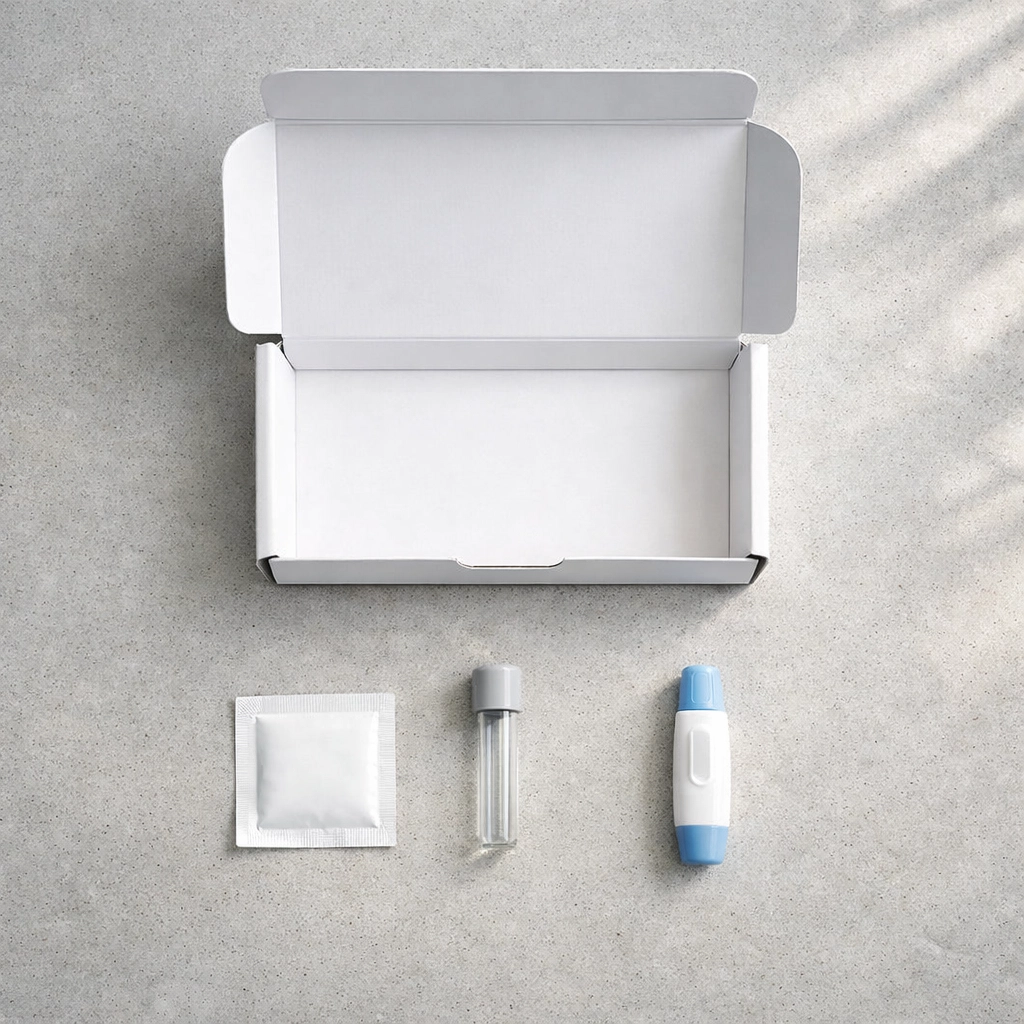
The process is deliberately simple, though it's worth acknowledging that finger-prick collection requires basic preparation. Warm hands, proper hydration, and collecting in the morning (before 11:00 am for hormones) all improve sample quality. If you're new to at-home testing, follow the official collection guide to avoid frustration.
Here's the typical timeline:
Day 1: Order your testosterone test kit online. No GP referral required.
Day 2-3: Kit arrives via Royal Mail. Inside: lancets, collection tube, prepaid return envelope, and step-by-step instructions.
Day 3: Collect your sample at home in the morning. Post it the same day using the prepaid envelope (Royal Mail priority).
Day 4-5: Your sample reaches the accredited laboratory. Analysis begins immediately.
Day 5-6: Results appear in your secure online portal. Full biomarker breakdown, reference ranges, and flagged abnormalities.
Total elapsed time: 48 to 72 hours from collection to results. Compare that to the NHS route, where you'd still be waiting for your initial appointment.
What You're Actually Testing: Testosterone + Cortisol
Testosterone doesn't exist in isolation. The relationship between testosterone and cortisol, your primary stress hormone, is critical for understanding performance, recovery, and overall vitality.
Testosterone governs muscle protein synthesis, bone density, libido, mood regulation, and cognitive function. Low testosterone (hypogonadism) can result from age, overtraining, poor sleep, chronic illness, or metabolic dysfunction. Symptoms include fatigue, reduced strength, difficulty building muscle, low motivation, and erectile dysfunction.
Cortisol is released in response to stress: physical, psychological, or metabolic. Acute cortisol elevation is protective. Chronic elevation (from overtraining, poor recovery, or life stress) becomes catabolic: it breaks down muscle tissue, suppresses testosterone production, disrupts sleep, and impairs immune function.
The testosterone-to-cortisol ratio is a validated marker of anabolic-catabolic balance in athletes. A declining ratio signals overtraining or inadequate recovery, even when absolute testosterone levels remain within "normal" ranges.
This is why Vitall Check's hormone and thyroid collection includes both markers. Testing testosterone alone gives you half the picture. Testing both reveals whether you're in an anabolic (building) or catabolic (breakdown) state: information that directly informs training volume, recovery protocols, and lifestyle adjustments.

Normal vs. Optimal: Understanding Your Results
This distinction matters, especially if you're performance-focused.
Normal ranges are clinical reference intervals derived from population averages. For testosterone, the NHS typically uses 10-30 nmol/L as "normal" for adult men. If your result falls within this range, a GP will often dismiss concerns.
Optimal ranges are narrower, reflecting where most individuals feel and perform their best. For testosterone, many performance-focused practitioners consider 15-25 nmol/L (mid-to-high normal) as optimal for strength, recovery, and vitality. A result of 12 nmol/L is "normal" but may explain why you feel flat.
Home testing provides both reference ranges and context. You're not just told "you're fine": you see exactly where you fall within the spectrum, allowing for informed decisions about lifestyle, training, or whether to pursue further clinical investigation.
Who Should Consider Home Testosterone Testing
You don't need a medical diagnosis to want data about your body. Home testosterone testing is appropriate for:
- Athletes and strength trainees monitoring recovery, overtraining risk, or unexplained performance plateaus
- Men aged 30+ experiencing age-related changes in energy, body composition, or libido
- Anyone with symptoms of low testosterone: persistent fatigue, difficulty building muscle, reduced motivation, mood changes, or sexual dysfunction
- Shift workers or high-stress professionals concerned about chronic stress impacts on hormones
- Individuals with previous abnormal results who want to monitor trends without repeated GP appointments
This isn't about bypassing medical care. It's about accessing timely, accurate information so you can have more informed conversations with healthcare providers when necessary.

Taking Action: What to Do with Your Results
Your results arrive with clear reference ranges and flagged abnormalities. Here's how to respond:
If testosterone is low (below 12 nmol/L): Consider retesting in four weeks to confirm. Testosterone varies, and a single low result doesn't always indicate chronic hypogonadism. If persistently low, consult your GP armed with your data. This accelerates the clinical process significantly.
If cortisol is elevated: Examine training load, sleep quality, and life stress. High cortisol with low-normal testosterone suggests overtraining or inadequate recovery. Adjust volume, prioritise sleep, and consider retesting after a deload week.
If both are within optimal ranges, you've ruled out hormonal factors. Look to programming, nutrition, or other biomarkers (vitamin D, iron, thyroid function) to explain symptoms.
Having objective data transforms vague concerns into actionable insights. You're no longer guessing: you're measuring, adjusting, and retesting to validate changes.
Explore Vitall Check's performance blood tests for comprehensive panels that include testosterone, cortisol, and recovery markers.
Frequently Asked Questions
How accurate are home testosterone tests compared to GP blood tests?
Home finger-prick tests use the same UKAS-accredited laboratories that process NHS samples. Clinical accuracy is equivalent. The only difference is the collection method (finger-prick vs. venous draw), and studies show a strong correlation between both methods for hormone testing.
Do I need a doctor's referral to order a testosterone test?
No. Home testosterone tests are available directly to consumers in the UK without GP referral. You order online, collect your sample at home, and access results privately.
When should I collect my testosterone sample?
Testosterone peaks in the morning. Collect your sample before 11:00 am for the most accurate reflection of your baseline levels. Avoid testing immediately after intense training, illness, or sleep deprivation, as these temporarily suppress testosterone.
Can I use home testing to diagnose hypogonadism?
Home testing provides data, not diagnosis. If your results indicate low testosterone, you should consult a GP for clinical assessment and potential treatment. However, having your own test results significantly accelerates the GP pathway, as you've already completed the diagnostic groundwork.
What's the difference between total testosterone and free testosterone?
Total testosterone measures all testosterone in your blood, including bound (inactive) and unbound (active) forms. Free testosterone measures only the bioavailable hormone. Most home tests measure total testosterone, which is sufficient for initial screening. If total testosterone is borderline, your GP may order free testosterone for further investigation.
How often should I retest?
If you're monitoring training load or recovery, retesting every 8-12 weeks provides useful trend data. If you've made lifestyle changes (improved sleep, reduced stress, adjusted training), retest after 4-6 weeks to measure impact. If initial results are normal and you feel well, annual testing is sufficient for general health monitoring.
The Bottom Line
Four-week GP wait times don't just delay diagnosis: they delay action. Whether you're an athlete chasing performance gains, a professional managing stress and recovery, or someone experiencing symptoms that don't feel right, waiting isn't a neutral decision.
Home testosterone testing (paired with cortisol) gives you lab-grade data in 48 hours, privately, without the NHS backlog. Same accuracy. Same accredited labs. Zero wait time. You control the timeline, and you get actionable information when it actually matters: not six weeks after the concern arose.
If you're serious about understanding what's happening in your body, stop waiting for permission. Order your testosterone test kit today and take ownership of your hormonal health.
About the Author
Vitall Check Editorial Team
The Vitall Check Editorial Team is dedicated to empowering individuals with evidence-based health information and clear, actionable insights. Every article is researched using peer-reviewed journals and official health resources, reflecting our commitment to the same high standards of accuracy as our laboratory testing services. Our goal is to make proactive wellness accessible, data-driven, and transparent.
Disclaimer
Vitall Check is not registered with the Care Quality Commission (CQC) and does not diagnose, treat, prescribe, or provide medical advice that falls under CQC-regulated activities. This content is for general information only and does not provide a diagnosis. It does not replace advice from a qualified healthcare professional. If you have concerns about testosterone levels or related symptoms, consult your GP or an endocrinologist for clinical assessment.