

Cortisol Test Near Me? Why At-Home Cortisol Testing Beats Clinic Visits in 2026
Searching "cortisol test near me"? Here's what you actually need to know: A cortisol test measures your body's stress hormone levels to identify potential adrenal issues, chronic stress, or hormonal imbalances. While traditional clinic visits require appointments, travel, and waiting rooms, at-home cortisol testing lets you collect your sample in minutes from your own space, with results delivered digitally within 48 hours from UKAS-accredited labs. In 2026, at-home testing isn't just convenient; it's often more accurate because you can test at the optimal time without the added stress of a clinical environment.
Why Your Cortisol Levels Actually Matter
Cortisol gets a bad reputation as the "stress hormone," but it's actually one of your body's most essential players. Produced by your adrenal glands, cortisol regulates everything from your sleep-wake cycle and blood sugar levels to how your immune system responds to threats. According to the NHS, cortisol helps your body respond to stress, maintain blood pressure, and reduce inflammation.
The problem? Modern life throws our cortisol production into chaos. Chronic work stress, poor sleep, excessive caffeine, and even overtraining at the gym can push your levels too high or tank them completely. You might experience unexplained weight gain, crushing fatigue that coffee can't fix, brain fog, or that "tired but wired" feeling at night.

When your cortisol rhythm is off, either consistently elevated or depleted, it affects everything. Your sleep suffers. Your recovery from workouts takes longer. Your mood becomes unpredictable. And here's the thing: you can feel absolutely terrible while your standard annual physical shows "normal" results, because cortisol testing isn't typically included unless you specifically request it.
The Clinic Visit Problem (And Why It's Not Your Best Option)
Let's be honest about what "cortisol test near me" really means for most people. You search for clinics, find one that's open when you're free (good luck with that), book an appointment weeks out, take time off work, sit in a waiting room with fluorescent lights and yesterday's magazines, and then: here's the kicker: you're stressed about being there in the first place.
Cortisol levels fluctuate dramatically throughout the day. They peak in the early morning (typically between 6-8 a.m.) and gradually decline until reaching their lowest point at night. This natural rhythm matters enormously for accurate testing. The Society for Endocrinology explains that timing is everything when measuring cortisol, because what's "normal" at 7 a.m. would be concerning at 11 p.m.
Traditional clinic visits rarely offer the flexibility you need to test at the optimal time for your specific situation. Morning appointments get pushed back. You're rushed. The environment itself: sterile, clinical, unfamiliar: can spike your cortisol levels artificially, potentially skewing your results.
Plus, there's the waiting game. You collect your sample, then wait days (sometimes weeks) to hear back from your GP, who then needs to find time to discuss the results with you. By the time you understand what's happening in your body, another fortnight has passed.
How At-Home Cortisol Testing Actually Works
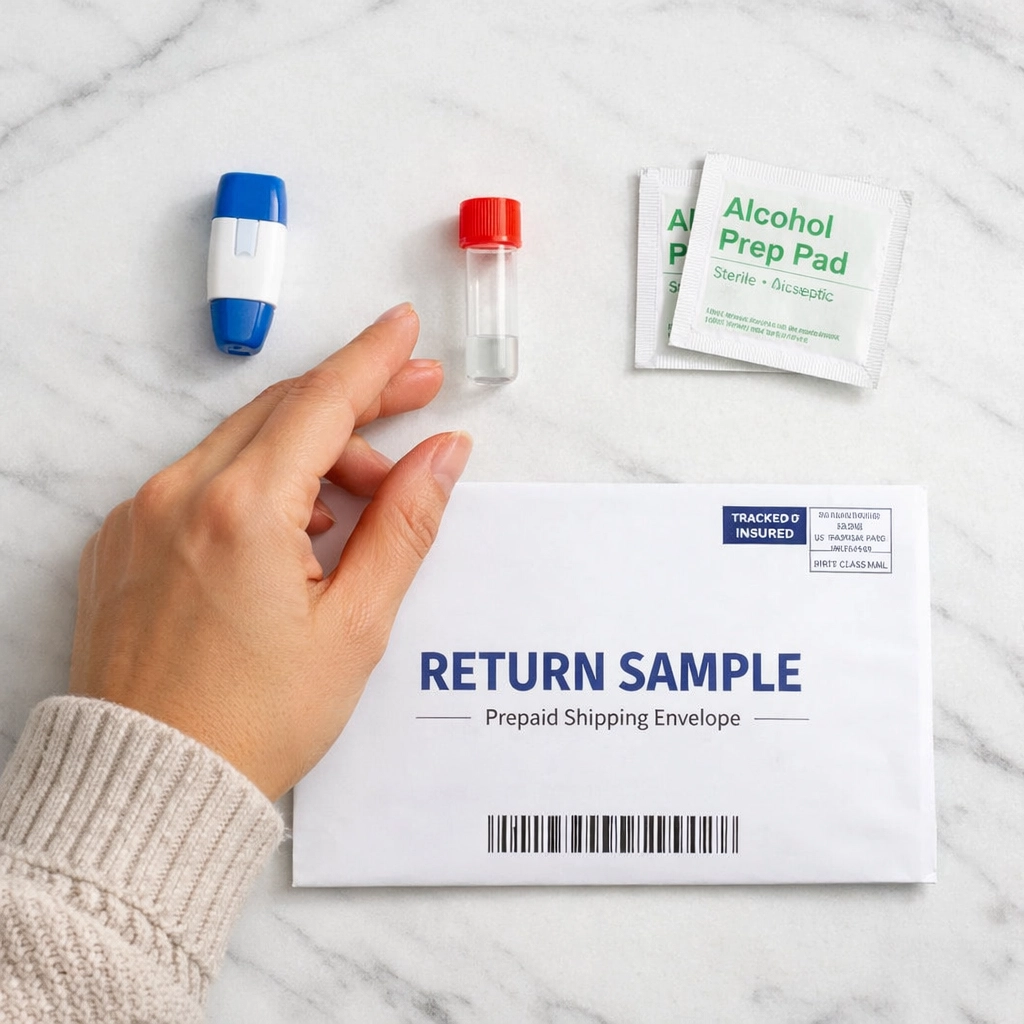
At-home testing strips away all that friction. Here's your reality with a Vitall Check hormone test kit: you order online, your kit arrives within days, and you're in control of when and where you test.
Most at-home cortisol tests use a simple finger-prick blood sample: the same collection method used in clinics, just without the clinical setting. You'll receive everything you need: lancets, collection tubes, clear instructions, and prepaid return packaging. The entire collection process takes about 5-10 minutes once you're set up.
Here's where at-home testing really shines: you can test at the time that matters most for your situation. Experiencing morning exhaustion? Test right when you wake up. Struggling with evening anxiety? Capture that late-night sample. Some comprehensive cortisol tests even measure levels at multiple times throughout the day to map your complete cortisol rhythm.
Your sample goes straight to a UKAS-accredited laboratory: the same gold-standard facilities that process samples for the NHS. Within 48 hours of your sample arriving at the lab, your results are ready. No chasing GP receptionists, no waiting for callback appointments.
But here's what separates basic at-home testing from what you actually need: the insight that comes with your results. Your numbers mean nothing without context. Vitall Check includes detailed Insight Reports with every test, translating your biomarkers into actionable information you can actually use to improve your health.

What Makes UKAS Accreditation Matter
You might be wondering: "Can at-home tests really match clinic accuracy?" Fair question. The answer depends entirely on the laboratory processing your sample.
UKAS (United Kingdom Accreditation Service) is the national accreditation body recognised by the government to assess the competence of testing laboratories. UKAS accreditation means a laboratory has met rigorous international standards for technical competence, quality management, and accurate result reporting. It's the same accreditation required for NHS laboratory services.
When you use a test processed by UKAS-accredited labs, you're getting the same analytical quality as clinic-based testing, just with the convenience of collecting your sample at home. The lancets are the same, the analysis equipment is the same, and the trained laboratory scientists reviewing your results are the same.
The difference isn't in the quality of testing. It's in the experience surrounding it.
Beyond the Numbers: Understanding Your Results
Here's what typically happens when you get blood work done through your GP: you receive a letter saying your results are "normal" or get a brief call explaining you're "within range." But cortisol isn't binary. Where you fall within the reference range matters enormously for how you feel and function.
A comprehensive Insight Report breaks down:
- Where your levels sit compared to optimal ranges (not just "normal" ranges)
- What your specific numbers mean for energy, sleep, and stress resilience
- Contributing lifestyle factors that might be pushing your levels up or down
- Targeted recommendations for supplements, timing changes, or lifestyle modifications
- When to consider follow-up testing or speaking with a healthcare provider
This is personalised health data you can actually use. No medical jargon. No vague suggestions to "reduce stress" without explaining how. Just clear, practical guidance based on your unique results.
Your Questions About At-Home Cortisol Testing, Answered
How accurate are at-home cortisol tests compared to clinic tests?
When processed by UKAS-accredited laboratories, at-home tests use identical analysis methods to clinic-based testing. The collection method (finger-prick blood sample) is the same as that used in clinical settings. Accuracy depends on following the collection instructions properly and testing at the appropriate time of day, which you can actually control better at home than in a clinic.
What time of day should I do my cortisol test?
It depends on what you're investigating. For general screening, morning testing (ideally before 10 a.m.) captures your peak cortisol levels. If you suspect adrenal issues or abnormal cortisol rhythms, your healthcare provider might recommend testing at specific times. The beauty of at-home testing is that you can test at the optimal time for your situation without coordinating clinic schedules.
How long does it take to get results?
With Vitall Check, results are typically available within 48 hours of your sample arriving at the laboratory. You'll receive an email notification when your Insight Report is ready to view online: no waiting for post or GP appointments.
Do I need a doctor's referral for at-home cortisol testing?
No. At-home testing kits are available without a prescription or GP referral. However, your results should inform conversations with healthcare providers, especially if they indicate levels outside optimal ranges. Think of at-home testing as a tool for health awareness and early detection, not a replacement for medical consultation when needed.
What can affect my cortisol test results?
Many factors influence cortisol levels: time of day, recent meals, caffeine intake, exercise, sleep quality, medications (especially corticosteroids and birth control), and acute stress. For the most accurate results, follow the specific preparation instructions included with your test kit. Generally, this means testing first thing in the morning before eating, avoiding intense exercise the day before, and trying to maintain your normal routine.
Can I test cortisol with a saliva test instead of blood?
Saliva tests are available and useful for measuring free (unbound) cortisol, which some practitioners prefer for assessing adrenal function. Blood tests measure total cortisol (both bound and unbound) and are generally considered the gold standard for diagnostic purposes. The British Medical Journal notes that blood cortisol remains the most widely validated measurement method.
What should I do if my cortisol levels are abnormal?
First, don't panic. Single abnormal readings can happen for various reasons. Your Insight Report will provide context for your results and suggest potential next steps. Generally, consistently high or low cortisol warrants a conversation with your GP or an endocrinologist who can conduct additional testing and rule out underlying conditions like Cushing's syndrome or Addison's disease.
How often should I test my cortisol levels?
For general wellness monitoring, annual or bi-annual testing is sufficient for most people. If you're working on stress management, adrenal support protocols, or recovering from burnout, more frequent testing (every 3-6 months) helps track progress and adjust interventions. Your initial results and health goals should guide your testing frequency.
Author
Vitall Check Editorial Team
The Vitall Check Editorial Team is dedicated to empowering individuals with evidence-based health information and clear, actionable insights. Every article is researched using peer-reviewed journals and official health resources, reflecting our commitment to the same high standards of accuracy as our laboratory testing services. Our goal is to make proactive wellness accessible, data-driven, and transparent.