

Athlete Blood Tests: The Ultimate Guide to Data-Driven Performance and Recovery in 2026
Athlete blood tests are comprehensive diagnostic assessments that measure specific biomarkers, including iron storage, hormone levels, inflammatory markers, and metabolic function, to optimise training intensity, prevent overtraining, and identify nutritional deficiencies before they affect performance. Unlike standard health screenings, these targeted panels reveal how your body responds to training load, enabling data-driven adjustments to recovery protocols, nutrition strategies, and competition preparation.
Whether you're training for your first marathon or competing at an elite level, your annual GP check-up isn't designed to catch the subtle physiological shifts that separate peak performance from burnout.

Why Standard Blood Tests Fall Short for Athletes
Your GP's standard blood panel checks whether you're within "normal" population ranges. That works fine if you're sedentary. But when you're logging double-digit weekly training hours, "normal" doesn't cut it.
Standard tests typically include a basic metabolic panel and complete blood count: enough to flag clinical disease, but not enough to identify subclinical deficiencies that sabotage endurance, strength gains, or recovery speed. You might technically have "adequate" ferritin at 30 ng/mL, but research shows athletes need levels above 50 ng/mL to maintain optimal oxygen transport and energy production.
High-performance training creates unique physiological demands. You're depleting micronutrients faster, stressing your endocrine system harder, and generating more inflammatory byproducts than the average patient. Your blood work needs to reflect that reality.
The Biomarkers That Actually Matter for Performance
Let's break down what you should be tracking, and why these markers make or break your training cycle.
Ferritin and Iron Status
Ferritin measures your stored iron reserves. When it drops, so does your ability to produce haemoglobin: the protein that carries oxygen to working muscles. Low ferritin is the silent killer of endurance performance, particularly in female athletes who lose iron through menstruation.
The NHS pathology guidelines for ferritin outline clinical reference ranges, but athletes should aim for 50-100 ng/mL for optimal performance. Below that threshold, you'll notice fatigue, reduced power output, and sluggish recovery: even if you're not technically anaemic.
A complete iron panel should include serum iron, total iron-binding capacity (TIBC), and transferrin saturation alongside ferritin to give you the full picture.
Vitamin D: The Underrated Performance Enhancer
Vitamin D does more than support bone health. It plays a critical role in muscle function, immune regulation, and testosterone production. The British Journal of Sports Medicine has published extensive research showing vitamin D deficiency correlates with increased injury risk and impaired muscle recovery.
Target levels between 75-125 nmol/L (30-50 ng/mL). If you train indoors or live in the UK during winter, you're almost certainly deficient without supplementation.
Testosterone and Hormonal Balance
Both male and female athletes rely on optimal testosterone levels for muscle synthesis, bone density, and training adaptation. Overtraining syndrome often manifests as suppressed testosterone before you notice performance decline.
For men, monitor total testosterone, free testosterone, and sex hormone-binding globulin (SHBG). Women should track testosterone alongside estradiol and progesterone to identify menstrual cycle disruptions that signal inadequate energy availability: a red flag for Relative Energy Deficiency in Sport (RED-S).
The Society for Endocrinology provides evidence-based guidance on interpreting hormone levels in athletic populations.
Inflammation Markers: CRP and Beyond
High-sensitivity C-reactive protein (hs-CRP) measures systemic inflammation. Training creates controlled inflammatory stress: that's how you adapt. But chronic elevation above 3 mg/L suggests you're not recovering adequately between sessions.
Optimal hs-CRP sits below 1 mg/L. Persistent elevation indicates you need to reassess training volume, sleep quality, or nutritional intake before you slide into overtraining territory.
Liver and Kidney Function
Your liver metabolises everything from protein supplements to post-workout recovery drinks. Your kidneys filter metabolic waste products generated during high-intensity training. Monitoring alanine aminotransferase (ALT), aspartate aminotransferase (AST), creatinine, and blood urea nitrogen (BUN) ensures these organs aren't being overwhelmed.
Elevated liver enzymes don't always signal pathology: they can reflect muscle damage from hard training. But tracking trends over time helps distinguish normal training adaptation from genuine organ stress.

The Recovery-Data Connection: Avoiding Overtraining Before It Hits
Overtraining syndrome doesn't announce itself with a clear warning sign. It creeps in gradually: performance plateaus, sleep quality drops, resting heart rate climbs, and motivation disappears.
Blood biomarkers catch these changes before they derail your season. A comprehensive athlete panel acts as an early warning system, revealing:
- Declining ferritin: Suggests iron depletion from training volume or inadequate dietary intake
- Elevated cortisol with suppressed testosterone: Classic hormonal signature of overtraining
- Persistent CRP elevation: Indicates insufficient recovery between training blocks
- Low vitamin D alongside elevated parathyroid hormone (PTH): Signals compromised bone health and increased stress fracture risk
According to research published in Sports Medicine, monitoring these biomarkers allows coaches to modulate training load before athletes cross the line from functional overreaching into non-functional overtraining.
The best athletes don't just train hard: they recover harder. Your blood work tells you whether your body is actually adapting to the training stimulus or struggling to keep up.
At-Home Testing vs. Clinic Visits: What Works for Your Schedule
You don't have time to sit in a GP surgery waiting room when you've got morning intervals scheduled. That's where at-home blood testing bridges the gap between performance optimisation and real-world logistics.
At-Home Testing: The Athlete's Advantage
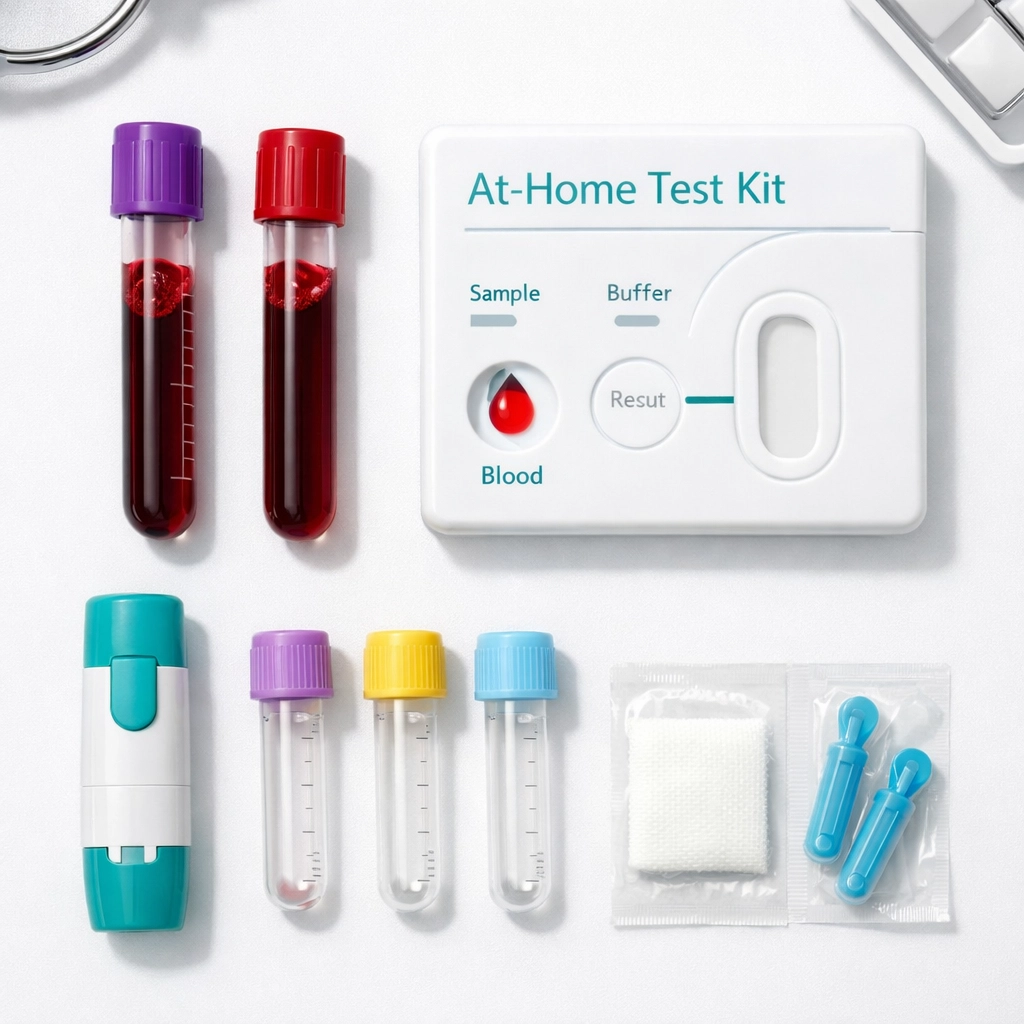
Modern at-home blood tests use the same UKAS-accredited laboratories that process NHS samples. You collect a finger-prick sample in the morning (cortisol and testosterone are highest before 11 AM), post it in a prepaid envelope, and receive results within days.
The advantages are obvious: test on your schedule, avoid clinic appointment delays, and track biomarkers between training blocks without disrupting your routine. Vitall Check's metabolic and hormone panels are specifically designed for athletes who need rapid turnaround and comprehensive biomarker coverage.
Learn how to collect your sample properly to ensure accurate results the first time.
When to See a Clinician
At-home testing works brilliantly for monitoring and optimisation. But if your results show significant abnormalities: severely low ferritin, markedly elevated liver enzymes, or hormonal values outside athletic reference ranges: book a GP or sports medicine consultation.
Some biomarkers require venous blood samples for accuracy, particularly if you're investigating complex endocrine issues. At-home tests serve as your first line of intelligence; clinical follow-up provides diagnostic precision when needed.

Testing Timeline: When to Draw Blood During Your Training Year
Timing matters. Random blood tests won't give you actionable data: you need strategic snapshots that align with your training periodization.
Baseline (Early Pre-Season): Test before high-volume training begins to establish your physiological starting point. This becomes your comparison reference for later results.
Mid-Training Block: Retest 4-6 weeks into high-volume training to assess how your body is responding. Declining biomarkers signal the need for nutritional adjustments or recovery modifications.
Pre-Competition: Test 4-6 weeks before your key race or event. This gives you time to address any deficiencies through supplementation or dietary changes before you taper.
Athletes training 12+ hours weekly should test at least three times per year. Those training 5-8 hours weekly can get away with pre-season and pre-competition testing.
Frequently Asked Questions
How much does comprehensive athlete blood testing cost?
At-home athlete panels typically range from £80-250 depending on biomarker coverage. Comprehensive panels including hormones, vitamins, inflammation markers, and metabolic function fall at the higher end but provide significantly more actionable data than basic packages.
Can I get athlete blood tests through the NHS?
Your GP can order basic panels if you present with symptoms (fatigue, poor recovery), but they're unlikely to approve comprehensive athlete-specific testing for performance optimization purposes. NHS resources prioritize clinical need over athletic enhancement.
How long before a race should I test?
Test 4-6 weeks before major competitions. This window allows time to address deficiencies through supplementation or dietary changes while leaving adequate taper time for adaptations to take effect.
Do I need to fast before testing?
Fasting requirements depend on which biomarkers you're testing. Glucose, insulin, and lipid panels require 8-12 hours fasting. Hormone tests (testosterone, cortisol) should be collected in the morning but don't require fasting. Check specific instructions for your chosen panel.
What if my results come back outside normal ranges?
First, compare your results to athletic reference ranges, not general population norms: they're often different. If values remain concerning, consult a sports medicine physician or qualified nutritionist who can interpret results within the context of your training load and recommend targeted interventions.
How quickly will I see improvements after addressing deficiencies?
Iron supplementation typically shows measurable ferritin increases within 4-6 weeks. Vitamin D levels respond within 2-4 weeks. Hormonal balance may take 8-12 weeks to restore if you've been chronically overtrained. Consistency matters more than perfection.
The Bottom Line
Elite athletes have known for decades what recreational competitors are finally discovering: you can't optimize what you don't measure. Your training diary tracks volume, intensity, and progression. Your blood work tracks whether your body is actually adapting to that stimulus or drowning in it.
Standard healthcare screenings aren't designed for high-performance demands. Athlete-specific blood testing bridges that gap, giving you the physiological intelligence to train smarter, recover faster, and compete at your peak when it matters most.
Stop guessing. Start testing.
Author
Vitall Check Editorial Team
The Vitall Check Editorial Team is dedicated to empowering individuals with evidence-based health information and clear, actionable insights. Every article is researched using peer-reviewed journals and official health resources, reflecting our commitment to the same high standards of accuracy as our laboratory testing services. Our goal is to make proactive wellness accessible, data-driven, and transparent.