From October to March, the UK sun basically clocks off early.
That matters for vitamin D. Your skin needs strong enough sunlight to make it, and in the UK winter half of the year, that simply does not happen reliably. That is why the NHS advises everyone to consider a daily 10 microgram vitamin D supplement during the autumn and winter.
If you have ever wondered whether you actually need vitamin D, whether testing is worth it, or how to make sense of a result in nmol/L, this guide gives you the plain-English version.
TL;DR:
- The NHS says everyone in the UK should consider 10 micrograms (400 IU) of vitamin D daily from October to March.
- That is because sunlight is not strong enough for your skin to make enough vitamin D during those months.
- Some groups may be at higher risk of low vitamin D all year round, including people who are rarely outdoors, cover most of their skin, have darker skin tones, are older, or are housebound.
- Low vitamin D can come with tiredness, muscle aches, bone pain, low mood, or weakness.
- Routine vitamin D testing is not offered to everyone. It is usually considered when you have symptoms or specific risk factors.
- A vitamin D blood result is usually shown as nmol/L. In general, below 25 nmol/L is considered deficient, while 50 nmol/L or above is adequate for most people.
- A result can help you arrive informed for a GP conversation about supplements and next steps.
What’s the NHS rule on vitamin D from October to March? The NHS advises everyone in the UK to consider taking a daily 10 microgram (400 IU) vitamin D supplement during the autumn and winter because sunlight is not strong enough for the skin to make enough vitamin D.
Why the NHS says 10 micrograms from October to March
This is the key point: in the UK, vitamin D is seasonal.
During spring and summer, many people can make vitamin D from sunlight on their skin. But the NHS explains that between October and early March, we do not make enough vitamin D from sunlight. Think of sunlight like a charger cable. In summer, your battery tops up. In winter, the cable is plugged in, but there is barely any power coming through.
The 10 microgram daily figure is not random. It lines up with the UK government’s nutrition advice and the Scientific Advisory Committee on Nutrition (SACN) report on vitamin D and health, which supports a reference nutrient intake of 10 micrograms per day for people aged 4 and over.
That does not mean everyone needs a blood test first. It means the public health advice is broad because winter sunlight in the UK is broadly weak.
Who is more likely to have low vitamin D?
Some people have a higher chance of low vitamin D even outside winter.
According to the NHS vitamin D guidance, higher-risk groups include:
- People who are not often outdoors
- People who cover most of their skin when outside
- People with darker skin tones, including many people of African, African-Caribbean, and South Asian backgrounds
- Older adults
- Housebound people or people living in care settings
Why does this happen? Because vitamin D relies heavily on sunlight exposure, and not everyone gets the same amount or produces it at the same rate. It is a bit like trying to fill a bucket with a slow tap. If the flow is weaker to begin with, it takes longer to get enough.
Older adults can also be more vulnerable because ageing skin becomes less efficient at making vitamin D. If you spend most of the day indoors, the maths gets even tougher.
What can low vitamin D feel like?
Low vitamin D is not always dramatic. In fact, it can be annoyingly vague.
Symptoms can include:
- Tiredness
- Muscle weakness or aches
- Bone pain
- General aches and pains
- Low mood
The NHS notes that severe vitamin D deficiency can lead to bone problems such as osteomalacia in adults or rickets in children. The tricky part is that these symptoms can overlap with many other things. Fatigue, for example, is like a car dashboard light. It tells you something needs attention, but it does not tell you exactly which part.
That is one reason vitamin D should be looked at in context, not in isolation.
If you are exploring wider nutritional markers, it can help to look at your broader Nutritional Health testing options or read the Health Hub’s wider pillar content on how to understand vitamin and fatigue blood markers. It gives you more of the full picture, not just one number.
Why routine testing is not offered to everyone
This catches many people out.
If vitamin D matters, why not just test everyone? Because public health guidance does not work like a scattergun. It works more like airport security: it focuses checks where there is a stronger reason to look.
NICE recommends not routinely testing vitamin D status. Testing is usually considered if:
- You have symptoms that could fit deficiency
- You are at particularly high risk
- There is a clinical reason why the result would change what happens next
This is why many people are simply advised to consider the standard 10 microgram daily supplement in winter rather than automatically having a blood test.
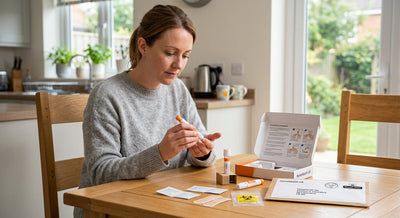
A test can still be useful in the right situation. If you want to understand where you sit before speaking with your GP, a targeted Vitamin D blood test option from Vitall Check can help you arrive informed. The key is to use the result as a conversation starter, not a DIY diagnosis.
How to read a vitamin D result in nmol/L
Most UK vitamin D blood results are reported as 25-hydroxyvitamin D in nmol/L.
If that sounds technical, keep it simple: this is the standard blood marker used to check vitamin D status. It is your vitamin D snapshot.
Clinical reference points commonly used in UK guidance include:
- Below 25 nmol/L: deficient
- 25 to 50 nmol/L: may be inadequate for some people
- Above 50 nmol/L: adequate for most people
These cut-offs are reflected in UK guidance, including the SACN report and NICE guidance on vitamin D supplement use and testing.
Here is the practical bit.
If your result is below 25 nmol/L, that is a clear flag to discuss with your GP. If it sits in the 25 to 50 nmol/L range, context matters: your symptoms, season, diet, skin tone, sun exposure, age, and health background all count. If it is 50 nmol/L or above, that is generally considered adequate for most people from a bone and muscle health perspective.
Think of the number like a weather forecast, not a personality test. It tells you the current conditions. It does not tell the whole story on its own.
If you are building out a bigger picture, you may also want to explore a more complete health check blood test or related Health Hub guides in this cluster once published.
What to do with the result
Start with context. Then speak to your GP if needed.
A vitamin D result is most useful when it helps you ask better questions:
- Does this result fit my symptoms?
- Does my winter routine or limited sun exposure explain it?
- Should I discuss standard supplementation with my GP or pharmacist?
- Do any other markers need attention too?
That is where the value really sits. Not in staring at a lab number and guessing, but in turning the number into a clearer next conversation.
Vitall Check results are processed by UKAS-accredited partner laboratories to ISO 15189 standards, the same quality benchmarks used by NHS laboratories. Each report is designed to translate raw data into clear, easy-to-understand results in plain English, so you can better understand where you sit within clinical reference ranges and prepare for a more informed GP appointment.
Summary
The NHS advice is simple: consider 10 micrograms of vitamin D daily from October to March.
That advice exists because winter sunlight in the UK is not strong enough for your skin to make enough vitamin D. Some people face a higher risk all year round, especially if they spend little time outdoors, cover most of their skin, have darker skin, are older, or are housebound.
Testing is not routinely offered to everyone, because it is usually reserved for people with symptoms or specific risk factors. But when used in the right context, a vitamin D result in nmol/L can help you understand where you stand and arrive informed for a better GP conversation about supplements and next steps.
FAQ
Q: Should everyone in the UK take vitamin D in winter?
A: The NHS advises everyone to consider taking a daily 10 microgram (400 IU) vitamin D supplement during the autumn and winter because sunlight is not strong enough for the skin to make enough vitamin D.
Q: Can an at-home vitamin D blood test replace a GP visit?
A: No. An at-home test can give you useful baseline information and help you arrive informed for a GP conversation, but it does not provide a diagnosis or replace medical care.
Q: What does a vitamin D result in nmol/L mean?
A: In general UK reference ranges, below 25 nmol/L is considered deficient, 25 to 50 nmol/L may be inadequate for some people, and 50 nmol/L or above is adequate for most people. Your GP can help interpret that result in context.
Author
Vitall Check Editorial Team
The Vitall Check Editorial Team is dedicated to empowering individuals with evidence-based health information and clear, actionable insights. Every article is researched using peer-reviewed journals and official health resources, reflecting our commitment to the same high standards of accuracy as our laboratory testing services. Our goal is to make proactive wellness accessible, data-driven, and transparent.
Disclaimer: Vitall Check is not CQC registered. The content provided is for general information only, does not provide a diagnosis, and does not replace advice from a qualified healthcare professional. Our services do not include treatment, prescription, or medical advice that falls under CQC-regulated activities. Always consult with your GP or a qualified clinician before making significant changes to your healthcare regimen.