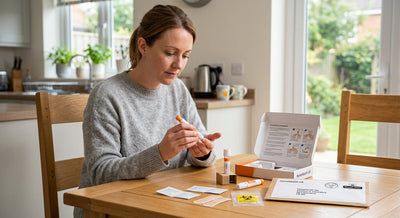
For a long time , the topic of prostate health was something men only discussed in hushed tones, if at all. It was the "P-word" that stayed behind closed doors until something went wrong. But the landscape of men’s health in the UK is shifting. Whether you are a busy professional, a dedicated athlete, or simply someone who values data over guesswork, understanding your prostate health is becoming as routine as checking your cholesterol or blood pressure.
This shift hasn't happened in a vacuum. High-profile figures and new, accessible testing methods are bringing the conversation into the light. If you are over 40, the question isn't just about whether you feel "fine" today; it's about having the data to ensure you stay fine tomorrow. A PSA test is a key part of that data set, offering a window into what’s happening internally before symptoms even appear.
TL;DR:
- The Clarkson Effect: Jeremy Clarkson’s openness about his prostate cancer journey caused a 640% surge in men checking their risk within a single week.
- What is PSA? It’s a protein produced by your prostate. High levels can indicate several things, from simple inflammation to more serious concerns.
- Early Detection is Key: In the UK, over 10,000 men are diagnosed too late for a cure each year; early testing aims to change that.
- Home Testing Benefits: At-home kits provide a private, rapid, and clinical-grade way to get your baseline data before a GP consultation.
- No More "Finger Check": A modern PSA test is a simple blood test, not a physical examination, making it easier than ever to get started.
What's a PSA test?
A PSA (Prostate-Specific Antigen) test is a simple blood check that measures the level of a specific protein produced by the prostate gland. While it isn't a direct "cancer test," it acts as a vital early warning system. Raised levels can indicate the need for further investigation, helping you and your GP catch potential issues, including prostate cancer, at an earlier, more treatable stage.
The Clarkson Effect: Breaking the Silence
The "Jeremy Clarkson effect" isn't just a media buzzword; it’s a recorded statistical phenomenon. When the Clarkson’s Farm star went public with his prostate cancer diagnosis and successful remission, the impact was immediate. According to reports in The Independent, Prostate Cancer UK saw a fourfold increase in risk-checker users in a single day.
This surge highlights a critical truth: men are ready to take action when the stigma is removed. Clarkson’s experience reminded us that even "aggressive" forms of the disease can be managed effectively if they are caught early. However, the reality remains that approximately 12,000 men die from prostate cancer in the UK every year. Many of these cases are caught too late because of a "wait and see" approach to symptoms.
By the time symptoms like frequent urination or discomfort appear, the window for early intervention may already be closing. This is why proactive men are increasingly turning to tools like the PSA Prostate Health Check to get ahead of the curve.
What Exactly is a PSA Test?
To understand the PSA test, think of it like a smoke alarm in your house. A smoke alarm doesn't tell you exactly where the fire is, or if someone just burnt a piece of toast in the kitchen. What it does is alert you that something is worth investigating.
PSA, or Prostate-Specific Antigen, is a protein made by both normal and cancerous cells in the prostate. A small amount of it naturally leaks into your bloodstream all the time. However, if the prostate is irritated, enlarged, or contains cancerous cells, more PSA leaks out, and the "alarm" sounds in your blood results.
It is important to remember that a raised PSA level does not automatically mean cancer. Just like a smoke alarm might go off because of a steam-filled bathroom, your PSA can rise due to:
- Benign Prostatic Hyperplasia (BPH): A common, non-cancerous enlargement of the prostate as you age.
- Prostatitis: Infection or inflammation of the gland.
- Recent Activity: High-intensity exercise or even cycling can temporarily "jiggle" the prostate and raise levels.
- Urinary Tract Infections (UTIs): These can cause a temporary spike in your protein levels.
By monitoring these levels, you aren't just looking for "bad news"; you are building a map of your internal health. For athletes, distinguishing between a training-induced spike and a clinical concern is where the real value of an Active Lifestyle Panel combined with PSA monitoring comes into play.
Why Age 40 is the New Benchmark
While the NHS often begins the conversation about PSA testing around age 50, many experts and charities like Prostate Cancer UK suggest that men at higher risk should start thinking about it from age 45 or even 40.
Imagine your prostate as a growing town. In your 20s, it’s a small village with very few residents (low PSA). As you get older, the town expands, more houses are built, and the population increases (higher PSA). This is a natural part of ageing. However, if the population suddenly triples overnight, you want to know why.
Starting your checks at 40 allows you to establish your "baseline." Knowing what is normal for you in your 40s makes it much easier to spot a suspicious trend in your 50s. This is particularly crucial for:
- Men with a family history: If your father or brother had prostate cancer, your risk is significantly higher.
- Black men: Statistics show that 1 in 4 Black men in the UK will get prostate cancer, compared to 1 in 8 men overall.
- The Data-Driven Patient: Those who prefer to track their health markers over time to ensure they are always operating within healthy clinical ranges.

Interpreting the Numbers: What’s "Normal"?
When you receive your results, you’ll see a number measured in nanograms per millilitre (ng/mL). It’s tempting to look for a single "pass" or "fail" mark, but PSA levels are more like a speedometer. Driving at 40mph might be perfectly safe on a main road but too fast for a narrow driveway.
According to NHS guidance, the typical thresholds for a "raised" PSA level change as you age:
- Aged 40 to 49: Over 2.5 ng/mL is often considered a point for further discussion.
- Aged 50 to 59: Over 3.0 ng/mL is the common threshold.
- Aged 60 to 69: Over 4.0 ng/mL is usually where clinicians take a closer look.
If your level is higher than the average for your age, it doesn't mean you have a "crash" ahead; it just means it’s time to slow down and check the map. This is why Vitall Check provides an easy-to-understand Insight Report with every test. Instead of just giving you a raw number like "3.2," we translate that into plain English, helping you understand where you sit within the clinical reference ranges and what your next steps should be.
When PSA Rises: Context is King
One of the reasons some men are hesitant to test is the fear of a "false positive." It is true that about 3 out of 4 men with a raised PSA level do not have cancer. This is why context is everything.
If you are a keen cyclist, the pressure from the bike saddle can physically irritate the prostate, causing a temporary release of PSA into the blood. Similarly, if you've recently finished a heavy lifting session or a marathon, your markers might look different than they would on a rest day.
When you use an at-home kit, you have the control to ensure you are testing under the best conditions. We recommend:
- Resting for 48 hours: Avoid vigorous exercise or cycling before your test.
- Hydration: Ensure you are well-hydrated to make sample collection easier.
- Timing: Collect your sample in the morning, following our official collection guide to ensure the highest accuracy.
This preparation helps ensure that when you take your results to your GP, you are providing the most accurate "snapshot" of your health possible.

The Advantage of At-Home Testing
The traditional route to a PSA test often involved waiting weeks for a GP appointment, only to have a brief conversation before being sent for a blood draw. For many busy professionals, this friction is enough to put the test off for another year.
At-home testing removes these barriers. It isn't about replacing your doctor; it’s about arriving at your doctor's office with the hard work already done. Here is why it works:
- Clinical-Grade Accuracy: Your sample is processed by the same UKAS-accredited labs that serve the NHS. You aren't sacrificing quality for convenience.
- Rapid Turnaround: Most results are ready within 48 hours of the lab receiving your sample.
- Privacy: For many men, discussing prostate health can still feel awkward. Testing at home allows you to get your initial data privately and process the information before sharing it.
- Comprehensive Insights: If you are checking your PSA, you might also want to look at your Testosterone levels or overall Male Performance markers. Our panels allow you to see the whole picture in one go.
Think of it as a "pressure valve" for the NHS. By handling the initial screening yourself, you are saving GP resources for those who need urgent care, while ensuring you have the insights you need to stay healthy.
Moving Forward: The Informed Conversation
The goal of a PSA test isn't to provide a self-diagnosis. It is to empower you to have a better, more informed conversation with your clinician. When you walk into a GP surgery and say, "My at-home PSA test showed a result of 3.8 ng/mL, and I'd like to discuss the next steps," you are fast-tracking your care.
If your levels are within the expected range for your age, you gain peace of mind and a baseline for future comparisons. If they are raised, your GP may suggest:
- A repeat test: To see if the level was a temporary spike.
- An MRI scan: A common next step in the UK to get a clear picture of the prostate gland.
- A physical examination: To check the size and feel of the prostate.
By taking the first step yourself, you are moving from reactive medical care to proactive wellness. You are no longer waiting for a problem to find you; you are actively looking out for yourself.

FAQ: Your Questions Answered
Is the PSA test a direct cancer test? No. It measures a protein produced by the prostate. High levels suggest the prostate is stressed or enlarged, which can be caused by cancer, but is more often caused by non-cancerous issues like BPH or inflammation.
At what age should I start testing? Most men should consider a baseline test at age 50. However, if you are Black or have a family history of prostate cancer, starting at 45 or 40 is often recommended.
Can exercise affect my results? Yes, particularly cycling or very heavy lifting. It is best to avoid intense physical activity for 48 hours before collecting your sample.
Does a high PSA always mean I need a biopsy? Not necessarily. Modern practice in the UK often uses an MRI scan first to see if a biopsy is even needed. Many men with a raised PSA will not require invasive procedures.
How often should I repeat the test? This depends on your initial result and your risk factors. Many men choose to check their levels annually as part of a broader health MOT, such as our Basic Health Check.
Summary: Taking Control of Your Data
Prostate health doesn't have to be a source of anxiety. By following the lead of thousands of men who were inspired by the "Clarkson effect," you can turn a potential "what if" into a manageable piece of data.
Whether you use an at-home PSA test for convenience, privacy, or to bypass the initial wait times, the result is the same: you are better equipped to look after your future. Remember, the best time to check your health is when you feel well, not just when you feel "off." Start your journey with clear insights and arrive informed for your next GP appointment.
About the Author: Vitall Check Editorial Team The Vitall Check Editorial Team is dedicated to empowering individuals with evidence-based health information and clear, actionable insights. Every article is researched using peer-reviewed journals and official health resources, reflecting our commitment to the same high standards of accuracy as our laboratory testing services. Our goal is to make proactive wellness accessible, data-driven, and transparent.
Disclaimer: Vitall Check is not CQC registered. The content provided is for general information only, does not provide a diagnosis, and does not replace advice from a qualified healthcare professional. Our services do not include treatment, prescription, or medical advice that falls under CQC-regulated activities. Always consult with your GP or a qualified clinician before making significant changes to your healthcare regimen.