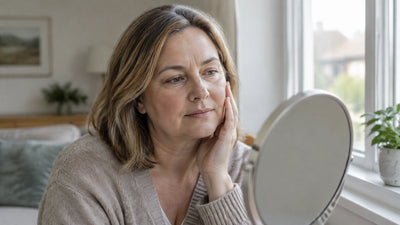
You’ve heard the phrases “Ozempic face” and “Mounjaro face”. But are they two different side effects, or two names for a similar change that can happen when you lose weight?
The evidence points to the second. The medicine’s brand name is not known to cause a distinct facial condition. The amount and pace of weight loss are more likely to explain why some people notice a change in their face.
TL;DR:
- “Ozempic face” and “Mounjaro face” are informal terms, not separate medical conditions.
- Facial fullness can change when you lose fat across your body, including from the face.
- Skin elasticity, age, hydration and changes in lean mass may affect how noticeable the change looks.
- Protein-rich meals, resistance exercise, steady hydration and support from your prescriber may help you care for your overall health during weight loss.
- Don’t change your dose or rush weight loss without speaking to your prescriber.
Is there a difference between Ozempic face and Mounjaro face? There’s no established difference. Both phrases describe facial changes that may become noticeable during significant weight loss; the amount and pace of weight loss are more likely to matter than the brand name.
What do “Ozempic face” and “Mounjaro face” mean?
These are social-media phrases for facial changes some people notice while losing weight. They can include less fullness around the cheeks or temples, looser-looking skin or a more drawn appearance.
They are not formal diagnoses, and the terms do not prove a medicine has directly affected your face. Semaglutide is the ingredient in Ozempic, while tirzepatide is the ingredient in Mounjaro. Both are prescription medicines; the NHS explains how semaglutide and tirzepatide are used.
Think of facial fullness like the padding in a cushion. If the padding reduces, the cushion’s shape changes. When your body loses fat, some of that change can show in the face too.

Why can weight loss change your face?
Fat loss can reduce facial fullness
Your face has natural fat pads that help give it shape and volume. With weight loss, fat can reduce in different parts of the body, including these areas. How visible that is varies from person to person.
A small 2025 imaging study looked at 20 people taking GLP-1 medicines who had scans before and after treatment. Researchers found a reduction in midface volume, particularly in superficial fat. The study is useful but limited: it was small and retrospective, and it cannot show that one medicine causes more facial change than another. It also cannot separate the effect of medication from the effect of weight loss itself. Read the study.
Skin and hydration affect what you notice
Skin changes with age, and its natural stretch and bounce differ between people. When facial volume reduces, those differences may become more noticeable.
Hydration can also affect how your skin looks from day to day. It is a bit like a houseplant: when it needs water, it may look less fresh, but that does not mean water can replace lost volume or reverse skin ageing. Drink regularly, especially if you have had vomiting or diarrhoea, and contact your prescriber if you are struggling to keep fluids down.
Lean mass matters too
Weight loss can involve a mixture of fat and lean mass. “Lean mass” is a broad term; it includes more than muscle alone. In body-composition studies of semaglutide and tirzepatide, lean mass fell alongside fat mass. These studies do not prove that a medicine specifically reduces facial muscle, or that lean-mass changes explain a person’s appearance. They do underline why muscle loss is a real consideration during substantial weight loss.
For more on that topic, read the Health Hub’s guide to muscle loss on GLP-1 medicines and its article on protecting lean mass. A body-composition analysis of semaglutide and a similar analysis of tirzepatide report changes in lean mass, but their different study designs mean their results should not be used to rank the medicines.
What may help during weight loss?
No food, exercise or skincare routine can promise to prevent facial changes. But you can take sensible steps to support your general health while your weight changes.
- Include protein-rich foods regularly. Appetite may fall while taking these medicines, making it harder to eat enough. Eggs, yoghurt, beans, tofu, fish and other familiar foods can help you build balanced meals. If you have a health condition that affects your diet, ask your GP or a qualified dietitian what is suitable for you.
- Make resistance exercise part of your routine if appropriate. Strength exercises give your muscles a reason to stay active during weight loss. Start at a level you can manage, and get advice if you are new to exercise or have a condition that affects movement.
- Keep fluids steady. Drink regularly through the day. If nausea or vomiting makes this difficult, speak to your prescriber rather than trying to push through alone.
- Avoid rushing weight loss. Dose increases and timing should be discussed with your prescriber. Don’t increase, reduce or stop your medicine on your own. Your prescriber can discuss the pace of treatment and whether your current plan is right for you.

Your face is only one part of the picture. Changes in strength, appetite, energy or how you feel day to day are worth mentioning at a review. Think of a weight-loss plan like a journey: the scale is one signpost, not the whole map.
When should you talk to your prescriber?
Bring it up if you are concerned about facial changes, losing weight faster than expected, struggling to eat or drink, or noticing a drop in strength. A clear record of changes can help you explain what you have noticed.
If you want broader health information before a GP or prescriber conversation, Vitall Check offers optional at-home panels, including female and male weight management panels, and a fitness health check. These are not tests for “Ozempic face” or direct measures of facial fat or muscle. Samples are processed by UKAS-accredited laboratories working to NHS-grade standards. Results are presented in plain English to help you understand the reported values and prepare for a conversation with a healthcare professional.
Summary: the takeaway
“Ozempic face” and “Mounjaro face” describe similar facial changes some people notice during weight loss. There is no established evidence that one brand creates a distinct facial condition. Loss of facial fat, skin elasticity, hydration and wider changes in body composition may all influence appearance.
Focus on steady, supported weight loss rather than chasing a cosmetic promise. Eat as well as you can, include resistance exercise if it suits you, stay hydrated and discuss dose changes with your prescriber. At-home blood testing can provide context for a GP conversation, but it cannot diagnose the cause of facial changes.
FAQ
Q: Does Mounjaro cause more facial changes than Ozempic? A: There is not enough evidence to say that Mounjaro causes more facial change than Ozempic. The amount and pace of weight loss may be more relevant than the brand.
Q: Can you prevent Ozempic face? A: There is no guaranteed way to prevent it. Balanced meals, resistance exercise where suitable, steady hydration and prescriber support can help you look after your general health during weight loss.
Q: Should I lower my dose if my face looks different? A: Don’t change your dose on your own. Discuss the change and your concerns with your prescriber, who can review your treatment with you.
Author
Vitall Check Editorial Team
The Vitall Check Editorial Team is dedicated to empowering individuals with evidence-based health information and clear, actionable insights. Every article is researched using peer-reviewed journals and official health resources, reflecting our commitment to the same high standards of accuracy as our laboratory testing services. Our goal is to make proactive wellness accessible, data-driven, and transparent.
Disclaimer: Vitall Check is not CQC registered. The content provided is for general information only, does not provide a diagnosis, and does not replace advice from a qualified healthcare professional. Our services do not include treatment, prescription, or medical advice that falls under CQC-regulated activities. Always consult with your GP or a qualified clinician before making significant changes to your healthcare regimen.