Low libido. Fewer morning erections. Poor energy. Changes in strength or mood.
These symptoms can make you wonder whether your hormones are involved. But symptoms alone cannot tell you what is happening. A properly timed blood test gives you useful information to discuss with your GP.
A male hormone test UK panel may look at testosterone, SHBG, free testosterone, cortisol, oestradiol, LH and FSH. Each marker tells a different part of the story. The trick is knowing what each one means , and not treating one result as a diagnosis.
TL;DR:
- Testosterone is usually highest in the morning, so collect your sample early.
- Total testosterone shows the amount in your blood. Free testosterone shows the portion not tightly attached to proteins.
- SHBG helps explain why total and free testosterone may not tell the same story.
- Cortisol follows a daily rhythm and should not be treated as a simple “stress score”.
- LH and FSH show the signals involved in testosterone production.
- Oestradiol matters in men too, although it is present at lower levels.
- At-home testing can provide lab-verified data without a routine clinic collection.
- Use your results to arrive informed for your next GP conversation , not to self-diagnose or change treatment.
What’s included in a male hormone test in the UK? A male hormone test may measure total and free testosterone, SHBG, cortisol, oestradiol, LH and FSH. These markers give different pieces of information about hormone production, transport and regulation, but results must be interpreted with your symptoms, timing and medical history.
What does a male hormone test check?
Hormones are chemical messengers. They carry instructions between different parts of your body.
Think of your hormone system like a delivery network. Testosterone is one parcel. SHBG is part of the transport system. LH and FSH are the dispatch instructions. Cortisol is involved in your body’s response to pressure and daily energy demands.
A single marker can be useful, but it rarely explains everything by itself.
The NHS notes that symptoms often linked with the so-called “male menopause” can also come from poor sleep, stress, depression, alcohol, lifestyle factors or other health conditions. Read the NHS guidance on male hormone symptoms.
That is why a testosterone test should be viewed as a starting point for a better conversation, rather than a final answer.
Testosterone: total versus free
Total testosterone
Total testosterone measures all the testosterone circulating in your blood.
This includes testosterone that is:
- Tightly attached to SHBG
- Loosely attached to albumin
- Unbound and available to tissues
Testosterone supports several body functions, including sexual health, sperm production, muscle and bone maintenance, mood and energy.
Levels naturally change throughout the day. They are generally higher in the morning and lower later on. North Bristol NHS Trust advises collecting male testosterone samples at around 9am because of this daily variation. Its adult male reference range is listed as 6–27 nmol/L, although ranges differ between laboratories. View the North Bristol NHS testosterone information.
Free testosterone
Free testosterone is the small fraction that is not tightly attached to carrier proteins.
It is often calculated using:
- Total testosterone
- SHBG
- Albumin
You can think of total testosterone as the money in your bank account. Free testosterone is closer to the money you can spend immediately. The total figure matters, but it may not show how much is readily available if your carrier proteins are higher or lower.
This is why a testosterone test UK panel that includes SHBG and free testosterone can provide more context than total testosterone alone.
The Endocrine Society recommends confirming suspected testosterone deficiency with symptoms plus consistently low results, using repeat morning testing. It also recommends measuring LH and FSH to help distinguish where the issue may be occurring. Read the Endocrine Society testosterone guideline.

SHBG: the protein that changes the picture
SHBG, or sex hormone-binding globulin, is a protein that carries sex hormones through your blood.
It binds strongly to testosterone. When SHBG changes, the amount of testosterone available to tissues can change too.
This creates a common situation:
- Your total testosterone may sit within the laboratory’s reference range.
- Your SHBG may be higher or lower than expected.
- Your calculated free testosterone may tell a different story.
SHBG can be affected by factors including age, body composition, thyroid function, liver health and some medicines. This does not mean that an unusual SHBG result identifies one specific condition. It means the result needs to be read alongside the wider panel.
A useful report should explain the relationship between these markers instead of leaving you with three separate numbers. That is the difference between raw data and understandable health information.
Cortisol: more than a “stress hormone”
Cortisol is made by your adrenal glands. It helps regulate blood sugar, metabolism, immune activity, blood pressure and the body’s response to stress.
It follows a daily pattern. Levels are usually higher in the morning and fall throughout the day. The Society for Endocrinology explains that cortisol has this natural daily rhythm and responds to stress. Read its patient information on cortisol.
That makes timing important.
A morning cortisol result is not a simple score showing whether you are “too stressed”. Sleep, illness, recent training, work pressure, medicines and the timing of collection can all affect the result.
Cortisol is more like a tide than a light switch. It rises and falls during the day. Checking it at a different time can give you a different picture.
If you have symptoms that could suggest a problem with adrenal function, such as fainting, unexplained weight loss, severe weakness or persistent dizziness, speak to your GP rather than relying on a private screening test.
Oestradiol: yes, men need it too
Oestradiol is often described as a female hormone. That is misleading. Men produce oestradiol too, usually by converting some testosterone into oestradiol.
It has roles in:
- Bone health
- Brain function
- Sexual health
- Mood
- The balance between different sex hormones
The amount matters less than the context. A result should be viewed using the laboratory’s reference range, your symptoms, other hormone results and relevant medicines.
Oestradiol may be considered when investigating symptoms such as breast tissue enlargement, breast tenderness, fertility concerns or other changes in male hormone health. It is not included in every testosterone panel, so check the marker list before you buy.
LH and FSH: the signals behind testosterone
LH, or luteinising hormone, is released by the pituitary gland. In men, it signals the testes to produce testosterone.
FSH, or follicle-stimulating hormone, is also released by the pituitary gland. It is closely linked with sperm production and reproductive function.
Together, LH and FSH help show how the communication system between the brain and testes is working.
Imagine the testes as a factory. Testosterone is one of the products. LH is part of the instruction from head office telling the factory how much to produce. If production is low, checking the instruction signal can help a clinician understand the pattern.
The North Bristol NHS biochemical investigation guide explains how morning testosterone, SHBG, LH and FSH may be used together when investigating suspected hormone problems.
LH and FSH are not always included in a basic testosterone test. They may be added when the initial result is low or borderline, or when symptoms and medical history suggest that a wider assessment is needed.
What symptoms may lead you to test?
A male hormone test may be worth discussing with your GP if you have persistent or troublesome symptoms such as:
- Reduced sex drive
- Fewer morning or spontaneous erections
- Erectile difficulties
- Ongoing tiredness
- Reduced muscle strength or mass
- Changes in body fat
- Low mood, irritability or reduced motivation
- Difficulty concentrating
- Fertility concerns
- Breast tenderness or enlargement
These symptoms are not proof of a hormone imbalance. They can also occur with sleep problems, stress, depression, medication, thyroid conditions, nutritional issues or cardiovascular concerns.
Fatigue is like a warning light on a car dashboard. It tells you that something needs attention, but it does not identify the fault.
If you train regularly, add your training context. Heavy exercise can affect some blood markers and may influence how you feel on the day of collection. A hard training block, poor recovery or low food intake may also affect energy and mood.
When should you take a testosterone test in the UK?
For the most useful testosterone result:
- Choose an early-morning collection. Aim for around 7am–10am and follow your kit’s stated cut-off.
- Check whether fasting is required. Vitall Check recommends an 8-hour fast for its relevant panels, with water allowed.
- Avoid heavy exercise for 24 hours beforehand.
- Avoid alcohol for 24 hours.
- Warm your hands before a finger-prick sample.
- Stay hydrated.
- Avoid testing when acutely unwell, where possible.
- Follow the official Vitall Check sample collection guide.
- Do not stop prescribed medicines without speaking to your GP.
- Tell your GP about supplements, hormone treatments or anabolic steroid use.
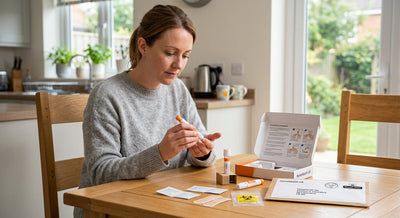
Finger-prick testing is convenient, but it can be challenging for some people. Warm hands and good preparation can help. If you feel faint or uneasy, stop, sit down and ask someone to stay with you.
If the sample is difficult to collect, follow the troubleshooting instructions. Do not force the process or repeatedly squeeze the finger hard.

What does an at-home male hormone test include?
Not every kit measures the same hormones.
Vitall Check’s Ultimate Testosterone & Hormonal Health Test measures six markers, including:
- Total testosterone
- Calculated free testosterone
- Free testosterone percentage
- SHBG
- Free androgen index
- Albumin
This panel is designed to give more context around testosterone transport and availability than a single total testosterone result.
If you want broader health information alongside hormone data, the Premium Men’s Health MOT includes testosterone alongside blood count, liver, kidney, cholesterol and nutritional markers.
Check the exact marker list before ordering. A product described as a testosterone test may not include cortisol, oestradiol, LH or FSH.
Samples are collected at home and processed by UKAS-accredited partner laboratories using NHS-grade laboratory standards. Results are provided through a secure portal, with an Insight Report that translates raw laboratory data into plain English.
The report is a manual for understanding your results. It can explain where a result sits within the laboratory’s reference range and highlight useful context for a GP conversation. It does not diagnose a condition, recommend treatment or tell you to change medication.
For a broader overview, read The Complete Guide to Male Hormone Health in the Health Hub.
What should you do with your results?
When your results arrive:
- Check the sample time.
- Read the laboratory reference range.
- Look at the markers together.
- Note any symptoms and when they began.
- Consider recent illness, poor sleep, training and alcohol.
- Write down medicines and supplements.
- Take the report to your GP if you have symptoms or results outside the stated range.
One low result does not confirm testosterone deficiency. Clinical guidance commonly uses symptoms and repeat morning testing before a diagnosis is considered.
Do not compare your number with an online chart or a friend’s result. Different laboratories use different methods and reference ranges. Your own report and clinical context matter more.

Summary
A male hormone test can help you understand more than total testosterone alone.
Testosterone shows the overall amount in your blood. Free testosterone gives context about the portion not tightly bound to proteins. SHBG helps explain the relationship between the two. Cortisol follows a daily rhythm. Oestradiol has a role in male health. LH and FSH show the signals involved in testosterone production.
For cleaner data, test in the morning, prepare properly and follow the official collection guide. Use your results as an informed starting point for your next GP conversation , not as a diagnosis or a reason to change treatment without professional guidance.
FAQ
Q: What’s the best time to take a testosterone test in the UK? A: Take it in the early morning, ideally between 7am and 10am and before 11am, because testosterone usually falls as the day goes on. Follow the timing and preparation instructions supplied with your kit.
Q: Can an at-home male hormone test replace a GP appointment? A: No. It can provide useful laboratory data and help you prepare for a better GP conversation, but it does not diagnose, treat, prescribe or replace clinical assessment.
Q: Does a testosterone test check cortisol, SHBG, LH, FSH and oestradiol? A: Not always. Test panels vary, so check the exact marker list before ordering. Some panels focus on testosterone and SHBG, while wider hormone testing may include additional markers.
Q: Are finger-prick hormone tests accurate? A: They can provide reliable results when the sample is collected correctly and processed by an accredited laboratory. Some people find collection difficult, so follow the official sampling guide carefully.
Author
Vitall Check Editorial Team
The Vitall Check Editorial Team is dedicated to empowering individuals with evidence-based health information and clear, actionable insights. Every article is researched using peer-reviewed journals and official health resources, reflecting our commitment to the same high standards of accuracy as our laboratory testing services. Our goal is to make proactive wellness accessible, data-driven, and transparent.
Disclaimer: Vitall Check is not CQC registered. The content provided is for general information only, does not provide a diagnosis, and does not replace advice from a qualified healthcare professional. Our services do not include treatment, prescription, or medical advice that falls under CQC-regulated activities. Always consult with your GP or a qualified clinician before making significant changes to your healthcare regimen.