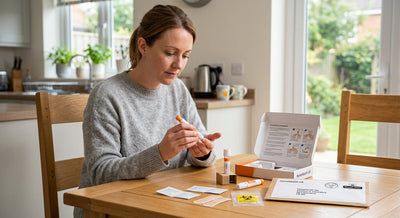
You probably don’t think about your kidneys very often. Tucked away near the small of your back, these bean-shaped organs work tirelessly in the background, filtering your blood and keeping your body’s internal chemistry in perfect balance. But as we focus more on longevity and proactive wellness, understanding how your kidneys are performing becomes essential.
Whether you’re a fitness enthusiast monitoring your protein intake, a busy professional managing stress and blood pressure, or someone interested in healthy ageing, kidney function tests offer a window into your long-term health. The good news is that you no longer have to wait weeks for a routine appointment to get these insights. At-home testing has made it possible to monitor your kidney biomarkers with clinical-grade accuracy, providing you with the data you need for an informed arrival at your next GP consultation.
TL;DR:
- Kidneys filter waste, balance fluids, and regulate blood pressure.
- Key biomarkers include Creatinine, eGFR, Urea, and Albumin.
- At-home tests use finger-prick blood samples processed by UKAS-accredited labs.
- Hydration, diet, and blood pressure are the main drivers of kidney health.
- Testing helps you track trends and prepare for better conversations with your doctor.
What's a kidney function test?
A kidney function test is a group of blood and urine checks that measure how well your kidneys are filtering waste from your blood. The most common markers include Creatinine and eGFR (estimated Glomerular Filtration Rate), which tell you if your kidneys are cleaning your blood at a healthy speed. These tests are vital for spotting early changes in kidney health, especially as you age.
Your Kidneys: The Body’s Silent Filtration System
Think of your kidneys as the ultimate aquarium filter for your body. In a fish tank, the filter constantly removes debris and toxins to keep the water clear so the fish can thrive. If the filter slows down, the water becomes cloudy, and eventually, the environment becomes unhealthy. Your kidneys do the exact same thing for your blood. They process about 200 litres of fluid every day, sifting out waste products and extra water to create urine.
Beyond just filtering, your kidneys act like a sophisticated chemical plant. They balance electrolytes (like salt and potassium), produce hormones that control your blood pressure, and even help make red blood cells. Because they have so many jobs, when their function dips, it can affect your energy levels, your heart health, and even your bone strength.
As we age, it’s natural for this "filter" to lose a bit of its efficiency, just like a car engine might not purr as quietly after 100,000 miles. However, by monitoring your kidney function regularly, you can identify if this decline is happening faster than expected. This allows you to make lifestyle adjustments, like managing your salt intake or staying better hydrated, to support your kidneys for the long haul.
The Big Five: Understanding Your Kidney Biomarkers
When you receive a Vitall Check Insight Report, you’ll see several different markers. Understanding what these mean is the first step toward taking control of your health.
1. Creatinine
Creatinine is a waste product that comes from the normal wear and tear on the muscles of your body. Everyone has creatinine in their blood. Your kidneys are responsible for filtering it out and sending it away in your urine.
If your kidneys aren't working as well as they should, the level of creatinine in your blood can start to rise. It’s important to note that if you have a lot of muscle mass (for example, if you’re a bodybuilder) or if you’ve recently eaten a lot of meat, your levels might be slightly higher than average. This is why we look at creatinine alongside other markers.
2. eGFR (Estimated Glomerular Filtration Rate)
This is arguably the most important number on your report. The NHS describes eGFR as the best way to measure how well your kidneys are working. It isn't a direct measurement but a calculation based on your creatinine levels, age, sex, and ethnicity.
Essentially, eGFR tells you the percentage of kidney function you have. A score of 90 or above is generally considered healthy. If the number stays below 60 for more than three months, it may indicate chronic kidney disease (CKD).
3. Urea
Urea is another waste product, created when your liver breaks down protein. Like creatinine, it’s filtered out by the kidneys. While urea levels can indicate how well your kidneys are working, they are also very sensitive to your diet and hydration.
If you’re dehydrated or have a very high-protein diet, your urea might look high even if your kidneys are perfectly healthy. This is why urea is always viewed as part of a larger picture.
4. Albumin
Albumin is a protein that should stay in your blood. If your kidneys are healthy, they won't let albumin leak out into your urine. Think of your kidney's filters like a fine mesh sieve. If the sieve is intact, the big "albumin" pieces stay in the bowl. If the mesh gets a hole, the albumin starts to leak through. Finding albumin in a urine test is often one of the earliest signs of kidney stress.
5. Electrolytes (Sodium and Potassium)
Your kidneys are the masters of balance. They make sure you have just the right amount of sodium (salt) and potassium in your system. Too much or too little of either can affect your heart rhythm and fluid levels. Monitoring these helps ensure your "internal ocean" is perfectly balanced.

Why Kidney Health is the Secret to Longevity
In the world of anti-ageing and longevity, we often talk about heart health or brain health, but kidney health is just as critical. In fact, research published in the BMJ suggests that maintaining healthy kidney function is one of the strongest predictors of a long, healthy life.
As we get older, our kidneys naturally lose some of their filtering units (called nephrons). This is a bit like a sports team losing players to injury over a long season. If you start with a "full squad" and take care of them, the team can keep playing well into the post-season. But if you lose too many players early on due to poor diet, high blood pressure, or lack of hydration, the team will struggle.
The Blood Pressure Connection
There is a "chicken and egg" relationship between your kidneys and your blood pressure. High blood pressure can damage the tiny blood vessels in your kidneys, making them less effective at filtering. On the flip side, damaged kidneys are less able to regulate the hormones that control blood pressure, causing it to rise further. By keeping an eye on your kidney markers through a Longevity-focused panel, you’re also keeping an eye on your cardiovascular health.
Hydration and Ageing
As you age, your body’s "thirst signal" can become less reliable. You might be slightly dehydrated without even realising it. Chronic, mild dehydration puts a constant, low-level strain on your kidneys. Regular testing can show you if your urea levels are creeping up, which might be a simple sign that you need to drink more water to support your "filtration system."
The "Informed Arrival": Why Testing at Home Matters
The traditional way to check your kidneys involves booking a GP appointment, taking time off work, and waiting for a clinic-based blood draw. While this is necessary for diagnosis, at-home testing serves as a powerful "pressure valve" for the healthcare system.
Testing at home allows you to take a proactive approach. Think of it like checking the oil in your car. You don't wait for the engine to seize before you look at the dipstick; you check it regularly so you can top it up when needed. If your at-home results show something that needs attention, you can take your Insight Report to your GP.
This is what we call an "informed arrival." Instead of telling your doctor "I’m feeling a bit tired," you can say, "I’ve noticed a trend in my eGFR over the last six months, and I’d like to discuss it." This helps your GP move straight to the clinical conversation, saving time for everyone.
How to Test Your Kidney Function at Home
Collecting a sample for a kidney function test is straightforward, but it does require a little preparation to ensure the best results. All Vitall Check samples are processed in UKAS-accredited laboratories, meaning they meet the same high standards as the tests performed by the NHS.
Preparation is Key
To get an accurate reading, you need to be well-hydrated. Think of it like trying to get water to flow through a garden hose, if the tap is barely on, the flow is poor. Drink one or two glasses of water about 30 minutes before you plan to take your sample.
The Finger-Prick Method
Most at-home kidney tests use a simple finger-prick (capillary) blood sample.
- Warm your hands: This is the most important step. Run your hands under warm water for a few minutes or swing your arms in circles to get the blood flowing to your fingertips.
- Select your spot: The side of your ring finger or middle finger usually works best.
- The "pinch": You’ll use a small, single-use device called a lancet. It feels like a tiny pinch.
- Collect the drops: Gently massage your finger (don't squeeze too hard!) to collect the blood into the small tube provided.
- Post it: Place your sample in the pre-paid envelope and pop it in a Priority Postbox.
For a detailed walkthrough, always follow the official how to collect your sample guide included with your kit.

Interpreting Your Results Without the Stress
When your results are ready (usually within 48 hours of the lab receiving your sample), you’ll receive an Insight Report. This report translates the raw data, which can often look like a confusing list of numbers, into plain English.
Staying Within the Lines
Your report will show your levels alongside "reference ranges." These ranges represent where the majority of the healthy population sits. It’s important to remember that being slightly outside a range doesn't always mean there’s a problem. For example, an athlete with a very high muscle mass might have a creatinine level that looks high, but for their body type, it’s perfectly normal.
We don't use the term "optimal" because everyone’s "normal" is different. Instead, we help you understand where you sit within the clinical standard ranges used by the NHS and private clinicians across the UK.
What if my results are abnormal?
If your eGFR is lower than expected or your creatinine is high, don't panic. A single test is just a snapshot in time. It could be that you were slightly dehydrated or had an intense workout the day before. The value of at-home testing is in the trend. If you see a consistent change over several months, that is the cue to book a follow-up with your GP.
According to Kidney Care UK, early detection is the most powerful tool we have. Most kidney issues can be managed effectively with simple lifestyle changes if they are caught early.
Practical Tips for Kidney Longevity
While testing gives you the data, your daily habits are what actually protect your kidneys. Here are three simple ways to support your "filters" every day:
- Watch the Salt: Excess salt forces your kidneys to work harder to maintain balance. The UK government recommends no more than 6g of salt per day (about one teaspoon). Try using herbs and spices for flavour instead.
- Mind the Meds: Common over-the-counter painkillers like ibuprofen (NSAIDs) can be tough on the kidneys if taken frequently or in high doses. If you have concerns about your kidney function, always check with a pharmacist before using these.
- Control Your Blood Sugar: Diabetes is one of the leading causes of kidney stress in the UK. Keeping your blood sugar stable through a balanced diet and regular movement protects the delicate blood vessels in your kidneys from damage.

Summary: Taking the Next Step
Your kidneys are your body’s unsung heroes. They work 24/7 to keep you clean, balanced, and healthy. By monitoring your function through at-home testing, you aren't just looking for problems, you’re actively participating in your own longevity.
Monitoring markers like eGFR and creatinine allows you to see how your lifestyle choices are impacting your internal health. It gives you the confidence to have better, more data-driven conversations with your doctor and ensures that you can enjoy a vibrant, active life well into your later years.
Whether you choose a Basic Health Check or a more comprehensive Performance Panel, you’re making an investment in your future self.
FAQ
Q: Can an at-home kidney test replace a GP visit?
A: No. At-home testing provides baseline screening and lifestyle insights. It allows for an "informed arrival" at your GP surgery, giving your doctor clinical-grade data to review, but it does not replace a formal diagnosis or clinical care.
Q: Are finger-prick blood tests as accurate as clinic vein draws?
A: Yes, provided the sample is collected correctly. Vitall Check samples are processed in UKAS-accredited laboratories using the exact same standard procedures as traditional venous blood tests you would receive in a hospital.
Q: How often should I check my kidney function?
A: For most healthy adults, an annual check is a great way to monitor trends. If you have high blood pressure, diabetes, or are over the age of 60, NICE guidelines suggest more frequent monitoring as part of your routine health check-ups.
Author: Vitall Check Editorial Team
The Vitall Check Editorial Team is dedicated to empowering individuals with evidence-based health information and clear, actionable insights. Every article is researched using peer-reviewed journals and official health resources, reflecting our commitment to the same high standards of accuracy as our laboratory testing services. Our goal is to make proactive wellness accessible, data-driven, and transparent.
Disclaimer: Vitall Check is not CQC registered. The content provided is for general information only, does not provide a diagnosis, and does not replace advice from a qualified healthcare professional. Our services do not include treatment, prescription, or medical advice that falls under CQC-regulated activities. Always consult with your GP or a qualified clinician before making significant changes to your healthcare regimen.