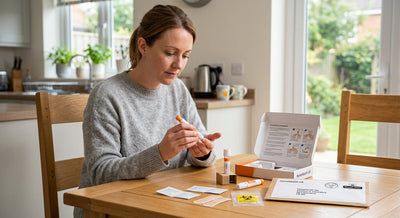
Your CRP result can change without one dramatic cause. Sometimes, the culprit is hiding in plain sight: poor sleep, a brutal training week or too many meals from a packet.
TL;DR:
- CRP is a blood marker linked to inflammation or infection.
- One raised CRP result is not a diagnosis.
- Poor sleep, hard training without recovery, stress, ultra-processed-heavy diets, smoking and excess alcohol may nudge CRP upwards.
- Illness or injury can raise CRP for a short time.
- Test under similar conditions and look for patterns, not panic.
- Use your results to prepare for a better GP conversation.
What's CRP, and why might it be raised? CRP is a protein made by your liver when inflammation or infection is present. Everyday habits, recent exercise, illness and injury can all affect the result, so one raised reading does not identify the cause or provide a diagnosis.
What is CRP?
CRP stands for C-reactive protein. Your liver releases it when your immune system responds to inflammation, infection or tissue damage.
It is useful because it acts a little like a smoke alarm. It can tell you that something is going on, but it cannot tell you whether the cause is burnt toast or a serious fire.
A raised result may happen after an infection, injury, surgery or another inflammatory condition. It may also be linked with longer-term lifestyle factors. The NHS pathology guide to CRP explains that CRP is non-specific and should be interpreted alongside a full clinical assessment.
That is why one raised result is not a diagnosis. Your symptoms, medical history, other blood markers and repeat results all matter.
1. You keep cutting sleep short
One late night will not explain everything. A regular pattern of poor or short sleep may be more relevant.
Research in healthy adults has found an association between short sleep and raised high-sensitivity CRP. In one peer-reviewed study, adults sleeping 5.5 hours or less had a higher chance of raised hs-CRP than those sleeping longer. You can read the full sleep and hs-CRP study.
Sleep is when your body carries out its overnight maintenance work. If you keep closing the workshop early, repairs can take longer.
Try this swap:
- Keep your wake-up time fairly consistent.
- Put your phone away 30 minutes before bed.
- Avoid using alcohol as a sleep aid.
- If you snore loudly, wake gasping or feel very sleepy during the day, speak with your GP.
Do not chase a perfect number of hours. Start by protecting a more regular sleep window.

2. You train hard but skip recovery
Exercise is good for your health. However, very hard or unfamiliar training can temporarily affect inflammation markers, especially when it causes muscle damage.
That matters if you test the morning after a punishing session, a long race or a heavy training block. Your body may simply be dealing with repair work. A systematic review found that the short-term CRP response after exercise is mixed, but strenuous or muscle-damaging exercise can produce an inflammatory response. Read the peer-reviewed exercise review.
Think of your muscles like a building site after a renovation. A little dust does not mean the building is failing. It means work is taking place.
Try this swap:
- Avoid an unusually hard session before a baseline blood test.
- Include easier days, gentle movement and proper meals.
- Hydrate normally.
- Tell your GP or record the training you completed before testing.
For athletes and lifters, context matters even more. Training load can shift several markers, so do not read CRP in isolation.
3. Stress becomes your daily background noise
Deadlines, money worries, family pressure and constant notifications can keep your body in a high-alert state.
Short bursts of stress are normal. The problem is when your nervous system rarely gets a quiet moment. It is like leaving every light on in the house all night: possible, but not a sensible long-term setting.
Stress may also affect sleep, food choices, alcohol intake and recovery. These factors can then add to the overall picture.
Try this swap:
- Take a 10-minute walk without your phone.
- Use slow breathing before bed.
- Put short breaks between demanding tasks.
- Speak with your GP if stress is affecting your sleep, mood or daily life.
You do not need a complicated routine. A small, repeatable pause is more useful than an impressive plan you never use.
4. Ultra-processed food becomes the default
Ultra-processed foods include many packaged snacks, sugary drinks, ready meals, processed meats and confectionery products. They are convenient, but a diet built heavily around them may contain less fibre and fewer whole foods.
A peer-reviewed review found that diets high in ultra-processed foods are associated with low-grade inflammation, although researchers also note that the evidence is still developing and does not prove that one food directly causes a raised CRP. Read the review on ultra-processed foods and inflammation.
Your diet works a bit like a team. If most of the players are sugary drinks, crisps and ready meals, the team is missing useful support.
Try this swap:
- Add vegetables or fruit to one meal each day.
- Choose oats, potatoes, brown rice or wholegrain bread more often.
- Keep beans, lentils, eggs, fish or yoghurt available for quick meals.
- Replace one sugary drink with water or a sugar-free option.
- Use packaged foods as part of your diet, not the whole game plan.

5. Smoking and excess alcohol keep adding pressure
Smoking is linked with inflammation and can affect many areas of health. If you smoke, support is available through the NHS quit smoking service.
Alcohol can also become an easy way to unwind after a stressful day. Regularly drinking above NHS guidance may affect your health and can interfere with sleep and recovery. If you drink, the NHS advises not regularly exceeding 14 units per week. Check how alcohol units are calculated.
Try this swap:
- Set a quit date and use NHS support if you smoke.
- Keep several alcohol-free days each week.
- Track your units for a week before guessing your intake.
- Swap the usual evening drink for a walk, shower, meal or alcohol-free option.
Small changes count. You do not need to fix every habit on the same Monday.
Do not test too soon after illness or injury
A recent cold, infection, flare-up, operation, dental problem or injury can raise CRP. So can healing muscle after hard training.
Testing during this window may give you a result that reflects the immediate event rather than your usual baseline. That is like checking the weather during a thunderstorm and assuming every day is going to look the same.
If you are unwell, have a significant injury or are recovering from a procedure, ask your GP when testing is appropriate. Do not use a home result to decide whether you need urgent care.
How to get more useful CRP context
For a baseline result:
- Test when you are well.
- Avoid unusual hard training beforehand.
- Follow the official “how to collect your sample” guide.
- Warm your hands and drink water before finger-prick collection.
- Keep the timing and preparation similar if you repeat the test.
- Record recent illness, injury, alcohol, sleep and training.
- Discuss an unexpected or persistent result with your GP.
Vitall Check’s Basic Health Check Blood Test includes CRP. The Active Lifestyle & Wellness Panel also includes CRP alongside other health markers. Samples are processed by independent UKAS-accredited laboratories using NHS-grade standards, with results translated into clear, plain-English Insight Reports.
The report is a manual for your lab data. It helps explain what a result means within the laboratory reference range and gives you useful context for your next healthcare conversation. It does not diagnose the cause.
For a wider guide to why context matters when reading blood results, read the Health Hub pillar post: Biohacking Blood Test Results: Why Context Matters More Than the Number.
Summary
CRP is a useful signal, but it is not a verdict.
Poor sleep, hard training without recovery, stress, a heavily ultra-processed diet, smoking and excess alcohol may all influence inflammation markers. Recent illness or injury can do the same.
Start with the basics: test when you are well, follow the sample guide and repeat under similar conditions when appropriate. Then use the result to arrive informed for a better conversation with your GP.
FAQ
Q: Can poor sleep raise CRP? A: Poor sleep has been linked with higher CRP in some studies, but sleep is only one possible influence. A result needs to be read alongside your health and recent circumstances.
Q: Should I test CRP after a hard workout? A: Avoid testing immediately after unusually hard or unfamiliar training if you want a baseline result. Exercise can cause short-term changes in inflammation markers.
Q: Is a raised CRP result a diagnosis? A: No. CRP is a non-specific marker. A raised result may reflect infection, injury, exercise or another cause, so speak with your GP about unexpected or persistent results.
Author Bio
Vitall Check Editorial Team
The Vitall Check Editorial Team is dedicated to empowering individuals with evidence-based health information and clear, actionable insights. Every article is researched using peer-reviewed journals and official health resources, reflecting our commitment to the same high standards of accuracy as our laboratory testing services. Our goal is to make proactive wellness accessible, data-driven, and transparent.
Disclaimer: Vitall Check is not CQC registered. The content provided is for general information only, does not provide a diagnosis, and does not replace advice from a qualified healthcare professional. Our services do not include treatment, prescription, or medical advice that falls under CQC-regulated activities. Always consult with your GP or a qualified clinician before making significant changes to your healthcare regimen.