Feeling tired, having irregular periods, noticing hair changes or waking hot at night? It is easy to blame “hormone imbalance” and order the biggest panel available.
That is not always the smartest move.
The right hormone test for women depends on your symptoms, age, cycle pattern, medicines and what you want to understand. A single result can also mislead you if you test on the wrong day.
A blood test is a map, not a verdict. It shows what was happening in your body at one point in time. Your GP or another qualified clinician still needs to interpret the result alongside your medical history.
TL;DR:
- Match the panel to your main symptom picture.
- Oestradiol, FSH and LH are affected by your menstrual cycle.
- Test progesterone around 7 days before your expected period, not automatically on day 21.
- Testosterone should usually be read alongside SHBG.
- Prolactin can change with stress, sleep, exercise and recent breast stimulation.
- TSH and free T4 can help investigate thyroid-type symptoms.
- Ferritin, vitamin B12 and vitamin D can mimic hormone-related fatigue and brain fog.
- If you are 45 or over with typical menopause symptoms, NICE says diagnosis is usually based on symptoms and cycle changes, not routine hormone testing.
- At-home testing provides information. It does not diagnose, treat or replace a GP consultation.
What's the best hormone imbalance test for women in the UK? The best panel depends on your symptoms and cycle timing. Common markers include oestradiol, progesterone, FSH, LH, prolactin, testosterone, SHBG and thyroid tests, with ferritin, vitamin B12 and vitamin D added when fatigue or hair changes are part of the picture.
Start with your symptom pattern
Before you choose a hormone imbalance test, write down what you are trying to explain.
Think of your symptoms as clues in a detective story. One clue rarely solves the case. A useful panel helps you collect several clues that belong together.
If your periods are irregular or missing
A GP may consider:
- FSH
- LH
- Oestradiol
- Prolactin
- TSH and free T4
- Testosterone and SHBG, especially if you also have acne, facial hair or scalp hair thinning
These markers can help show whether your symptoms need further investigation. They do not confirm a diagnosis on their own.
The NHS information on polycystic ovary syndrome explains that assessment may include hormone blood tests and, where appropriate, an ultrasound scan. Symptoms can overlap with other conditions, so your full history matters.
If you have hot flushes, night sweats or cycle changes
You may be thinking about perimenopause or menopause.
If you are aged 45 or over and otherwise well, NICE recommends identifying perimenopause and menopause without routine laboratory tests when typical symptoms and menstrual changes are present. NICE also says not to use oestradiol or FSH routinely to identify menopause in this group.
Read the NICE menopause identification and management recommendations before treating a private hormone test as a menopause answer.
FSH may have a more specific role when you are aged 40 to 45 with symptoms and cycle changes, or under 40 when premature ovarian insufficiency is suspected. Under 40, NICE says diagnosis should not be based on one blood test alone.
You can also read the perimenopause guidance in the Vitall Check Health Hub for wider context.
If fatigue, brain fog or hair changes are your main concern
Do not look only at reproductive hormones.
Fatigue can come from several places. Low iron stores, vitamin B12 deficiency, vitamin D deficiency and thyroid problems can feel similar to hormone-related symptoms.
It is a bit like trying to find why a phone keeps switching off. The problem might be the battery, the charger or the software. Checking one part does not tell you about the others.
Which hormone markers actually matter?
Oestradiol
Oestradiol is the main form of oestrogen during the reproductive years. It changes naturally across the menstrual cycle.
A result taken early in the cycle will not mean the same thing as a result taken close to ovulation or after ovulation. That is why the cycle day must sit beside the number.
Oestradiol may be useful when a clinician is looking at ovarian function, cycle changes or suspected early menopause. It is not a reliable stand-alone “balance” score.
Progesterone
Progesterone rises after ovulation. If you are testing whether ovulation has likely occurred, the useful timing is usually about 7 days before your next expected period.
For a 28-day cycle, that may be around day 21. For a 32-day cycle, it may be closer to day 25.
The fixed “day 21 test” only fits a regular 28-day cycle. If your cycles vary, count backwards from your expected next period instead.
A progesterone result taken too early may look low simply because ovulation has not happened yet. A single result can therefore be misleading, especially when your cycle is irregular.

FSH and LH
FSH and LH are signals made by the pituitary gland, a small area at the base of your brain.
- FSH helps stimulate the ovaries.
- LH is involved in ovulation and reproductive hormone production.
They can be useful when investigating irregular periods, absent periods or suspected ovarian function changes. They are also affected by cycle timing.
If you still have periods, early-cycle testing is often easier to compare than a random mid-cycle sample. Record the first day of bleeding as day 1 and follow the instructions for your chosen test.
Do not use an FSH result as a simple yes-or-no menopause test without considering your age, symptoms, cycle pattern, contraception and any hormone treatment.
Prolactin
Prolactin is best known for its role in breast milk production, but it also interacts with reproductive function.
Raised prolactin may be considered when periods are irregular or absent, fertility is affected or there is unexpected milk production. Levels can also shift temporarily with stress, poor sleep, recent exercise and breast stimulation.
That means one raised result may need a clinician-led review or repeat testing. Do not jump from one number to a diagnosis.
Testosterone and SHBG
Women produce testosterone in smaller amounts than men, but it still has a role in libido, mood, muscle and bone health.
Testosterone is best understood alongside SHBG, or sex hormone-binding globulin. SHBG is a carrier protein. It binds some sex hormones in the bloodstream, affecting how much testosterone is available.
Testing total testosterone alone can leave part of the picture missing. Testosterone and SHBG may be relevant if you have:
- New or increased facial hair
- Acne
- Scalp hair thinning
- Irregular periods
- Reduced libido
- Symptoms that prompt a clinician to consider androgen excess
The result still needs to be viewed in context. Hormonal contraception, medicines and the stage of your cycle can affect interpretation.
Thyroid tests: TSH, free T4 and thyroid antibodies
Your thyroid acts a little like your body’s speed controller. It helps influence energy, temperature, heart rate and many other processes.
The NHS explains that suspected underactive thyroid is assessed with blood tests for TSH and thyroxine, or T4. Symptoms can include tiredness, feeling cold, weight gain, concentration problems, dry hair, hair loss and heavy or irregular periods. Read the NHS guide to underactive thyroid testing.
- TSH is the signal telling your thyroid how hard to work.
- Free T4 is the available thyroid hormone measured in the blood.
- Thyroid antibodies, such as TPO antibodies, may be useful when autoimmune thyroid disease is being considered.
Thyroid antibodies are not needed in every general hormone panel. Whether they are useful depends on your symptoms, previous results and clinical history.
Vitall Check’s Female Hormone Health & Balance Test includes targeted reproductive and thyroid markers, including oestradiol, LH, FSH, TSH, free T4, testosterone, SHBG and prolactin. Check the current marker list before ordering, because not every hormone test includes progesterone, thyroid antibodies or nutritional markers.
Do not overlook ferritin, vitamin B12 and vitamin D
Ferritin
Ferritin reflects your stored iron. Low iron status can be relevant if you have heavy periods, tiredness, breathlessness, restless legs or increased hair shedding.
The NHS lists tiredness, palpitations, hair loss and restless legs among symptoms linked with iron deficiency anaemia. Read the NHS iron deficiency anaemia guidance.
Ferritin is not the same as a full blood count. A GP may use more than one test to understand whether iron deficiency or anaemia is present and why it may have happened.
Vitamin B12
Vitamin B12 deficiency can cause tiredness, memory problems, pins and needles, numbness, weakness and balance changes. The NHS notes that some neurological problems can become permanent if deficiency is left untreated.
Read the NHS vitamin B12 and folate deficiency guidance.
If you have pins and needles, loss of balance or worsening weakness, arrange a GP assessment rather than relying only on a private test.
Vitamin D
Vitamin D supports healthy bones and muscles. Low vitamin D can be more likely when you have little sun exposure, cover most of your skin outdoors or have darker skin.
The NHS vitamin D guidance explains who may need supplements and why high doses can be harmful. Do not use a blood result to choose large supplement doses without professional advice.

How to get a more useful result
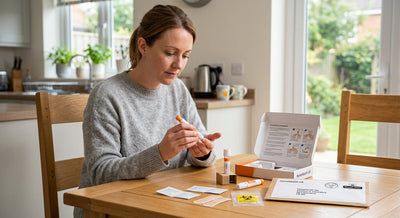
Follow the official “how to collect your sample” guide supplied with your kit. Finger-prick testing is convenient, but it may take preparation.
Before testing:
- Record your cycle day.
- Check whether the panel needs a morning sample.
- Check whether fasting is required.
- Drink water unless your instructions say otherwise.
- Warm your hands and dry them fully.
- Avoid a hard workout if the instructions advise this.
- Check whether biotin supplements should be paused.
- Tell your GP about medicines, contraception, HRT or pregnancy plans.
Some people find collection difficult. Cold hands, slow blood flow and nerves can all make it harder. If you feel faint, stop and sit or lie down safely. Contact Vitall Check if you cannot collect enough blood.
Vitall Check samples are processed by UKAS-accredited partner laboratories working to NHS-grade standards. Results are delivered digitally within 48 hours after the laboratory receives a suitable sample. The Insight Report is a plain-English manual that translates raw laboratory data into clear explanations and helps you prepare questions for your GP. It does not diagnose or prescribe.
Safety and follow-up
Speak to your GP before ordering if you are pregnant, trying to conceive, under the provider’s minimum age, taking regular medicines or being monitored for an existing condition.
Do not stop prescribed medicine to change a test result.
If a result sits outside the laboratory reference range, do not panic and do not dismiss it. Take the full report to your GP or another qualified clinician. Timing, symptoms, medicines and previous results all matter.
Summary: choose the question before the panel
The best hormone imbalance test for women is not necessarily the largest one.
Choose based on your main question:
- Irregular or absent periods: consider reproductive hormones plus thyroid and prolactin context.
- Acne, facial hair or scalp hair changes: testosterone and SHBG may be relevant.
- Hot flushes and cycle changes: consider your age and symptoms first, especially because NICE does not recommend routine hormone testing for menopause diagnosis at 45 or over.
- Fatigue and brain fog: include thyroid, ferritin, vitamin B12 and vitamin D in the conversation.
- Cycle or ovulation questions: record cycle day carefully and time progesterone from your expected next period.
Use the result as an informed starting point for a better GP conversation, not as a label for your health.
Frequently asked questions
Q: What blood tests should a woman get for hormone imbalance? A: It depends on your symptoms. Common markers include oestradiol, progesterone, FSH, LH, prolactin, testosterone, SHBG, TSH and free T4. Ferritin, vitamin B12 and vitamin D may be useful when fatigue, hair changes or brain fog are present.**
Q: What day of my cycle should I test female hormones? A: Oestradiol, FSH and LH are often assessed early in the cycle, while progesterone is usually checked around 7 days before your expected period. Follow the exact instructions for your chosen panel.**
Q: Can an at-home hormone test diagnose PCOS or menopause? A: No. It can provide laboratory information, but PCOS and menopause assessment requires symptoms, history and sometimes scans or repeat testing. Take your results to your GP or another qualified clinician.**
Author
Vitall Check Editorial Team
The Vitall Check Editorial Team is dedicated to empowering individuals with evidence-based health information and clear, actionable insights. Every article is researched using peer-reviewed journals and official health resources, reflecting our commitment to the same high standards of accuracy as our laboratory testing services. Our goal is to make proactive wellness accessible, data-driven, and transparent.
Disclaimer: Vitall Check is not CQC registered. The content provided is for general information only, does not provide a diagnosis, and does not replace advice from a qualified healthcare professional. Our services do not include treatment, prescription, or medical advice that falls under CQC-regulated activities. Always consult with your GP or a qualified clinician before making significant changes to your healthcare regimen.