Inflammation is a bit like a hidden fire. When you have a small, controlled campfire in a designated pit, it keeps you warm and helps you cook. But if a stray spark lands on the dry grass, it can slowly spread beneath the surface before you even see a flame. By the time you notice the smoke, the situation has changed.
In your body, C-reactive protein (CRP) is that smoke. It’s a signal that something is heating up. Whether you’re an athlete pushing your limits, a busy professional managing high-stress weeks, or someone simply looking to stay ahead of their health, understanding your CRP levels is one of the most effective ways to peek under the bonnet of your wellbeing.
TL;DR:
- What it is: CRP is a protein made by your liver that increases when there is inflammation in your body.
- Two types: Standard CRP detects major infections or injuries, while high-sensitivity CRP (hs-CRP) looks at low-level inflammation linked to heart health.
- What it tells you: It doesn't pinpoint where the problem is, but it confirms that your immune system is currently active.
- Why it matters: Tracking CRP helps you identify "hidden" lifestyle stress, overtraining, or early signs of cardiovascular risk.
- Next steps: A CRP test helps you arrive informed for your next GP appointment with clear, clinical-grade data.
What's a CRP test? A: It's a blood test that measures C-reactive protein (CRP), a marker produced by your liver that increases when there's inflammation in your body. It helps identify if your system is reacting to an injury, infection, or chronic lifestyle stress.
What exactly is C-reactive protein?
Think of your liver as a high-tech security monitoring station. Most of the time, it’s running routine checks and keeping things steady. However, when your body detects an "intruder", like a virus, a bacterial infection, or even physical damage from a heavy gym session, the security team sends out an emergency signal.
That signal is C-reactive protein. It’s part of your "acute phase response." When something goes wrong, your liver pumps CRP into your bloodstream to help your immune system find and fix the damage.
Because CRP levels rise and fall quite quickly, they act like a real-time news feed for your immune system. If the "fire" is put out, the CRP levels drop back down. If the fire keeps smouldering (chronic inflammation), the CRP levels stay elevated.

Standard CRP vs. High-Sensitivity CRP (hs-CRP)
Not all inflammation is the same, and not all tests measure it the same way. You might hear people talk about "Standard CRP" and "High-Sensitivity CRP" (hs-CRP). While they both measure the same protein, they are used for very different reasons.
Standard CRP
This is what most NHS blood tests look for. It’s designed to spot big, obvious "fires." If you have a severe infection, a flare-up of an autoimmune condition like rheumatoid arthritis, or you’ve just had surgery, your standard CRP might jump from 5 mg/L to 100 mg/L or more. It’s a blunt tool for big problems.
High-Sensitivity CRP (hs-CRP)
This is a much more precise version of the test. It can measure tiny amounts of CRP that a standard test might miss. It’s used primarily to look at "low-grade" inflammation. This is the kind of inflammation that doesn't make you feel "sick" in the traditional sense, but it slowly irritates your blood vessels over time. This is why the British Heart Foundation highlights hs-CRP as a key marker for cardiovascular risk.
Understanding the ranges: What do your results mean?
When you receive your Insight Report from Vitall Check, you’ll see a number expressed in milligrams per litre (mg/L). It’s important to remember that these numbers provide a snapshot of your health at a specific moment.
For Standard Inflammation (General Health):
- Under 5 mg/L: This is generally considered the "normal" range for most healthy adults in the UK. It suggests there is no significant active inflammation or infection in your system.
- 5 mg/L to 10 mg/L: This is a "grey area." It might mean you're recovering from a minor cold, dealing with a small injury, or perhaps your body is slightly stressed from a lack of sleep.
- Above 10 mg/L: This usually indicates more significant inflammation. It could be an infection or a flare-up of a known condition. If your levels stay this high, it’s a good idea to discuss the results with your GP.
For Cardiovascular Risk (hs-CRP):
If you are using the test to check your long-term heart health, the bars are set much lower:
- Low Risk: Less than 1.0 mg/L.
- Average Risk: 1.0 to 3.0 mg/L.
- High Risk: Above 3.0 mg/L.
It is worth noting that if your result is over 10 mg/L, it’s usually dismissed for heart risk assessment because you likely have a temporary infection that’s "masking" your true baseline. In these cases, it’s best to wait 2-3 weeks and test again when you feel 100%.

Why check your CRP?
Why should you care about a protein made by your liver? Because inflammation is the root of many modern health concerns. By tracking your CRP, you can make more informed decisions about your lifestyle.
1. Spotting overtraining
For athletes and fitness enthusiasts, a high CRP can be a sign that you aren't recovering properly. If you’ve been smashing the weights or running marathons and your CRP is consistently elevated, your body is telling you it needs more rest. Our Performance Monitor Blood Test includes CRP specifically to help you balance training load with recovery.
2. Monitoring lifestyle stress
Busy professionals often live in a state of "constant alert." High cortisol, poor sleep, and a diet of convenience foods can all drive up low-grade inflammation. Checking your CRP can be the wake-up call needed to prioritise better sleep and stress management.
3. Heart health awareness
Heart disease doesn't usually happen overnight. It’s often the result of decades of low-level irritation in the arteries. A high hs-CRP can indicate that your lifestyle, diet, exercise, and stress, might be putting extra pressure on your cardiovascular system.
4. An informed arrival at the GP
Waiting for a GP appointment can be frustrating. By arriving with lab-verified, UKAS-accredited data in hand, you can have a much more productive conversation. Instead of saying "I feel tired," you can say, "My CRP is currently 8 mg/L, which suggests some persistent inflammation. Can we explore why?" This shifts you from a passive patient to a proactive partner in your care.

How to prepare for your test
Getting an accurate CRP reading requires a little bit of preparation. Because CRP reacts so quickly to what's happening in your body, you want to make sure you're testing your "true" baseline.
- Wait after illness: If you’ve had a cold, flu, or even a dental procedure, wait at least 14 days before testing.
- Rest before the test: Avoid heavy, "soul-crushing" workouts for at least 48 hours before your finger-prick collection. Intense exercise causes temporary muscle damage, which naturally spikes CRP.
- Stay hydrated: Drink plenty of water. Not only is it better for your general health, but it also makes the finger-prick collection much easier.
- Follow the guide: Always follow our official collection guide to ensure your sample is high quality and can be processed quickly by the lab.
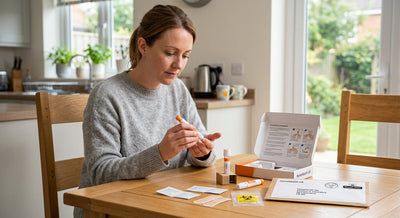
If you find finger-prick testing a little daunting, don’t worry. Most people find that once they’ve done it once, the "pinch" is much less than they expected. Just make sure your hands are warm, try jumping on the spot or running them under warm water, to get the blood flowing.
Summary: Taking control of the "smoke"
CRP is one of the most versatile tools in your health toolkit. It’s a general marker, meaning it won’t tell you exactly why it’s high, but it’s a brilliant "red flag" system. Whether you use it to adjust your training, tweak your diet, or check in on your heart health, it provides the data you need to stop guessing and start knowing.
By using an at-home kit like our Fitness Health Check, you bypass the initial wait times and get a clear Insight Report that translates raw lab data into plain English. You aren't just getting a number; you're getting a plan.
FAQ: People Also Ask
Q: Can a high CRP result mean I have cancer?
A: A high CRP result is "non-specific," meaning it only tells you that inflammation is present, not why. While some cancers can cause high CRP, so can a common cold, a sprained ankle, or even intense exercise. Never use a CRP test to self-diagnose serious conditions; always consult your GP if you have concerning symptoms.
Q: Does diet affect CRP levels?
A: Yes, absolutely. Diets high in processed sugars and trans fats are often linked to higher CRP. Conversely, a Mediterranean-style diet rich in leafy greens, fatty fish, and olive oil is widely known to help maintain lower inflammation levels.
Q: Why's my CRP high but I feel fine?
A: This is common with "low-grade" inflammation. You might not feel "sick," but your body is dealing with internal stressors like chronic stress, poor sleep, or an underlying minor injury. It’s a sign to look at your lifestyle habits.
The Vitall Check Editorial Team
The Vitall Check Editorial Team is dedicated to empowering individuals with evidence-based health information and clear, actionable insights. Every article is researched using peer-reviewed journals and official health resources, reflecting our commitment to the same high standards of accuracy as our laboratory testing services. Our goal is to make proactive wellness accessible, data-driven, and transparent.
Disclaimer: Vitall Check is not CQC registered. The content provided is for general information only, does not provide a diagnosis, and does not replace advice from a qualified healthcare professional. Our services do not include treatment, prescription, or medical advice that falls under CQC-regulated activities. Always consult with your GP or a qualified clinician before making significant changes to your healthcare regimen.