Creatine is having a very public moment. Scroll through TikTok or Instagram and you will see it linked to strength, muscle, bone health and “brain fog” during perimenopause.
Some of the excitement is fair. Some of it needs a careful reality check.
Creatine is not a hormone. It is not a steroid. It is a naturally occurring compound that helps your cells produce quick energy. Think of it as a small battery pack your muscles keep charged for short, demanding bursts.
The useful question is not simply, “Should women take creatine?” It is: what does the evidence support, and how should you read your blood markers if you supplement or train hard?
TL;DR:
- Creatine helps your muscles recycle quick energy during demanding exercise.
- It is not a hormone or anabolic steroid.
- The strongest evidence in women relates to strength, lean tissue and exercise performance when combined with resistance training.
- Claims about perimenopausal brain fog and bone density are still based on limited or mixed evidence.
- Creatine can affect how you interpret creatinine and calculated eGFR.
- Hard training can also influence some liver-related markers, including ALT.
- A baseline blood test gives you useful context. It does not diagnose a condition.
- Always discuss unusual results with your GP or another qualified clinician.
What does creatine do for women? Creatine helps replenish quick energy in muscle cells. Evidence most strongly supports small improvements in strength and lean tissue when paired with resistance training, while evidence for brain fog and bone density remains limited.
What is creatine?
Your body makes creatine naturally. You also get some from foods such as meat and fish. Much of it is stored in your muscles as phosphocreatine.
When you lift a weight, climb stairs quickly or sprint, your muscles need energy fast. Phosphocreatine helps recycle that energy for a short period.
A simple way to picture it is a phone battery pack. Your main battery keeps you going throughout the day. The battery pack gives you extra power when demand suddenly rises.
Creatine does not work like oestrogen, progesterone or testosterone. It does not act as a sex hormone. It is also not an anabolic steroid, and it does not produce the same effects as steroid drugs.
A 2025 review of creatine in women’s health found the clearest evidence around strength, exercise performance and body composition, especially when supplementation is paired with resistance training. However, the authors also noted that research specifically involving perimenopausal women remains limited. You can read the peer-reviewed review on creatine in women’s health.

What does the evidence support?
Strength and muscle
This is where the evidence is most useful.
Creatine may help you produce more work during repeated, high-effort movements. Over time, that may support strength and lean tissue when combined with a suitable resistance-training programme.
This matters during midlife because maintaining strength supports everyday movement as well as gym performance. Carrying shopping, lifting a suitcase or getting up from a low chair all rely on muscle.
Creatine is not a magic shortcut. It cannot replace training, food, sleep or recovery. It is more like giving your car a slightly bigger starter motor. You still need fuel, a working engine and somewhere to go.
Perimenopause and brain fog
The social media conversation often moves from strength to concentration, memory and brain fog.
There is a reasonable biological idea behind this. The brain also uses energy, and creatine is involved in the body’s energy system. Some research in wider adult populations suggests possible effects on memory or mental performance.
But this is not the same as proving that creatine treats perimenopausal brain fog.
The 2025 review found that direct research in perimenopausal women is still lacking. So treat strong online claims with caution. Creatine may be an interesting area for future research, but it is not an established treatment for memory problems, mood changes or menopause symptoms.
If you have new or ongoing concentration problems, speak with your GP. Perimenopause is one possible explanation, but it is not the only one.
Bone density
Bone health is another popular claim. The reasoning is understandable: stronger muscles can place useful load on bones during resistance exercise.
However, creatine itself should not be presented as a proven treatment for osteoporosis or low bone density.
In a two-year randomised trial involving postmenopausal women, creatine did not improve bone mineral density at the hip or spine compared with placebo. Some measures of bone structure and walking performance did change, but the findings do not mean creatine prevents fractures or replaces standard medical care. Read the full two-year bone-health trial.
The sensible takeaway is simple: resistance training remains important for strength and bone loading. Creatine may support some training outcomes, but it is not a bone-health solution on its own.
Creatine myths: bloating, water retention and kidney damage
“Creatine causes bloating”
Some people notice stomach discomfort or a feeling of bloating. Others do not.
Creatine can change how water is stored in muscle cells. That is not quite the same as holding large amounts of water under the skin. Still, everyone responds differently, and some people may dislike how they feel after starting it.
A female-only systematic review found no statistically significant increase in overall adverse events, weight gain, kidney problems or liver problems in the studies it included. However, the studies were often small, and safety evidence is not a guarantee for every individual. Read the systematic review of creatine safety in females.
“Creatine damages the kidneys”
Current evidence does not show kidney damage from creatine in healthy women using studied supplement regimens. That does not mean you should ignore your medical history.
Take extra care if you have known kidney disease, reduced kidney function, a history of abnormal kidney tests or medicines that affect the kidneys. Speak with your GP before using creatine in these situations.
The NHS explains that kidney disease may have no symptoms in its early stages and is often identified through blood or urine testing. Read the NHS guide to chronic kidney disease.
“A higher creatinine result means my kidneys are damaged”
Not necessarily.
Creatinine is a waste product linked to muscle metabolism. Creatine supplementation can increase the amount of creatinine produced. A person with more muscle may also naturally have a higher creatinine result.
This is why creatinine is a bit like a smoke alarm that is sensitive to cooking. It may be giving useful information, but the sound alone does not tell you whether there is a serious fire.
Creatinine, eGFR and ALT: why context matters
Creatinine and eGFR
Creatinine is used to help assess kidney function. eGFR is an estimate calculated largely from creatinine, along with other factors.
If creatinine rises after starting creatine, calculated eGFR may appear lower. That change may reflect the supplement, muscle mass, hydration or recent hard training rather than a true fall in kidney filtration.
This is not a reason to dismiss the result. It is a reason to interpret it properly.
Tell your clinician:
- Whether you use creatine
- When you started taking it
- How hard you have been training
- Whether you were dehydrated or unwell
- Which medicines and supplements you use
A single result is one frame from a film. Your previous results, symptoms, urine tests and medical history show more of the story.
If you want a baseline view of kidney-related markers, the Vitall Check Kidney Health & Renal Function Test includes creatinine and eGFR among its markers. Samples are processed by UKAS-accredited partner laboratories working to NHS-grade standards.
ALT and liver-related markers
ALT is an enzyme found mainly in the liver. It is often included in health panels, but it is not a standalone verdict on liver health.
Recent hard training, illness, alcohol, medicines, body weight and other factors can influence liver-related blood results. Creatine research in women has not shown a consistent pattern of liver harm, but an ALT result still needs proper clinical context.
Avoid taking a result from social media and trying to diagnose yourself. Use it as a prompt for a better conversation with your GP.

Why a baseline blood test can help
If you are considering creatine, a baseline result gives you a starting point. It is like taking a photograph before changing one part of your routine.
For the clearest comparison:
- Test before making several changes at once.
- Record your training load and supplement use.
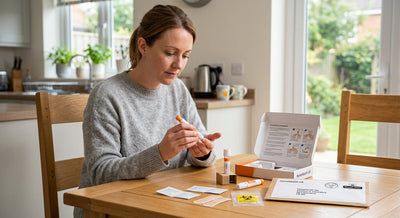
- Follow the official “how to collect your sample” guide.
- Warm your hands and stay hydrated before a finger-prick sample, unless your instructions say otherwise.
- Avoid heavy exercise before testing if your kit instructions recommend it.
- Take any unusual result to your GP.
Vitall Check results are processed by UKAS-accredited partner laboratories, with lab-verified results delivered within 48 hours after receipt of a suitable sample. The Insight Report is designed as a plain-English manual: it translates raw data into understandable context and helps you prepare questions for your clinician.
For women who want broader hormone and health markers, explore the Premium Women’s Health MOT. It should be used to support an informed healthcare conversation, not to diagnose or treat symptoms.
For a wider explanation of preparation, sample collection and results, read the Health Hub pillar guide: At-Home Blood Testing UK: The Complete Guide to Testing Your Health From Home.
Summary: use the trend wisely
Creatine for women is not just internet hype. The best-supported evidence relates to strength and lean tissue, particularly alongside resistance training.
The perimenopause conversation is more uncertain. Claims about brain fog, mood and bone density are interesting, but the research is not strong enough to treat creatine as a solution for those concerns.
Creatinine and eGFR can also be confusing if you supplement or train hard. That is where a baseline blood test can help. It gives you a starting point and useful information to take to your GP, rather than leaving you to panic over one number.
Frequently asked questions
Q: Is creatine safe for women? A: Research in healthy women is generally reassuring, with no consistent evidence of kidney or liver harm in the available studies. Speak with your GP first if you have kidney or liver disease, take regular medicines or are pregnant.**
Q: Can creatine help with perimenopause brain fog? A: The evidence is not strong enough to say that it treats brain fog. Early research is interesting, but direct evidence in perimenopausal women remains limited.**
Q: Can creatine raise creatinine on a blood test? A: Yes. Creatine use, muscle mass, hydration and hard training can all affect creatinine. A clinician should interpret creatinine and eGFR together with your wider results and health history.**
Author
Vitall Check Editorial Team
The Vitall Check Editorial Team is dedicated to empowering individuals with evidence-based health information and clear, actionable insights. Every article is researched using peer-reviewed journals and official health resources, reflecting our commitment to the same high standards of accuracy as our laboratory testing services. Our goal is to make proactive wellness accessible, data-driven, and transparent.
Disclaimer: Vitall Check is not CQC registered. The content provided is for general information only, does not provide a diagnosis, and does not replace advice from a qualified healthcare professional. Our services do not include treatment, prescription, or medical advice that falls under CQC-regulated activities. Always consult with your GP or a qualified clinician before making significant changes to your healthcare regimen.