TikTok loves a villain. Right now, cortisol is getting cast as the bad guy behind your face shape, your belly, your energy, your workouts, and basically your whole life. The fix, apparently, is a “cortisol detox”.
That sounds tidy. It is also wrong.
Cortisol is not a toxin that needs flushing out. It is a hormone your body makes on purpose. Like your phone’s battery saver mode, it kicks in to help you get through stress, wake up properly, and keep fuel moving when your body needs it most. The real issue is not “having cortisol”. The issue is context, timing, and whether there is a genuine medical reason to investigate it.
If you have seen “cortisol face”, “low-cortisol workouts”, or one-shot supplement claims all over social media, here is the fact-check you actually need.
TL;DR:
- Cortisol is a hormone, not a toxin, so “cortisol detox” is not a medical concept.
- Your body uses cortisol to help with waking up, stress response, blood sugar, and energy regulation.
- “Cortisol face” is not a recognised diagnosis. True cortisol excess disorders such as Cushing’s syndrome are rare and need proper medical assessment.
- Ashwagandha is not a magic overnight fix. Some studies show effects with daily use over about 60 days, not one dose.
- “Low-cortisol workouts” flatten a complex topic. Training stress, sleep, food intake, and recovery all matter.
- A single cortisol blood test can show what your cortisol was at that time of day. It cannot tell the whole story on its own.
- Cortisol testing is usually considered when there is a clear clinical reason, not because a trend told you your jawline changed.
What's a “cortisol detox”? It’s a social media phrase, not a medical one. Cortisol is a hormone your body needs for waking, energy, blood sugar control, and stress response, so the goal is not to “detox” it but to understand when symptoms and test results need proper clinical context.
What cortisol actually does
Cortisol is made by your adrenal glands and works as part of your body’s built-in stress and timing system. According to StatPearls, cortisol follows a daily rhythm, with higher levels in the morning and lower levels at night: https://www.ncbi.nlm.nih.gov/books/NBK538239/
That morning rise matters. It helps you wake up and get moving. Think of it like your body’s starter motor. You do not want it revving all day, but you do need it to turn on.
Cortisol also helps:
Wake you up
Your cortisol levels normally rise around waking time. It is one reason you can go from half-asleep to functional without instantly eating a roast dinner.
Regulate your stress response
When something stressful happens, cortisol helps your body respond. It is more like a fire alarm system than a poison. Annoying when overactive, yes. But still designed to protect you.
Keep blood sugar and energy steady
Cortisol helps your body release and use stored fuel. In simple terms, it helps make sure your brain and muscles are not running on fumes.
Support normal day-to-day function
Cortisol also plays roles in immune signalling, metabolism, and how your body manages physical demands.
So no, the answer is not to “get rid of cortisol”.
Why “cortisol face” is not a real diagnosis
“Cortisol face” gets used online to describe puffiness, facial fullness, or changes in appearance. The problem is that this is not a medical diagnosis.
Facial puffiness can happen for loads of reasons: poor sleep, salty food, alcohol, allergies, normal weight changes, medications, and plain old genetics. Blaming cortisol every time is like blaming one traffic light for a whole traffic jam.
People making these claims often point towards Cushing’s syndrome, which is a condition linked to prolonged excess cortisol. But the NHS is clear that Cushing’s syndrome is uncommon and needs proper investigation: https://www.nhs.uk/conditions/cushings-syndrome/
The NHS also lists a bigger picture of symptoms than “face looks rounder”. These can include easy bruising, muscle weakness, broad weight gain, and skin changes. NICE notes that suspected Cushing’s is usually investigated with tests such as an overnight dexamethasone suppression test, 24-hour urinary free cortisol, or late-night salivary cortisol, not a random guess from a mirror selfie: https://cks.nice.org.uk/topics/cushings-syndrome/diagnosis/investigations/
So if social media has convinced you that a puffy morning face equals a hormone disorder, pause there.
Ashwagandha: what the evidence actually says
Ashwagandha gets pushed hard in “cortisol detox” videos, often as if one capsule will sort everything by tomorrow morning. That is not what the evidence shows.
A 2023 randomised, double-blind, placebo-controlled trial found improvements in stress measures and reduced morning salivary cortisol after 60 days of daily ashwagandha use in healthy adults with mild to moderate stress: https://pubmed.ncbi.nlm.nih.gov/37832082/
Another 2019 randomised controlled trial also found reductions in serum cortisol over eight weeks of daily supplementation: https://pubmed.ncbi.nlm.nih.gov/31517876/
And a 2023 systematic review concluded that short-term supplementation may reduce cortisol in stressed adults, but it also noted that long-term effects remain unclear: https://pubmed.ncbi.nlm.nih.gov/38140274/
The key point: this is not a one-shot erase button. It is more like steering a ship than flicking a switch. Even where studies show an effect, they tend to involve consistent daily use over weeks, specific extracts, and selected groups of stressed adults.
That does not mean ashwagandha is useless. It means TikTok is overselling it.
Why the “low-cortisol workout” trend oversimplifies training
Social media often splits exercise into “good for cortisol” and “bad for cortisol”. Real life is messier.
Exercise is a stressor. That is not automatically a problem. Training places demand on the body so the body can adapt. That is the whole point. A hard session can raise cortisol temporarily, just as a smoke alarm goes off when there is actual smoke. Temporary does not mean harmful.
What matters more is the full picture:
- Sleep
- Recovery
- Training load
- Food intake
- Life stress
- Illness or under-fuelling
A tough workout after poor sleep and missed meals may feel very different from the same workout when you are recovered. Calling one style of exercise a “cortisol workout” is a bit like judging a film from one screenshot.
For athletes and regular gym-goers, context matters even more. High training load can change stress hormones without meaning something is medically wrong. That is why broad claims on Instagram usually create more confusion than clarity.
What a cortisol blood test can and cannot show
A cortisol blood test can be useful. But it needs proper context.
A single reading shows your cortisol level at that moment, and cortisol changes through the day. NHS pathology sources note that timing matters because cortisol follows a diurnal rhythm, with morning levels generally higher than later levels: https://www.gloshospitals.nhs.uk/our-services/services-we-offer/pathology/tests-and-investigations/cortisol/
That means a one-off result is not a full documentary. It is more like one frame from a moving film.
A cortisol blood test can:
- Show what your cortisol level was at the time the sample was taken
- Help as part of a wider medical assessment
- Support follow-up where there is a specific reason to investigate adrenal function
A cortisol blood test cannot:
- Diagnose every cause of tiredness, weight change, or stress on its own
- Confirm a TikTok trend
- Tell the full story without timing, symptoms, and sometimes further testing
If you are exploring stress-related biomarkers, the Ultimate Testosterone & Hormonal Health Test and the broader Hormone & Thyroid Blood Tests category can help you understand your results in plain English through Vitall Check Insight Reports. For wider context, our pillar post Testosterone vs Cortisol: Why Your Stress Is Killing Your Gains explains how stress and hormone patterns can overlap. You can also explore the Lifestyle & Recovery Blood Tests category for related options.
When cortisol testing is usually considered clinically appropriate
Cortisol testing is usually considered when there is a genuine clinical reason, not because social media has diagnosed you with “cortisol face”.
That may include:
- Symptoms that suggest possible adrenal problems
- Signs that make a GP think further endocrine testing is needed
- Investigation of suspected conditions such as adrenal insufficiency or Cushing’s syndrome
- Follow-up as part of a wider medical pathway
NICE guidance on adrenal insufficiency also stresses that timing matters, with morning serum cortisol commonly used in specific scenarios: https://www.nice.org.uk/guidance/NG243/chapter/recommendations
In other words, cortisol testing works best as part of an informed arrival for a better GP conversation, not as a shortcut to self-diagnosis.
Summary
The “cortisol detox” trend is catchy, but catchy is not the same as correct.
Cortisol is a hormone your body needs. It helps wake you up, manage stress, and keep energy available. “Cortisol face” is not a real diagnosis, and serious cortisol disorders such as Cushing’s syndrome are rare and need proper medical testing. Ashwagandha may have some evidence behind it, but not as an instant fix. And “low-cortisol workouts” reduce a complex training picture to a lazy label.
If you are curious about cortisol, use testing sensibly. One reading can offer context, but it is not a verdict. The aim is to understand your numbers clearly and use them to support a better conversation with your GP.
FAQ
Q: Is “cortisol face” a real medical condition? A: No. “Cortisol face” is a social media term, not a recognised diagnosis. If there is concern about true cortisol excess, it needs proper medical assessment for conditions such as Cushing’s syndrome.
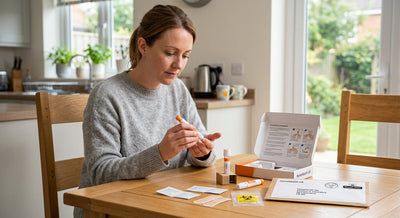
Q: Can an at-home cortisol test replace a GP visit? A: No. At-home testing can support an informed GP discussion by giving you lab-verified data, but it does not replace diagnosis or medical assessment.
Q: Does ashwagandha lower cortisol straight away? A: The evidence does not support a one-dose effect. Studies showing changes in cortisol usually involve daily use over roughly 8 weeks or about 60 days.
Author
Vitall Check Editorial Team
The Vitall Check Editorial Team is dedicated to empowering individuals with evidence-based health information and clear, actionable insights. Every article is researched using peer-reviewed journals and official health resources, reflecting our commitment to the same high standards of accuracy as our laboratory testing services. Our goal is to make proactive wellness accessible, data-driven, and transparent.
Disclaimer: Vitall Check is not CQC registered. The content provided is for general information only, does not provide a diagnosis, and does not replace advice from a qualified healthcare professional. Our services do not include treatment, prescription, or medical advice that falls under CQC-regulated activities. Always consult with your GP or a qualified clinician before making significant changes to your healthcare regimen.