For a long time, your health was something of a mystery. You might have felt "okay," but without a peek under the hood, you were essentially driving a car with a taped-over dashboard. You knew you were moving, but you had no idea how much fuel was left or if the engine was overheating.
Recent data suggests that the tide is turning in the UK. We're no longer content with guessing. A recent study revealed that a staggering 90% of UK adults who used at-home blood testing made at least one significant lifestyle change after seeing their results. It turns out that when you see your health written in black and white, it’s much harder to ignore.
TL;DR:
- 90% of people make positive lifestyle changes after an at-home blood test.
- Top 5 changes: New supplements (57%), dietary shifts (56%), more strength training (29%), increased cardio (28%), and better sleep (17%).
- Actionable insights are more powerful than raw data for driving habit changes.
- Informed arrival: Use your results to have more productive conversations with your GP.
- Vitall Check provides UKAS-accredited testing with clear, plain-English reports.
Why're at-home blood tests changing British health habits? At-home blood testing provides a "teachable moment" by turning abstract health concepts into personal, tangible data. When people receive clear, clinically-guided insights rather than just raw numbers, they feel empowered to make specific adjustments to their diet, exercise, and supplement routines, leading to a 90% success rate in lifestyle modification.
The Data Revolution: Why Numbers Need a Translator
Imagine you’re trying to build a piece of flat-pack furniture, but the instructions are written in a language you don't speak. You have all the parts (the data), but you don’t have the guide (the insights). This is how raw blood test results often feel. Seeing "ALT: 45 IU/L" on a screen doesn't tell you much unless you know what it means for your liver health and what you can actually do about it.
This is the key difference between traditional testing and the new wave of proactive health monitoring. By using UKAS-accredited laboratories, you ensure the data is accurate. But the real magic happens when that data is translated into plain English.
Instead of a confusing spreadsheet, you receive a map. If your results show low Vitamin D, it’s like a "low fuel" light coming on. You don't panic; you just know exactly which station to pull into. This clarity is why so many people are finally taking action.

The Top 5 Changes Brits are Making
The study highlighted five key areas where people are taking control. These aren't just minor tweaks; they're fundamental shifts in how we approach our daily lives.
1. Targeted Supplementation (57%)
Over half of those surveyed started new vitamins or supplements. Rather than taking a generic multivitamin and hoping for the best, people are now filling specific "gaps in the puzzle." If your metabolic health panel shows a deficiency, you can choose the exact supplement you need. According to the NHS, while most people get what they need from a balanced diet, certain groups or deficiencies require targeted support.
2. Nutritional Precision (56%)
Dietary changes were almost as popular as supplements. Participants reported eating more fruit and vegetables or significantly reducing their sugar intake. Seeing high blood glucose or cholesterol levels serves as a powerful motivator to rethink what’s on your plate. It’s no longer about a "fad diet"; it’s about eating to support your specific internal markers.
3. Strength Training Tweaks (29%)
Nearly a third of people increased their resistance training. Whether it’s lifting weights or using resistance bands, strength training is vital for metabolic health and bone density. When you see how muscle mass (or the lack of it) impacts markers like your resting metabolic rate, hitting the gym becomes a data-backed necessity rather than a chore.
4. Cardiovascular Calibration (28%)
Running, cycling, and brisk walking saw a significant uptick. NICE guidelines emphasise the importance of physical activity for cardiovascular health, and blood tests often provide the "nudge" needed to get moving. If your lipid profile isn't where you want it to be, that daily walk suddenly feels much more important.
5. Sleep and Stress Management (17%)
While smaller in number, nearly one in five people improved their sleep routines. We often think of sleep as a luxury, but it’s actually the "system update" your body runs every night. When biomarkers associated with stress or inflammation are high, many people realise that burning the candle at both ends is taking a physical toll they can finally see.

Moving Beyond the "Wait and See" Approach
For decades, the standard approach to health has been reactive. You wait until you feel "off," you book a GP appointment, and then you hope for an answer. But why wait for the leak to flood the kitchen before you fix the pipe?
Proactive testing acts as a "pressure valve" for the NHS. By identifying potential issues early and making lifestyle adjustments, you're not just helping yourself; you're arriving at your next GP consultation as an informed patient. You can say, "I've noticed my ferritin levels are on the lower end of the clinical range, and I'd like to discuss how we can manage this."
This is what we call an "informed arrival." You aren't replacing your doctor; you're giving them better tools to help you. It's like bringing a clear photo of a car fault to a mechanic instead of just saying "it makes a funny noise."
How Vitall Check Turns Data into Action
The reason 9 out of 10 people make a change isn't just because they have the data, it's because they have a plan. At Vitall Check, our Insight Reports do the heavy lifting for you. We translate raw laboratory data into easy-to-understand insights.
Every kit includes a personalised health action plan. This isn't generic advice you'd find on a cereal box. It’s tailored to your specific results. If your markers suggest your recovery is lagging, your plan might suggest prioritising protein or adjusting your training volume.
Our goal is to make your health transparent. We use UKAS-accredited labs, the same standards used by the NHS, to ensure your results are clinical-grade. You collect your sample at home (it’s simpler than you think; just follow our sampling guide), and within 48 hours of the lab receiving it, you have your answers.

Is At-Home Testing Right for You?
If you’re an athlete, a busy professional, or simply someone who values data, the answer is likely yes. According to Cleveland Clinic London, nearly half of UK adults are now using some form of health-monitoring technology.
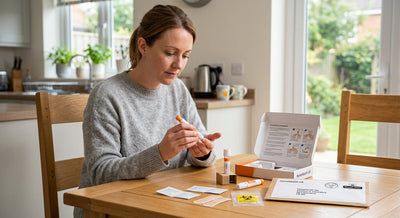
However, we understand that finger-prick testing can feel daunting. It’s normal to feel a small pinch or a bit of nerves the first time. The key is preparation: stay hydrated, make sure your hands are warm, and follow the instructions carefully. If you're nervous, ask a friend to help or watch our video tutorials.
Remember, this isn't about finding something "wrong." It's about understanding your unique baseline. It’s about having the map so you can choose the best route forward.

Summary: Your Health, Your Data
The "9 out of 10" statistic is powerful because it proves that knowledge is the ultimate motivator. When you stop guessing and start measuring, you naturally want to improve. Whether it's adding a specific supplement, prioritising an extra hour of sleep, or finally starting that strength programme, the data gives you the permission, and the reason, to act.
By choosing a Vitall Check test kit, you’re taking the first step towards an informed arrival at your next clinical appointment. You’re moving from being a passive passenger to being the driver of your own health journey.
FAQ
What if my results are outside the normal range? If any of your markers fall outside the clinical reference range, our Insight Report will explain what this means in plain English. We always recommend taking these results to your GP for a follow-up conversation. Your results provide a starting point for a deeper clinical discussion.
How accurate are at-home blood tests? Very. All Vitall Check samples are processed by UKAS-accredited laboratories that meet NHS-grade standards. While the collection happens at home, the analysis happens in a professional clinical environment.
Do I need to see a doctor before taking a test? No, you can order a test directly to your home. However, our tests are designed to supplement your healthcare, not replace it. We encourage you to share your reports with your GP.
How long does it take to get results? Once our lab receives your sample, you will typically receive your digital Insight Report within 48 hours.
What is an "Insight Report"? It’s a translation of your raw lab data. Instead of just seeing numbers and symbols, you get a clear explanation of what those numbers mean for your health, along with actionable steps you can take.
Author: Vitall Check Editorial Team The Vitall Check Editorial Team is dedicated to empowering individuals with evidence-based health information and clear, actionable insights. Every article is researched using peer-reviewed journals and official health resources, reflecting our commitment to the same high standards of accuracy as our laboratory testing services. Our goal is to make proactive wellness accessible, data-driven, and transparent.
Disclaimer: Vitall Check is not CQC registered. The content provided is for general information only, does not provide a diagnosis, and does not replace advice from a qualified healthcare professional. Our services do not include treatment, prescription, or medical advice that falls under CQC-regulated activities. Always consult with your GP or a qualified clinician before making significant changes to your healthcare regimen.