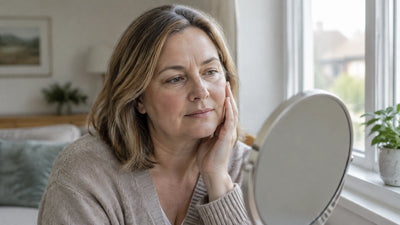
Perimenopause can make your body feel like it has changed the settings without telling you. Your periods shift. Sleep becomes unreliable. Hot flushes arrive at inconvenient times. Then there is the brain fog.
So, which blood tests can help with perimenopause symptoms?
The short answer is: some blood tests can help investigate symptoms or rule out other causes, but hormone testing does not routinely confirm perimenopause for people aged 45 or over.
TL;DR:
- Perimenopause is usually identified from symptoms and period changes.
- If you are aged 45 or over, FSH, oestradiol and other hormone tests are not usually needed to confirm perimenopause.
- Blood tests such as thyroid function, full blood count and ferritin may help investigate symptoms that overlap with other conditions.
- If you are aged 40 to 45, or under 40, FSH testing may be considered in specific circumstances.
- Use results as useful background information for a better GP conversation, not as a diagnosis.
What blood tests can help with perimenopause symptoms? Blood tests such as thyroid function tests, a full blood count and ferritin may help investigate symptoms that can overlap with perimenopause. Hormone tests such as FSH and oestradiol are not usually used to diagnose perimenopause in people aged 45 or over because levels can change widely.
Key reminders before you test
Perimenopause symptoms can include:
- Changes to your periods
- Hot flushes and night sweats
- Sleep problems
- Mood changes, anxiety or low mood
- Memory problems or brain fog
- Palpitations
- Vaginal dryness
- Joint and muscle aches
- Low sex drive
- Tiredness and changes in weight
The NHS guide to perimenopause and menopause symptoms explains that symptoms vary widely. You may have several symptoms, one main symptom, or hardly any symptoms at all.
Keep a simple symptom record before your appointment. Note your cycle pattern, sleep, hot flushes, mood, bleeding and any medicines or supplements you take. This gives your GP a clearer picture than a single blood result ever could.
Think of a blood test as one photograph. Your symptoms, medical history and period pattern are the rest of the album.

Which blood tests can help with perimenopause symptoms?
1. Thyroid function tests
Thyroid problems can look a lot like perimenopause.
An underactive thyroid may cause tiredness, feeling cold, weight changes, low mood, difficulty concentrating, hair changes and heavy or irregular periods. The NHS guide to underactive thyroid explains that thyroid function blood tests usually check thyroid-stimulating hormone, known as TSH, and thyroxine, known as T4.
An overactive thyroid can also cause symptoms that overlap with perimenopause, including palpitations, sleep problems, anxiety and changes to your periods. The NHS diagnosis guide for an overactive thyroid explains how TSH, T3 and T4 may be assessed.
Your thyroid acts a little like your body’s thermostat. If it is running too slowly or too quickly, your energy, temperature, heart rate and periods may all feel different.
Ask your GP whether thyroid function testing is suitable for your symptoms. Do not try to interpret TSH or T4 without considering your medical history and the laboratory’s reference range.
2. Full blood count
A full blood count, or FBC, looks at several parts of your blood, including red blood cells and haemoglobin.
This can help investigate symptoms such as:
- Tiredness
- Breathlessness
- Headaches
- Palpitations
- Pale skin
- Reduced exercise tolerance
Heavy or prolonged bleeding during perimenopause may increase the chance of iron deficiency or anaemia. An FBC can provide useful information, but it does not tell the whole iron story.
3. Ferritin and iron markers
Ferritin is a marker of your stored iron. It can be useful when you have heavy periods, ongoing tiredness or concerns about iron intake.
Picture ferritin as your body’s savings account for iron. Your haemoglobin may still sit within its reference range while your savings are running low. That is why a GP may consider ferritin alongside an FBC when symptoms or bleeding patterns suggest iron deficiency.
Read the Health Hub guide to iron deficiency in women and what ferritin and haemoglobin can show for more background.
Your GP will decide whether ferritin, serum iron or additional iron studies are appropriate. A result outside the reference range needs proper clinical context.
4. Vitamin B12 and folate
Vitamin B12 and folate help your body make healthy red blood cells. Low levels may be linked with tiredness, concentration problems, numbness or tingling.
These symptoms can overlap with perimenopause, poor sleep and stress. Testing may therefore be considered when your symptoms, diet, medicines or health history make a deficiency possible.
Do not start high-dose supplements based on a single symptom or online checklist. Discuss your options with a qualified healthcare professional.
5. Vitamin D and HbA1c
Depending on your symptoms and risk factors, your GP may consider other tests.
Vitamin D testing may be relevant when muscle aches, bone concerns or risk factors for deficiency are present. HbA1c measures average blood sugar over recent months and may be considered when there are relevant symptoms or risk factors.
Neither test diagnoses perimenopause. They may simply help your healthcare professional check whether another issue could be contributing to how you feel.
What about FSH, oestradiol and LH?
Hormone tests are often the first thing people search for when they notice perimenopause symptoms. It is understandable. You want a number that explains what is happening.
The problem is that reproductive hormones can move up and down during perimenopause. A single result may capture one moment without showing the wider pattern.
The NICE menopause recommendations state that, in otherwise healthy people aged 45 or over with menopause-associated symptoms, perimenopause should be identified without laboratory tests. NICE also advises against using tests such as FSH, oestradiol and anti-Müllerian hormone routinely for this purpose.
FSH testing may be considered in some people aged 40 to 45 who have menopause-associated symptoms and a change in their menstrual cycle. If premature ovarian insufficiency is suspected under the age of 40, NICE recommends using symptoms alongside elevated FSH results from two blood samples taken four to six weeks apart.
That age distinction matters. It is one reason you should discuss your symptoms and test choices with a qualified healthcare professional.
If you are taking hormonal contraception, HRT or other hormone medicines, tell your GP and the testing provider. These treatments can affect how results should be understood.
Can an at-home hormone blood test help?
An at-home test can provide lab-verified data about selected biomarkers. It may help you arrive at your GP appointment with more information and better questions.
Vitall Check’s Menopause Health & Hormonal Profile includes oestradiol, FSH, LH, TSH and free T4. Results are processed by UKAS-accredited partner laboratories and are provided through a secure Health Hub with plain-English explanations and reference ranges.
However, the result is not a diagnosis of perimenopause. It is a snapshot that needs to be considered alongside your age, symptoms, cycle history, medication and health background.
For a wider picture, you can also explore the Women’s Health collection. Choose a panel based on the question you want to explore rather than collecting as many numbers as possible.

How should you prepare for an at-home blood test?
Preparation can make sample collection easier and may help reduce avoidable errors.
Before collecting your sample:
- Read the official how to collect your sample guide.
- Drink water and warm your hands.
- Check whether your panel requires fasting.
- Follow the stated collection time, especially if your panel includes time-sensitive markers.
- Avoid intense exercise if your kit instructions advise this.
- Tell the provider about medicines and supplements, including biotin.
A finger-prick sample is convenient, but it is not effortless for everyone. Cold fingers, nerves or slow blood flow can make collection difficult. That is normal. Warm your hands, let your arm hang down and follow the guide carefully. Use the spare lancet only as instructed, and contact support if you cannot collect enough blood.
How should you approach your results?
Start with the reference range shown by the laboratory. Then look at the result in context.
Do not treat a result marked outside the reference range as a diagnosis. Do not assume a result within the range explains every symptom either. Blood results are more like clues in a detective story than a final verdict.
Write down:
- The biomarker and result.
- The laboratory reference range.
- Your symptoms at the time.
- Your cycle day, if relevant.
- Any medication, contraception or supplements.
- What you want to ask your GP.
Vitall Check’s Insight Report is a manual that translates raw laboratory data into clear, plain-English explanations. It does not replace a clinical review or provide medical advice.
Seek medical advice if you have very heavy or concerning bleeding. If you have had no period for 12 months and then experience vaginal bleeding, contact your GP, as advised by the NHS.
Key takeaway
Perimenopause symptoms are real, but a hormone blood test is not always the answer.
For many people aged 45 or over, symptoms and period changes are more useful for identifying perimenopause than a single FSH or oestradiol result. Targeted tests such as thyroid function, FBC and ferritin may help investigate other causes or contributors.
Use testing to fast-track your insights and prepare for a better GP conversation. Bring your results, symptom notes and questions with you.
For broader background, read The Complete Guide to Women’s Hormone Testing, the main Health Hub guide in this cluster.
FAQ
Q: Can a blood test confirm perimenopause? A: Not usually if you are aged 45 or over. NICE recommends identifying perimenopause from symptoms and menstrual changes rather than routine hormone testing. Blood tests may help investigate other causes of similar symptoms.
Q: Which blood tests should I ask my GP for if I think I have perimenopause? A: Ask whether thyroid function tests, a full blood count, ferritin, vitamin B12, folate, vitamin D or HbA1c are suitable for your symptoms and health history. Your GP will decide which tests are appropriate.
Q: Is an at-home perimenopause blood test the same as a diagnosis? A: No. An at-home test can provide lab-verified biomarker data and plain-English explanations, but it does not diagnose, treat or provide medical advice. Share your results with a qualified healthcare professional.
Author
Vitall Check Editorial Team
The Vitall Check Editorial Team is dedicated to empowering individuals with evidence-based health information and clear, actionable insights. Every article is researched using peer-reviewed journals and official health resources, reflecting our commitment to the same high standards of accuracy as our laboratory testing services. Our goal is to make proactive wellness accessible, data-driven, and transparent.
Disclaimer: Vitall Check is not CQC registered. The content provided is for general information only, does not provide a diagnosis, and does not replace advice from a qualified healthcare professional. Our services do not include treatment, prescription, or medical advice that falls under CQC-regulated activities. Always consult with your GP or a qualified clinician before making significant changes to your healthcare regimen.